


When you choose an ice cream container, think about insulation. Also, check if it is airtight and strong. Make sure it uses food-grade materials. These factors help your ice cream stay fresh and keep it tasting good for a longer time.
“Aseptic products make shelf life longer. They last at least twice as long as regular packages,” said James Hurley, CEO of TRU Aseptics.
Plastic containers are the most popular choice. They block moisture and air very well. You should consider how you store ice cream and how your choice affects the environment. Choosing the right container makes each scoop taste better.
Key Takeaways
- Pick containers that have good insulation. This keeps ice cream cold and creamy. It stops freezer burn and keeps the texture nice.
- Choose strong materials like polypropylene or high-density polyethylene. These materials do not crack easily. They keep ice cream safe while you store it.
- Find containers with lids that are airtight. This stops air and moisture from getting in. It helps keep flavor and texture good. It also stops ice crystals from forming.
- Make sure containers use food-grade materials. This keeps your ice cream safe from bad chemicals. It makes sure your ice cream is safe to eat.
- Think about the size of the container you need. Pick a size that fits your needs. The right size makes storage easy and keeps ice cream fresh.
Choose an Ice Cream Container: Key Factors

Insulation and Temperature Control
Insulation is very important when picking an ice cream container. It helps keep your ice cream cold and creamy. Storing ice cream at very low temperatures, like −50℃ or −70℃, helps stop air cells from changing size. This is important because it keeps freezer burn away. Freezer burn happens when ice forms on the surface and moisture leaves. This process, called ice recrystallization, can make your ice cream taste and feel bad.
- Keeping ice cream very cold stops air cells from changing size. This helps prevent freezer burn.
- When surface ice forms, called ‘ice recrystallization’, moisture escapes and freezer burn happens.
Some containers use special materials to keep the temperature steady. For example, phase change materials (PCMs) help a 5-liter tub stay cold even if the room is warm. This means your ice cream stays smooth and yummy for longer.
Durability and Strength
You need a container that does not crack or break in the cold. Plastic containers made from polypropylene (PP) or high-density polyethylene (HDPE) are good choices. They stay strong and bendy, even when frozen. These materials do not get brittle, so your ice cream is safe during storage and moving.
Here’s a quick look at how different materials compare:
| Material | Strengths | Weaknesses |
|---|---|---|
| Polypropylene (PP) | Great at staying strong and flexible in cold | N/A |
| High-Density Polyethylene (HDPE) | Strong, keeps shape in freezing temps | N/A |
| Metal | N/A | Gets dents easily, lets heat in and out too fast |
| Glass | N/A | Breaks easily, does not keep cold in well |
- Plastic containers like PP and HDPE do not get brittle in the freezer.
- They keep their shape and stop leaks or crushed tubs.
Lid Quality and Airtightness
A good lid is needed to keep your ice cream fresh. Airtight lids stop air and water from getting in. This helps stop ice crystals and freezer burn, which can make your ice cream taste old or icy.
- Good packaging keeps food from drying out and keeps flavor, texture, and color.
- Packaging should keep out water or at least resist it.
- Strong and leakproof materials help keep food good.
- Using a resealable freezer bag or putting plastic wrap under the lid can make a better seal.
- This extra step keeps your ice cream creamy and tasty.
Tip: Always push the lid down tight after you use it. If you see ice crystals, try adding plastic wrap before closing the lid.
Food-Grade Materials
Safety is most important when picking an ice cream container. Food-grade materials keep your ice cream safe from bad chemicals and germs. Look for containers with labels like FDA, BRCGS, IFS, or NSF. These show the container meets strict safety rules.
| Certification | Description |
|---|---|
| FDA | Checks if packaging is safe for food and follows rules. |
| BRCGS | A worldwide label that checks food packaging safety. |
| IFS | Looks at how packaging is made and if it is safe. |
| NSF | Gives labels that follow FDA rules and show safety. |
If you use containers that are not food-grade, you risk:
- Making your ice cream dirty and lowering its quality.
- Getting exposed to bad chemicals like BPA, which can hurt your health.
- Spoiling your ice cream, since dairy is very sensitive.
Size and Storage Needs
Think about how much ice cream you want to keep and how much space you have. The right size makes storing easy and keeps your ice cream fresh. Here are some common sizes and what they are used for:
| Size (oz) | Dimensions | Typical Use Case | Recommended For |
|---|---|---|---|
| 8 oz | 3.75″ x 3.15″ x 2.3″ | Small single serve | Tastings, small desserts |
| 12 oz | 4.15″ x 3.35″ x 3″ | Big single serve | Standard scoop, takeout |
| 16 oz | 4.4″ x 3.6″ x 3.15″ | Large single sharing | Hungry people, premium |
| 20 oz | 5″ x 4.15″ x 2.75″ | Small group sharing | Couples, double flavors |
| 24 oz | 5.5″ x 4.5″ x 2.8″ | Family/small group | Family dessert, party treat |
| 28 oz | 5.6″ x 4.4″ x 3.3″ | Group/family sharing | Multi-flavor, event use |
| 32 oz | 5.6″ x 4.4″ x 4.15″ | Big packaging/party | Family gatherings, catering |
You can also see how container size fits in your freezer:
| Container Size | Capacity (Ounces) | Ideal Use |
|---|---|---|
| 32 Ounce | 32 | Small families or people who want more |
| 64 Ounce | 64 | Parties or groups with many flavors |
| 128 Ounce | 128 | For big crowds or stocking up |
| 4 Ounce | 4 | Small freezer space for one person |
| 5.5 Ounce | 5.5 | Small freezer space for one person |
Sustainability
Many people now want ice cream containers that are better for the earth. Some companies use packaging that can be recycled or breaks down easily. Here’s a look at the market:
| Company Name | Percentage of Sustainable Packaging |
|---|---|
| Amcor Plc | 14 – 16% |
| ITC Packaging | 12 – 14% |
| Huhtamaki Oyj | 10 – 12% |
| Sonoco Products Company | 8 – 10% |
| Berry Global Group | 6 – 8% |
| Other Companies (combined) | 40 – 50% |
- Old plastic containers make a lot of trash and pollution.
- Eco-friendly choices, like recyclable paperboard and biodegradable plastics, are better for the planet.
- Picking sustainable packaging helps you lower your impact on the environment.
Note: If you want to help the earth, look for containers that say recyclable, compostable, or made from renewable resources.
When you pick an ice cream container, think about insulation, strength, airtightness, food safety, size, and sustainability. Choosing the right things will help your ice cream stay fresh and taste good every time.
Container Types
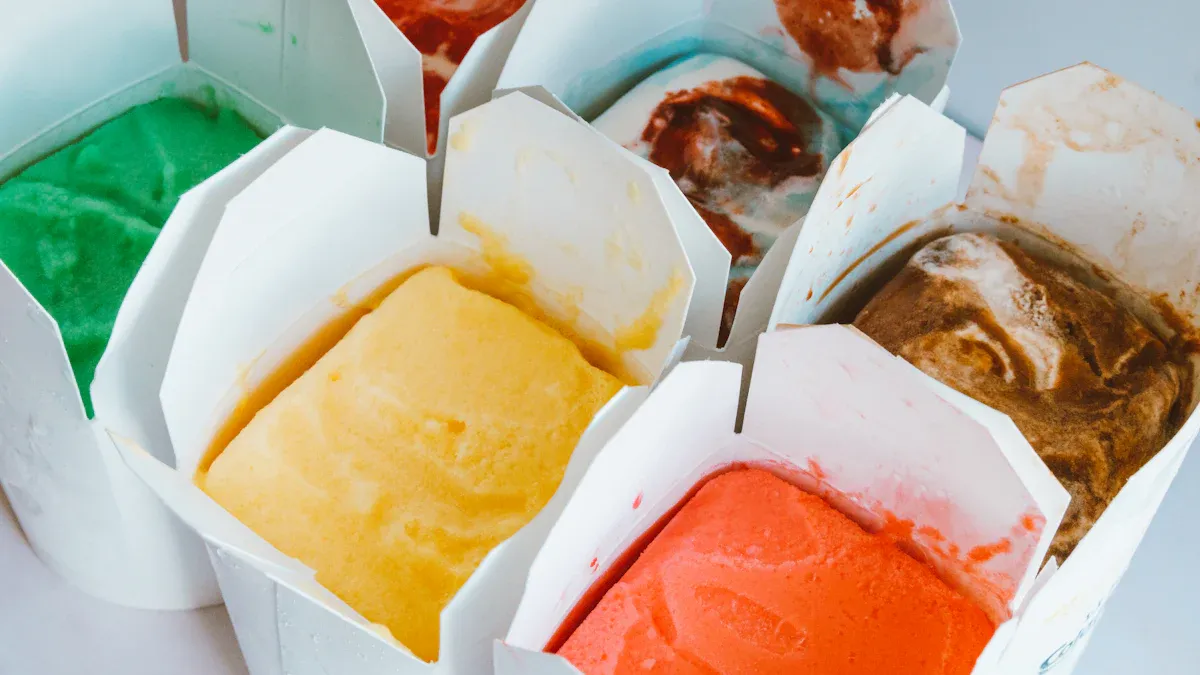
When you choose an ice cream container, you’ll see lots of options. Each type works best for different needs. Let’s look at the main container types and help you pick the right one.
Plastic Tubs and Pints
Plastic tubs and pints are everywhere. You’ll find them in grocery stores and home freezers. They’re lightweight, strong, and keep ice cream cold. Airtight lids help stop freezer burn. You can stack them easily, and they come in many sizes.
| Advantages | Disadvantages |
|---|---|
| Lightweight and easy to handle | Not environmentally friendly unless recycled |
| Resistant to shattering | Can absorb odors if not properly sealed |
| Available in various sizes and shapes | |
| Airtight lids prevent freezer burn |
Plastic tubs work well for families, homemade ice cream, and retail shops. If you want something easy to use and store, this is a good choice.
Paper and Cardboard Cups
Paper and cardboard cups are popular for single servings and parties. They’re light and eco-friendly. You can print fun designs on them. These cups work best for short-term use because they can get soggy if left in the freezer too long.
- Great for tastings, events, and small desserts.
- Not ideal for long-term storage since moisture can seep in.
You’ll see these in ice cream parlors and at birthday parties.
Glass and Metal Options
Glass and metal containers look fancy and last a long time. Glass jars don’t react with food and are easy to clean. Metal tubs, like stainless steel, keep ice cream cold and stand up to bumps and drops.
| Material | Advantages | Disadvantages |
|---|---|---|
| Metal | Moves cold well, strong, hard to damage | Can cost more, might taste metallic, heavier than plastic |
| Glass | Does not react, no smell, easy to clean, looks nice | Heavy, breaks easily, costs more than plastic |
If you want a reusable option for homemade ice cream, glass and metal are great picks. They’re safe and help keep flavors pure.
Bulk and Foodservice Containers
Bulk containers are made for big groups and businesses. These tubs are tough and easy to stack. They fit scoop shop freezers and come ready to fill.
| Feature | Description |
|---|---|
| Durability | Strong plastic design means less waste from broken tubs. |
| User-friendliness | Ready to use, no assembly needed. |
| Compatibility | Fits standard scoop shop collars and freezers. |
| Space-saving | Nestable design saves storage space. |
| Branding | You can print your logo on the lid and tub. |
| Leak prevention | Stops leaks from soft or melted ice cream. |
If you run a business or need to serve a crowd, bulk containers make things simple.
Eco-Friendly Choices
Eco-friendly containers help you protect the planet. You’ll find tubs made from plant-based materials, recyclable paperboard, and even edible cups.
- Compostable tubs break down fast and enrich soil.
- Recyclable cartons are easy to stack and reuse.
- Edible cups add fun and cut down on waste.
- Glass jars can be reused and recycled.
If you care about sustainability, these options let you enjoy ice cream and help the earth.
Tip: Match your container to your needs. Homemade ice cream works well in glass or plastic. Retail shops often use paper or plastic. Big events need bulk tubs. If you want to go green, try compostable or edible containers.
Match Container to Use
Homemade Ice Cream
If you make ice cream at home, you want a container that keeps things simple and safe. You should look for plastic containers that do not crack or break in the freezer. Modern plastics handle cold temperatures well, so your ice cream stays smooth. Rounded edges help you scoop every last bit, so you waste less. You can also use a freezer bag inside the container to stop ice crystals from forming. This keeps your ice cream creamy and fresh.
- Plastic containers resist dents and breaks.
- Rounded edges make scooping easier.
- Freezer bags help prevent freezer burn.
Tip: Always seal your container tightly after each use. This helps keep your ice cream tasting great.
Retail and Small Business
Running a shop or selling ice cream means you need containers that look good and work well. You want packaging that shows off your brand and keeps ice cream safe during transport. Plastic tubs with custom lids are popular because they stack easily and protect against leaks. Paper cups work well for single servings and events. If you care about the environment, try compostable or recyclable options.
| Container Type | Best For | Extra Benefit |
|---|---|---|
| Plastic Tub | Bulk sales | Custom branding |
| Paper Cup | Single servings | Eco-friendly designs |
| Compostable | Green branding | Lower environmental impact |
Family and Group Use
When you serve ice cream to family or friends, you need containers that hold enough for everyone. Large plastic tubs or cardboard cartons work well for parties and gatherings. You can stack them in the freezer and carry them easily. Look for containers with strong lids to keep ice cream fresh between servings.
- Large tubs fit more ice cream for sharing.
- Strong lids keep flavors locked in.
- Stackable design saves freezer space.
Foodservice
If you work in foodservice, safety and quality matter most. You should choose an ice cream container made from food-grade materials. BPA-free plastics help you avoid health risks. Containers must handle freezing temperatures to keep dairy fresh. You want tubs that fit standard freezers and resist leaks.
- Food-grade materials protect your customers.
- BPA-free plastics keep ice cream safe.
- Strong tubs prevent spills and spoilage.
Note: Always check for safety labels when you choose an ice cream container for your business.
Features to Look For
Airtight Lids
You want your ice cream to stay fresh and creamy. Airtight lids help you do that. These lids block air and moisture, which stops freezer burn and keeps flavors locked in. When you shop for containers, check if the lid snaps on tightly or twists to seal. Some lids have silicone rings that add extra protection.
How to pick an airtight lid:
- Press the lid down and listen for a click or snap.
- Look for a rubber or silicone seal inside the lid.
- Test the lid by turning the container upside down. If it stays closed, you have a good seal.
Tip: If you see ice crystals on your ice cream, your lid might not be airtight. Try adding a layer of plastic wrap before closing the lid.
Stackability
Stackable containers save space in your freezer. You can organize your ice cream and find flavors quickly. Flat lids and straight sides make stacking easy. If you have a small freezer, stackable tubs help you fit more treats inside.
Benefits of stackable containers:
- 🧊 More ice cream in less space.
- 🍦 Easy to grab and serve.
- 🚀 Less mess and better organization.
| Feature | Why It Matters |
|---|---|
| Flat lids | Prevents tipping |
| Uniform shape | Makes stacking stable |
| Strong sides | Stops crushing |
Note: Always stack heavier tubs at the bottom. This keeps your containers safe and stops spills.
Custom Design
Custom designs let you show off your style or brand. You can pick colors, add labels, or print your logo. If you run a business, custom containers help you stand out. At home, you can use fun stickers or write flavors on the lid.
Ways to customize your container:
- Choose bright colors or patterns.
- Add a label with the ice cream flavor and date.
- Print your business logo for retail tubs.
Custom containers make your ice cream look special. They also help you remember what’s inside!
Maximize Freshness
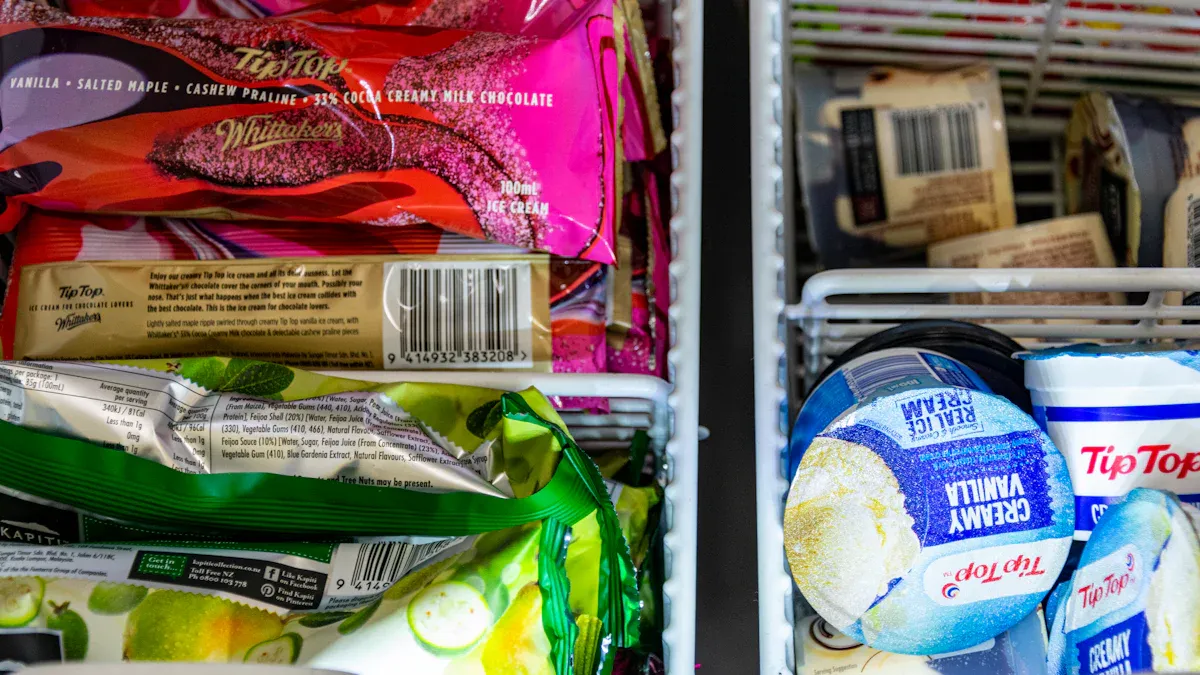
Filling and Sealing Tips
You want your ice cream to taste fresh every time you open the container. Start by filling your container all the way to the top. This step leaves less air inside, which helps stop freezer burn. Next, press a piece of plastic wrap, wax paper, or parchment paper right onto the surface of the ice cream. This layer keeps ice crystals from forming and stops a hard skin from developing.
Here’s a simple way to seal your ice cream:
- Fill the container to the top.
- Press plastic wrap, wax, or parchment paper onto the ice cream.
- Snap the lid on tightly.
- For extra protection, store the container upside down. This trick helps keep air away from the ice cream.
Tip: Always use an airtight container. This step is the best way to keep your ice cream creamy and smooth.
Storage Practices
Where you put your ice cream in the freezer matters. You should always keep it in the coldest part, which is usually the back. The door gets warm every time you open it, so avoid storing ice cream there. Try to keep your freezer at 0°F (-18°C) or colder. This temperature keeps your ice cream at its best.
Experts suggest these habits for the freshest ice cream:
- Use airtight containers to block air and moisture.
- Place ice cream at the back of the freezer for steady cold.
- Avoid putting warm items next to your ice cream.
- Check your freezer’s temperature often.
Note: If you see ice crystals or your ice cream feels icy, your freezer might be too warm or the lid may not be tight enough.
Cleaning and Reuse
If you use reusable containers, you need to keep them clean and safe. Always wash, rinse, and sanitize your containers before and after each use. Let them dry completely before filling them again. Many companies follow strict cleaning rules to make sure containers stay safe for food.
- Inspect containers for cracks or damage.
- Wash with hot, soapy water.
- Rinse and sanitize to remove germs.
- Dry thoroughly before reuse.
Keeping your containers clean helps protect your ice cream and your health. Clean containers mean fresh, tasty ice cream every time.
You want your ice cream to stay safe and fresh. Choose a container that keeps it cold and blocks air. It should be strong and safe for food. Experts say these things are most important:
| Key Considerations for Ice Cream Containers | Description |
|---|---|
| Food-grade materials | Keeps your ice cream clean and safe. |
| Appropriate sizes | Works for families or selling at stores. |
| Temperature tolerance | Stays strong in the freezer to keep ice cream good. |
Think about what you care about most. Do you want your ice cream to stay fresh? Do you want something easy to use? Or do you want to help the earth? Try out different containers to see what fits your freezer and family best.
- Always check for “food grade” labels.
- Use empty containers again at home.
- Put ice cream in plastic bags inside containers to scoop easier.
Enjoy every scoop! 🍦
FAQ
What is the best way to prevent freezer burn on ice cream?
You can press plastic wrap or wax paper directly onto the ice cream before sealing the lid. This step blocks air and keeps your ice cream smooth. Always use an airtight container for the best results.
Can I reuse ice cream containers?
Yes, you can! Wash them with hot, soapy water and let them dry completely. Check for cracks or damage before using them again. Reusing containers helps you save money and reduce waste.
Are glass containers safe for freezing ice cream?
Glass containers work if they are freezer-safe. Leave some space at the top for the ice cream to expand. Avoid sudden temperature changes to prevent cracking. Always check the label for freezer safety.
How do I choose the right size container?
Think about how much ice cream you want to store. For single servings, pick small cups. For families or parties, use larger tubs. Make sure the container fits your freezer space.
What makes a container food-grade?
A food-grade container uses safe materials that do not leak chemicals into your ice cream. Look for labels like FDA-approved or BPA-free. These labels show the container meets safety standards.
See also
How Many Gallons of Ice Cream for 50 Guests
How to Use Airtight Containers to Extend Ice Cream Shelf Life