


Choosing the right yogurt container size can affect your snack or business. You need to think about portion size, material, branding, temperature control, and the environment. Studies show that container size helps you manage portions and keeps people happy.
- Standard sizes give you the same taste and look each time.
- Different sizes fit different needs, so one size is not for everyone.
Take some time to decide what works best for you, your family, or your customers.
Key Takeaways
- Pick the right portion size. This helps you eat yogurt without wasting any. Single-serve containers help you control how much you eat. They also make healthy eating easier for you.
- Look at what the container is made of. Plastic, glass, and compostable choices have special benefits. They help keep yogurt fresh and affect the environment in different ways.
- Customization can help your brand. Special shapes and colors make your yogurt easy to notice. This helps your yogurt stand out and connect with customers.
- Insulated containers keep yogurt fresh for a longer time. Use them when you travel or go on picnics. They stop yogurt from spoiling and keep it tasting good.
- Think about eco-friendly options. Reusable and compostable containers help cut down on waste. They also help protect the environment.
Portion Size
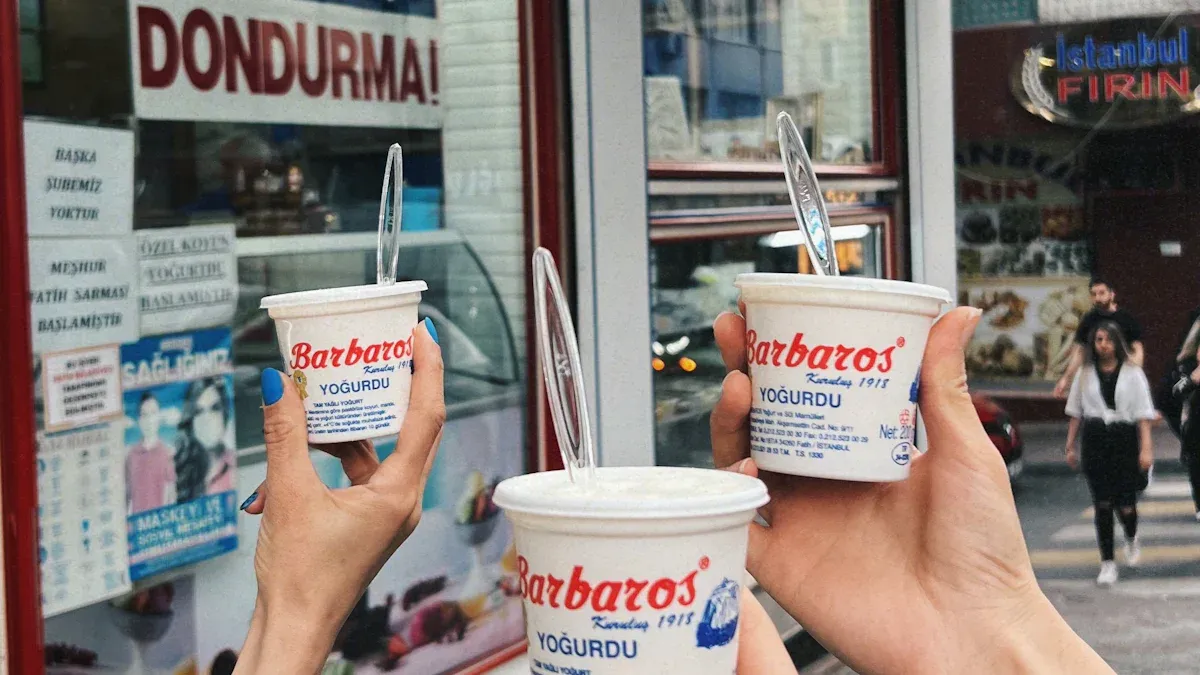
Picking the right portion size helps you enjoy your yogurt. It also helps you not waste food. Stores and restaurants sell many sizes. Each size is good for different needs. You might want a small snack or a big meal. Some people need containers for their business.
Single-Serve
Single-serve yogurt containers help you eat the right amount. They usually hold between 5.3 and 8 ounces. You can find them in many shapes. Some are cups, some are wide, some are fluted, and some have sidecars. These sizes help you count calories. They also help you eat healthy. You can take one for breakfast or a snack at school or work.
Tip: Single-serve containers help you not eat too much. They make counting calories easier.
Here is a table with common single-serve yogurt container sizes:
| Capacity | Description |
|---|---|
| 70ml | Small single-serve option |
| 80ml | Slightly larger single-serve |
| 120ml | Common single-serve size |
| 4 oz | Single-serve glass jar |
| 5.3 oz | Popular Greek yogurt cup |
| 6 oz | Larger single-serve glass jar |
| 8 oz | Big single-serve (like Noosa) |
Single-serve containers help you waste less food. You open only what you need. You do not throw away leftovers. Smaller sizes help you control portions. They also keep your food fresh.
- You can control how much you eat.
- You waste less food.
- Standard sizes help you pick the right amount.
Family and Bulk
Family and bulk yogurt containers are good for many people. These containers often hold 1 kilogram or more. You can use them for family breakfast. You can also use them for recipes that need lots of yogurt. Bulk containers help you save money when you buy more.
Here is a table with family and bulk yogurt container sizes:
| Container Size | Description | Availability |
|---|---|---|
| 6 oz | Plastic yogurt container with lids | Available in bulk for businesses |
| 1 kg | Round plastic yogurt container with handle | Good for family servings |
| 5.3 oz | Round yogurt container | Standard retail size |
You can reuse big yogurt containers at home. You might use them to plant seeds. You can store leftovers or organize your pantry. These containers help you keep your fridge neat. You can use them for crafts or sorting games with kids.
- You save money when you buy in bulk.
- You use less packaging.
- You can reuse containers for many things at home.
Commercial Use
Businesses need yogurt containers that fit their needs. Commercial containers hold much more, like 38 ounces or 2.2 liters. These sizes are good for restaurants and cafeterias.
- Big containers help businesses serve many people fast.
- They make shipping and storing easier.
- The right size can save money and cut waste.
Here is a table showing how commercial container sizes help businesses:
| Aspect | Impact on Efficiency and Cost |
|---|---|
| Packaging Design | Makes production and shipping better |
| Size and Weight | Makes handling and delivery easier |
| Form-fill-seal (FFS) | Costs less, uses less material, better for the environment |
| Fill-seal (FS) Flexibility | Works with many sizes and materials, good for many runs |
| Consumer Preferences | Balances looks, speed, and sustainability |
Picking the right yogurt container size for your business saves money. It helps you work faster. It also keeps customers happy.
Yogurt Container Materials

Picking the right material keeps your yogurt safe and fresh. You can choose plastic, glass, or paper and compostable containers. Each kind has special things that change how long yogurt lasts, how strong it is, and how it affects the earth.
Plastic Types
Many yogurt containers use plastic. The most common plastics are Polypropylene (PP), Polyethylene Terephthalate (PET), and Polystyrene (PS). These plastics keep yogurt safe from air, water, and light.
- PP does not melt easily and fights chemicals. It keeps water out and works for hot drinks. PP is used a lot because it stays strong and safe with yogurt cultures.
- PET lets you see your yogurt clearly. It stops water and gas but does not like heat. PET does not break easily, so it is good for travel.
- PS can be soft or hard. It stops water but breaks and burns fast. PS is hard to recycle.
Tip: PP cups with In-Mold Labeling (IML) give more protection. They help keep yogurt safe from germs and air.
Glass Options
Glass yogurt containers protect yogurt well. They have lids that keep out germs and keep yogurt fresh. Glass blocks sunlight and keeps flavors strong.
| Advantages of Glass Yogurt Containers | Disadvantages of Glass Yogurt Containers |
|---|---|
| Lids keep out germs and bacteria | Glass is heavy and hard to move |
| Clear glass helps with marketing | Glass breaks easily and needs care |
| Handles heat, good for warm places | Making glass costs a lot |
| Stops UV rays from hurting yogurt | N/A |
- Glass containers close tightly. This keeps out smells and gases, so yogurt stays fresh longer.
Paper and Compostable
Paper and compostable containers help the earth. Most use paperboard from plants. Some have a thin plastic layer to keep yogurt fresh.
| Material Type | Description |
|---|---|
| Paperboard | 80% paperboard from good, renewable sources |
| Plastic Lining | Thin plastic layer keeps yogurt fresh |
- These containers break down in compost. They do not hurt the earth like plastic.
- You make less trash when you pick compostable containers.
| Aspect | Compostable Containers | Traditional Plastics |
|---|---|---|
| How it breaks down | Needs compost to break down well | Usually goes to landfills and does not break down fast |
| Greenhouse Gas Emission | Can make methane if put in landfill | Stays in landfills and adds to pollution |
| Time to Break Down | Breaks down in compost in about 180 days | Can take hundreds of years to break down |
Note: Yogurt containers made from paper and compostable stuff break down fast and help the planet.
Customization & Branding
You can make your yogurt container special for your brand. Customization helps your product look different in stores. It also helps you connect with customers. You can pick the shape, size, and label that match your brand’s style.
Shape and Size
There are many shapes and sizes for yogurt containers. Some brands use tall and thin cups. Others choose wide and round tubs. Special shapes get attention and make your product easy to find. You can pick a size that fits your needs. You can choose small single-serve cups or big family tubs.
Here is a table with popular choices:
| Sizes | Materials |
|---|---|
| 12 oz, 8 oz, 16 oz, 32 oz, 85 oz, 5-gallon | Plastic (PP), Cardboard |
You can also pick colors and add your logo. Many brands use bright colors and cool designs to get buyers’ attention. If you use a special shape or color, people remember your product.
Tip: Special shapes and colors help your yogurt stand out.
Manufacturers use creative designs to interest all ages. This helps build a strong bond with yogurt fans.
Labeling
Labels are important for how people see your yogurt. You can use full-color printing to share your brand’s story. Many companies print their logo and messages on the lid. Some even print on aluminum foil lids. This makes your product look professional. It also helps customers trust your brand.
Here is a table about how labels affect buyers:
| Evidence Type | Description |
|---|---|
| Packaging Influence | Packaging gets attention and affects what people buy. |
| Sensory Expectations | Good packaging makes people think it will taste great. |
| Brand Recognition | Labels help people know your brand and remember it. |
Studies show people understand yogurt labels in many countries. Labels help you share your brand’s values and connect with buyers everywhere.
Note: Custom labels and printed lids show you care about quality and new ideas.
Temperature Control
Insulated vs. Standard
You want your yogurt to stay fresh and safe. The type of container you choose makes a big difference. Insulated containers help keep yogurt cold for longer. These containers use special layers or thicker walls. They slow down changes in temperature. Standard containers work well for short-term use. They do not keep yogurt cold for long periods.
| Container Type | Keeps Yogurt Cold | Best Use Case |
|---|---|---|
| Insulated | ✅ | Travel, lunch boxes |
| Standard | ❌ | Home, quick snacks |
Insulated containers protect yogurt from heat. They help keep bacteria from growing. You get a longer shelf life. Standard containers work best when you eat yogurt soon after opening. If you need to store yogurt for a few hours, insulated options give you better results.
Tip: Use insulated containers for picnics or school lunches. You keep yogurt fresh until you are ready to eat.
Storage & Transport
You need to think about how you store and move your yogurt. Large containers can be heavy and hard to carry. You should check if the container fits in your fridge or cooler. Some containers stack easily. Others take up more space.
- Choose containers with tight lids. You stop spills and keep yogurt safe.
- Pick containers that fit your storage space. You save time and avoid messes.
- Use sturdy containers for transport. You protect yogurt from bumps and drops.
If you run a business, you need containers that travel well. Strong materials help prevent damage. Insulated containers work best for delivery or catering. You keep yogurt cold and fresh for your customers.
Note: Always check the temperature before serving yogurt. You make sure it stays safe to eat.
You can pick a yogurt container that matches your needs. Insulation and smart storage choices help you keep yogurt fresh and tasty.
Eco-Friendly Choices
Picking an eco-friendly yogurt container helps the earth. You want a container that keeps yogurt fresh and looks nice. It should not hurt the environment. You also need to think about recycling or reusing it. You have to balance being green with what you need. Think about how well the container works and feels. Make sure it matches your brand too.
Recyclable Options
Many yogurt containers use plastics you can recycle. Some plastics are easier to recycle than others. PETE and HDPE are the most common in stores. These plastics get recycled a lot and work well for yogurt. Polypropylene (PP) is also used, but it is not recycled as much.
| Material Type | Recycling Rate | Notes |
|---|---|---|
| Polyethylene Terephthalate (PETE) | High | Most widely used recyclable plastic. |
| High Density Polyethylene (HDPE) | High | Second most widely used and easiest to recycle. |
| Polypropylene (PP) | 2.7% | Notably low recycling rate despite being widely recyclable. |
Tip: Pick PETE or HDPE containers to help the planet. These plastics get recycled more often.
Check your local recycling rules before you buy. Some places recycle PP, but many do not. Choosing a container with a high recycling rate makes it easier to recycle.
Reusable and Compostable
Reusable and compostable containers help you make less trash. You can wash and use a reusable container again and again. After three uses, it is as good for the earth as single-use ones. If you use it seven times, you cut your impact by 74%. Compostable containers break down in dirt and do not fill up landfills.
- In 2015, almost 30% of U.S. waste was from containers and packaging.
- Reusable containers keep lots of trash out of landfills.
- Compostable containers break down fast and help the earth.
You can pick glass jars, strong plastic tubs, or paperboard cups with compostable linings. These choices work at home or for your business. You save money and help the earth when you reuse or compost yogurt containers.
Note: You help a lot by picking containers you can reuse or compost. Small choices make a big difference over time.
Decision Tips
Weighing Factors
You have many things to think about when picking a yogurt container. Portion size, material, branding, temperature, and being eco-friendly all matter. Each one changes how your yogurt looks, tastes, and stays fresh.
Businesses have some big problems to solve when picking yogurt containers. They need to keep yogurt cold, pick the right material, and think about the planet. Yogurt must stay between 34°F and 40°F so it does not spoil. The material you pick keeps yogurt safe and affects the earth. You also need to think about branding and portion size. People want containers that are easy to use and keep yogurt good.
You want a container that keeps yogurt safe and fresh. It should look good and match your brand. Some people care about the earth most. Others want easy storage or a cool look. Make a list of what is most important to you. Use your list to compare different containers.
Here is a quick checklist to help you:
- Portion size: Does the container fit your serving needs?
- Material: Is it strong, safe, and eco-friendly?
- Branding: Can you add your logo or design?
- Temperature: Will it keep yogurt cold and fresh?
- Sustainability: Can you recycle or reuse it?
Testing Options
Try out different yogurt container sizes before you decide. Test a few with your family, friends, or customers. See which ones work best for you.
Picking a container style is hard. You need to think about what people want, your brand, cost, and how you make it. If you know your customers and how you make yogurt, you can pick the best container for both.
Ask people what they think about the size and shape. See if the container keeps yogurt fresh and safe. Check if it fits in your fridge or on store shelves. Testing helps you find the best one before you buy a lot.
You can also do a small survey or give out samples in different containers. This helps you learn what people like most. Testing saves you time and money later. It helps you make a smart choice.
You have lots of choices for yogurt containers. You should think about how much yogurt you want. You also need to look at what the container is made of. Branding is important too. Temperature control matters if you want yogurt to stay fresh. Eco-friendly options help the planet. Decide what is most important for your family or business. Here are some steps to help you pick the best container:
- Ask experts about different container choices.
- Go to Customer Innovation Centres to learn what people want and get new ideas.
- Try out recipes and packaging at Product Development Centres to make your yogurt better.
Making smart choices lets you serve fresh yogurt and helps your brand grow strong.
FAQ
What size yogurt container works best for a single snack?
You should pick a container between 5.3 and 8 ounces. This size gives you a good portion for breakfast or a snack. You can control calories and avoid wasting food.
Can you recycle most yogurt containers?
Many yogurt containers use PETE or HDPE plastic. You can recycle these in most places. Always check your local recycling rules before you throw them away.
How do you keep yogurt fresh during travel?
You can use insulated containers. These keep yogurt cold for hours. Tight lids help stop spills. You protect yogurt from heat and bacteria.
What material is safest for storing yogurt?
Polypropylene (PP) and glass keep yogurt safe. PP resists chemicals and heat. Glass blocks sunlight and keeps flavors strong. Both help yogurt stay fresh longer.
How Brands Boost Sales with Ice Cream Packaging Design
Ice cream bucket packaging vs cup: Which do consumers prefer?
Why Same-Size Ice Cream Containers Have Big Price Differences