


Quick answer
How long does ice cream last in the freezer? About 2–4 months is a practical best-quality range at a steady 0°F/-18°C or below.
The University of Nebraska–Lincoln home-storage chart presents freezer times as quality guidance. FDA explains that properly handled food kept continuously frozen at 0°F remains safe, while flavor, texture and appearance still decline over time.
Use three checks together: the date and storage instructions on the tub, the freezer’s real temperature, and the product’s known handling history. A calendar cannot make an unknown melt-and-refreeze event safe.
The answer changes with four simple factors
One-page decision guide
What should you do with the tub in front of you?
Use the shortest answer that matches the actual situation. When the temperature history is unknown, choose the safer action instead of trying to judge by taste.
Quality is not the same as safety
What does the 2–4 month rule really mean?
The number helps a household plan for good flavor and texture. It assumes the product was handled correctly and stayed at 0°F/-18°C or colder. It does not guarantee that every formula, package or freezer will deliver the same result. It also does not override a shorter date or storage instruction printed by the manufacturer.
FDA states that properly handled food kept continuously frozen at 0°F remains safe, but quality falls with long storage. Freezing stops most bacterial growth; it does not sterilize food. When a product warms, microorganisms can become active again. That is why a known, continuous frozen history matters more to safety than the age written on a sticky note.
Packaging can make the quality window shorter. The National Center for Home Food Preservation gives a conservative warning: some store-bought ice cream should stay no longer than one month in its original container unless the closed container is overwrapped, because moisture-vapor protection may be limited. Read that as a package-specific caution, not a contradiction of the broader 2–4 month planning range.
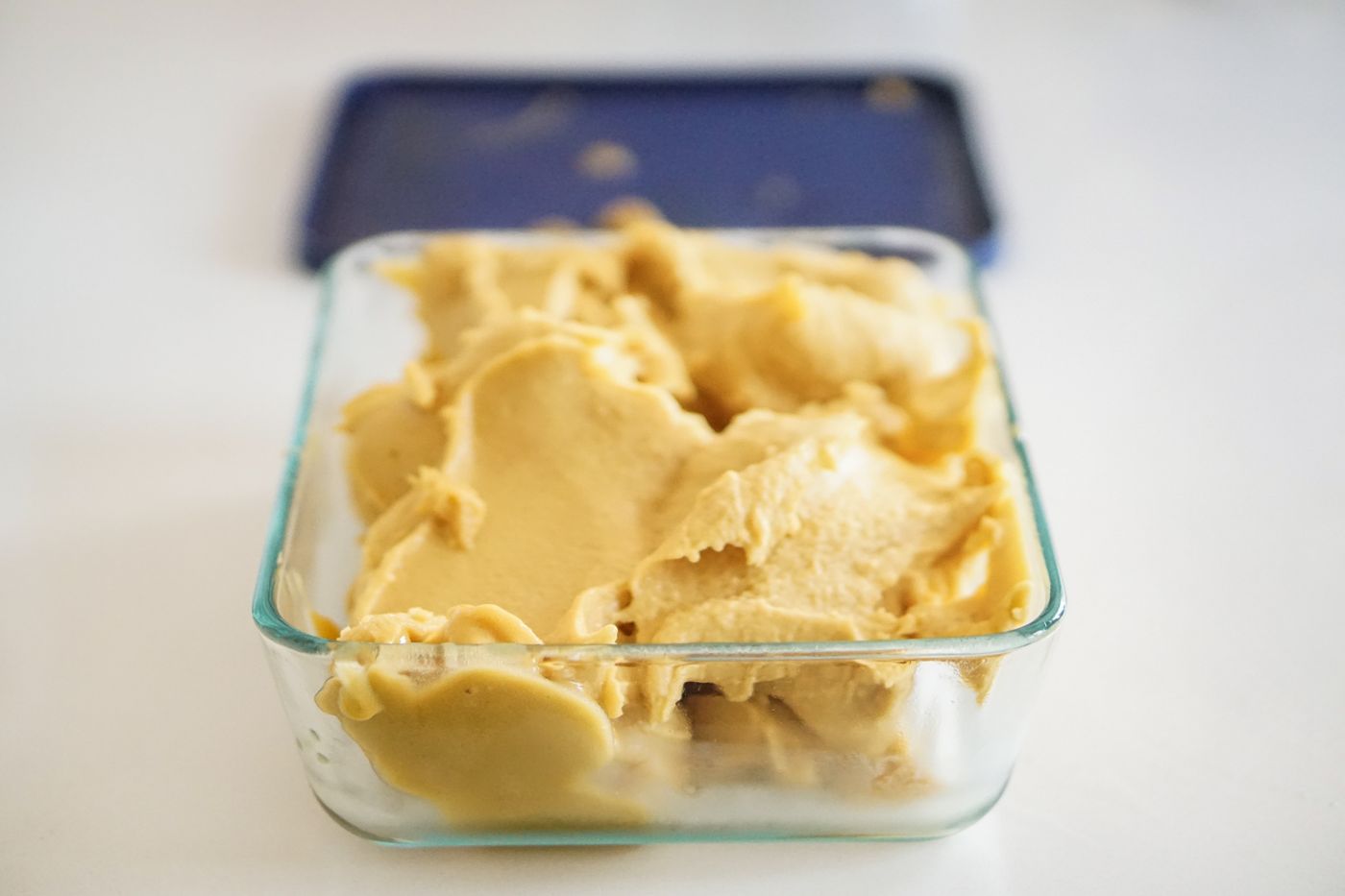
Homemade and commercial ice cream may not keep the same texture for the same time. Photo: Anna Guerrero / Pexels.
Why smooth ice cream becomes crunchy
Why does ice cream get icy in the freezer?
Fresh ice cream contains many tiny ice crystals. Small crystals feel smooth on the tongue. When the tub warms, some of the smallest crystals melt. When it cools again, that water joins larger crystals instead of rebuilding the original fine structure. The larger crystals feel hard, coarse or crunchy.
This process is called ice recrystallization. You do not need the technical term to make a good decision: every warm-cold cycle can add damage. A long car ride, a warm loading dock, a slow checkout line, an unstable retail case, frequent freezer-door opening or leaving the tub on the table during dessert can all contribute.
Seven habits that protect texture
How should you store ice cream after buying it?
See FDA’s food-storage guidance for freezer temperature, thermometer use and the distinction between freezer burn and food safety.
Opened tubs need a different rule
How long does opened ice cream last?
There is no reliable universal number of days for every opened tub. Opening changes the storage system. The surface is exposed, the air space grows as servings are removed, the lid may not close as well, and each serving session warms the top layer. A large family tub used every night may become icy sooner than a small pint opened once.
If the product stayed continuously frozen, opening mainly shortens acceptable quality. Use it while the flavor, texture and appearance are still good, and stay within the label guidance. Do not use a made-up “30 days after opening” rule as a safety guarantee.
A practical routine is simple: smooth the surface if convenient, close the lid firmly, keep the package upright, limit the time on the counter and use older open tubs before starting new ones. If the original closure is damaged or loose, place the closed tub inside a clean freezer bag or other suitable overwrap. An extra wrap helps with air and moisture exposure; it cannot undo heat shock.
Read the warning signs in context
Are ice crystals or freezer burn dangerous?
Small ice crystals and freezer burn are usually quality problems. FDA says freezer burn is caused by moisture loss from packaging that is not airtight and does not automatically make food unsafe. On ice cream, you may see a dry edge, a thin ice layer, shrinkage, a sticky surface or a stale freezer odor.
Known frozen history
If the lid stayed secure and the tub stayed frozen, a few crystals may only mean poorer texture. Use it promptly if the quality is acceptable.
Signs of melting and refreezing
A distorted surface, leakage, stains or a separated, collapsed look means the controlled history is no longer trustworthy. Discard it.
Mold or abnormal appearance
Do not scrape away the affected area or taste the product to test it. Discard the tub.
Unknown warm history
Normal smell and appearance do not reconstruct time and temperature. When in doubt, throw it out.
Power outage and refreezing rule
Can you refreeze softened or melted ice cream?
Do not deliberately refreeze softened or melted ice cream. USDA notes that soft or melted ice cream should be disposed of for quality because the refrozen texture will be coarse. For an actual power outage or freezer failure, use the product-specific government chart instead of the broad rule for many other frozen foods.
The FoodSafety.gov power-outage chart says to discard ice cream and frozen yogurt even when they still contain ice crystals and feel as cold as refrigerated food. That advice is more conservative than its guidance for meat, bread and several other frozen foods.
Keep the freezer door closed during an outage. Once power returns, do not taste ice cream to decide whether it is safe. If you are assessing other frozen foods, use the correct product row in the official chart rather than applying the ice-cream rule to everything.
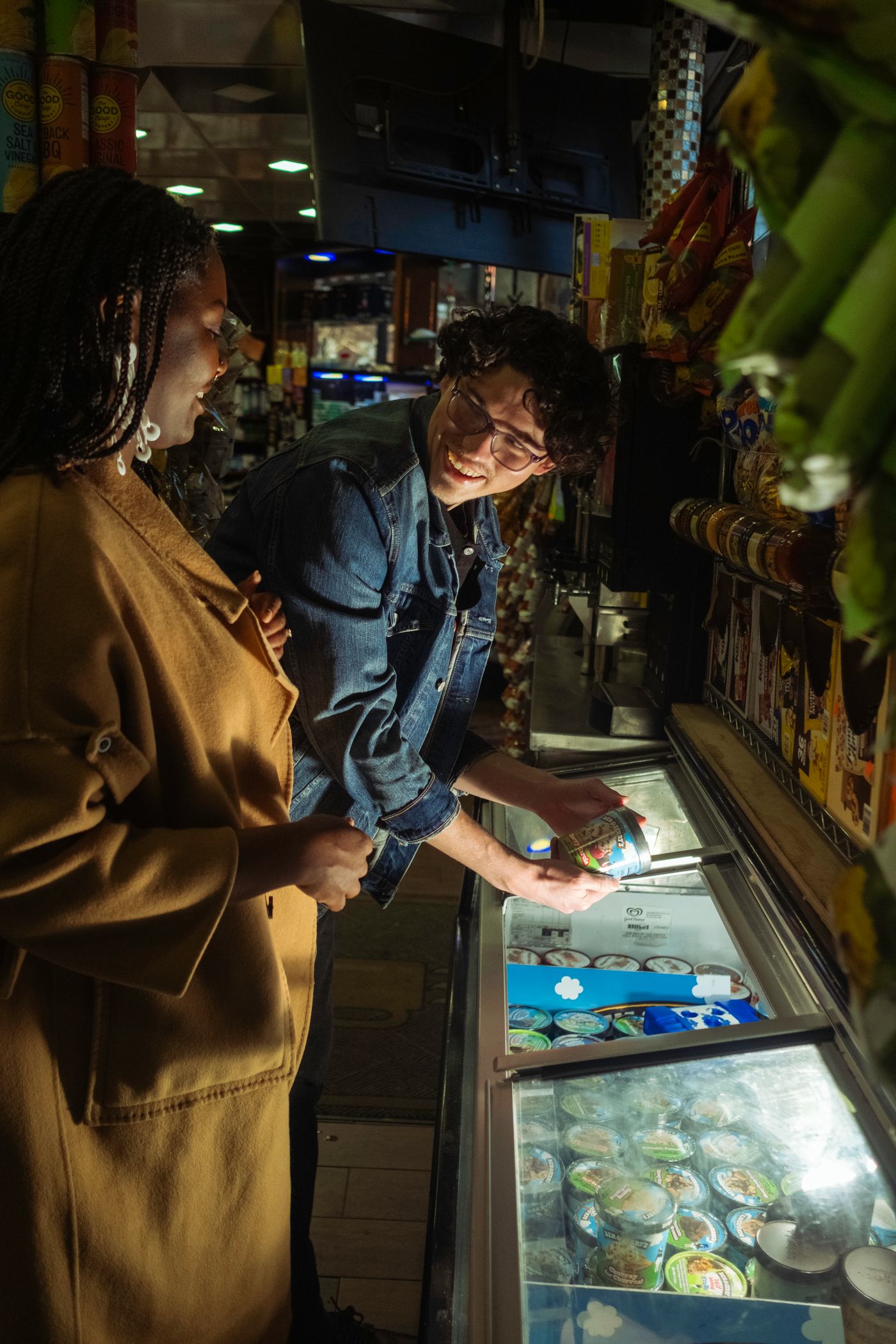
Quality loss can begin during retail or transport before the tub reaches a home freezer. Photo: Scott Foltz / Pexels.
Not every frozen dessert ages alike
Why can two ice creams have different freezer lives?
The 2–4 month range is broad because the product itself matters. Fat, sugar, protein, total solids, stabilizers, air content, fruit, cookies, nuts and sauces all affect freezing point, hardness and the way crystals grow. Package size and headspace also change how quickly the surface warms during use.
A premium dairy pint, a light ice cream, gelato, sorbet, frozen yogurt and a plant-based dessert are not one storage system. A lower-sugar or higher-protein formula may be harder or more sensitive to heat shock than a conventional formula. The brand’s validated date and storage instructions are more useful than assuming one category always lasts longer.
Homemade ice cream often hardens more slowly and may become grainy sooner. Ingredient safety also matters. FDA recommends pasteurized dairy and pasteurized eggs, egg products or a cooked egg base for recipes that contain egg. Review FDA’s homemade ice-cream safety advice rather than assuming freezing will make raw eggs safe.

For brands, co-packers and buyers
Why can’t a brand print a generic 2–4 month shelf life?
A household guide is not a commercial specification. The printed date belongs to the complete system: formula, mix treatment, freezing and hardening, fill weight, headspace, cup or carton, lid or wrapper, frozen distribution, retail display and expected consumer use. Change one important part and the evidence may need review.
The real cold chain is often more useful than the nominal setpoint. Product on a pallet edge may warm differently from product in the center. Loading delays, an uncooled vehicle, defrost cycles and a warm display case can add texture damage before purchase. A good barrier result cannot correct a weak route, and a cold route cannot correct a loose lid.
For packaging selection, start with Honokage’s live ice cream container range, then qualify the chosen construction with the actual product and process. The supplier page describes options and intended applications; final food-contact suitability, freezer performance and shelf life remain project-specific.
Package protection has clear limits
What can an ice cream package protect?
It can help protect
Moisture retention, odor resistance, lid fit, opening and reclosing, stacking, label durability and physical protection during the qualified route.
It cannot fix
Heat shock, slow hardening, an unsuitable formula, unknown warming, weak cold-chain control or ice crystals that have already grown.
Food-contact evidence must also match the intended use. FDA separates food types, including dairy emulsions, and conditions such as frozen storage. It also explains that the regulatory status of a finished material depends on each relevant component and its authorized conditions of use. A generic “food-grade PP” or “FDA approved” sentence is not the complete package assessment.
Review FDA’s food types and conditions of use and its explanation of food-contact material components. Buyers should request evidence tied to the exact cup, lid, colorant, label, ink, adhesive and contact condition.
What should an ice cream container RFQ include?
- Dairy, plant-based, sorbet, frozen yogurt or inclusion-heavy formula
- Fill weight, overrun target, headspace and filling temperature
- Cup size, shape, rim, lid, tamper feature and decoration
- Target market, frozen temperature and shelf-life claim
- Pallet, transport, retail, foodservice or e-commerce route
- Sensory, integrity, leak, stacking and frozen-impact criteria
- Food-contact documents, traceability and change-control needs
Compare a 500 ml round ice cream container with the pack geometry and consumer-use pattern in your brief; capacity alone is not enough.

Example package only. Final material, lid, decoration, food-contact status and freezer-life performance require project-specific confirmation.
Frequently asked questions
Ice cream freezer-life FAQ
Does ice cream expire in the freezer?
It can outlast peak quality. At a stable 0°F/-18°C, properly handled frozen food remains safe, but ice cream can lose smooth texture, flavor and appearance. Follow the product date and reject a tub with a damaged package or unknown warm history.
How long is opened ice cream good for?
There is no one authoritative opened-tub number. Opening increases air exposure and warm-cold cycling. Keep the lid tight, return the tub quickly and use it before flavor or texture becomes unacceptable.
Can I eat ice cream with ice crystals?
A few crystals usually show quality loss. If the package stayed closed and continuously frozen, they do not automatically mean the food is unsafe. Discard the product if it leaked, melted and refroze, or has an unknown temperature history.
Is freezer-burned ice cream safe?
Freezer burn is mainly moisture loss and a quality defect. It may produce a dry, icy or stale surface. It does not prove that a separate melt-and-refreeze event was safe.
Should ice cream be stored in the freezer door?
No. A spot toward the back normally sees less warm room air when the door opens. Stable product temperature protects creamy texture better than convenient door access.
Does a colder freezer make ice cream last longer?
A steady freezer at or below 0°F/-18°C slows quality loss, and colder commercial conditions may protect texture. But colder storage cannot reverse existing crystal growth or guarantee the same shelf life for every formula and package.
Can a freezer-safe tub guarantee shelf life?
No. A suitable tub can help with moisture, odors, lid fit and handling. The shelf-life claim still needs validation for the final formula, hardening process, complete package, cold chain, retail condition and consumer use.
For frozen-dessert brands and packagers
Need to review a tub, lid or freezer-life test plan?
Share the dessert type, target capacity, fill weight, filling and hardening process, storage temperature, cold-chain route, desired shelf life, lid or sealing requirement, decoration and destination market. Honokage can discuss container options and the package tests needed for the selected specification.
Start with the supplier’s testing overview, then agree on project-specific acceptance limits. A container test alone does not validate the food’s printed shelf life.
Sources and scope
Key sources include FDA freezer-storage and food-contact guidance, USDA freezing guidance, FoodSafety.gov’s power-outage chart, the University of Nebraska–Lincoln home-storage chart, the National Center for Home Food Preservation and FDA’s homemade ice-cream advice. The guidance is centered on U.S. consumer sources; foodservice and commercial rules vary by jurisdiction.
Use this page as general storage and packaging education. The exact product label, local food-safety requirements and a product-specific shelf-life study take priority. If the package is leaking, the product has mold, or its warm history is unknown, discard it rather than tasting it.