


Quick answer
How long does butter last at room temperature? Use one to two days only as a conditional working window for a small amount of plain salted butter in a covered dish below 70°F (21°C).
University of Nebraska-Lincoln defines the room-temperature range behind its storage chart as 50–70°F (10–21°C) and lists butter at one to two days. University of Maine’s 2026 type-specific guidance narrows the practical case to salted butter protected from heat, light and air. It recommends refrigeration for longer storage and for unsalted, cultured, whipped and compound butter.
The useful rule: keep most butter refrigerated, portion only what you will use soon, keep that portion covered and clean, and switch back to refrigeration whenever the product type, temperature or label instruction is uncertain.
Three questions decide whether the countertop rule applies
Type-by-type decision
Which butter can stay at room temperature?
Products casually called “butter” do not share one composition or storage direction. Use the short table as a first decision, then follow the exact package when it is more restrictive.
This table is a household decision aid, not a commercial shelf-life specification. Product formulation, label directions and local requirements remain controlling.
Define the condition
What does “room temperature” mean for butter?
Room temperature is not a universal number. The University of Nebraska-Lincoln home-storage chart defines it as a pantry or cupboard at 50–70°F (10–21°C). Its one-to-two-day butter entry is therefore a cool-room recommendation, not permission for every kitchen counter in every season.
The difference matters in a warm apartment, summer kitchen, food truck, bakery production room or countertop beside a range. Heat softens the fat structure and accelerates quality loss. Direct sunlight adds heat and light exposure. If the environment rises above the cited range, do not try to turn the general guidance into an unsupported formula such as “half the time at 80°F.” Refrigeration is the defensible default.
The clock is cumulative in practical terms. Repeatedly warming and chilling the same stick creates repeated handling, oxidation and contamination opportunities. Portioning a small amount is easier and more reliable than trying to maintain a multi-day exposure log.
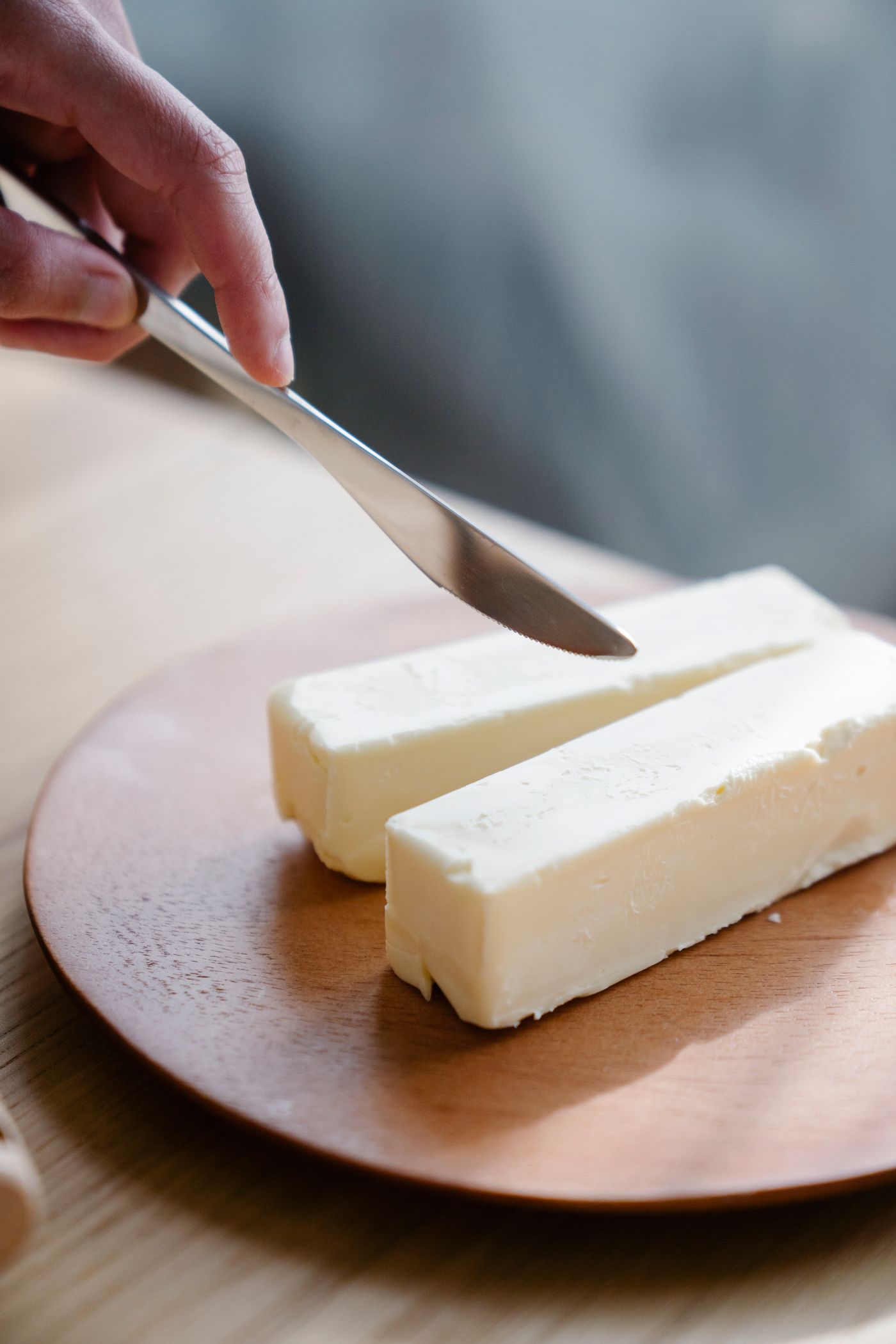
Portioning preserves the refrigerated reserve and avoids cycling an entire package. Image: Felicity Tai / Pexels.
Why butter is different from milk
Why can plain salted butter tolerate a short counter hold?
USDA describes butter as a product made by churning milk or cream and requiring at least 80 percent milkfat. During manufacture, the fat phase becomes continuous around small water droplets. This high-fat, relatively low-moisture structure makes ordinary butter different from liquid milk or cream.
Salt also matters. University of Maine explains that salted butter is the common type most tolerant of brief room-temperature storage because added salt, high fat and low moisture help slow microbial and oxidative deterioration. That mechanism supports a limited household practice; it does not make butter permanently shelf-stable.
The details can change with moisture distribution, salt concentration in the water phase, processing, formulation and handling. That is why a garlic-herb compound butter is not simply “the same butter with flavor.” Added ingredients can introduce moisture and microorganisms and create a product with different storage needs.
Quality and safety are separate layers
Is rancid butter the same as unsafe butter?
Rancidity is usually a quality failure caused by changes in fat, especially oxidation or hydrolysis. The butter may smell stale, paint-like, soapy or otherwise unpleasant; flavor and color may also change. Heat, light, oxygen and time accelerate deterioration. USDA Agricultural Research Service work found that storage time, temperature and package form all affected butter flavor and oxidation-related measurements.
Food safety is a different question: did the exact product follow its storage instruction, was it protected from contamination, and is the handling history known? The two layers can overlap, but a normal smell cannot clear a product that was mishandled or stored contrary to its label. Sensory judgment is useful for detecting an obvious quality failure, not for issuing a microbiological safety certificate.
Conservative household boundary: if you cannot verify the butter type, room condition, duration or package instruction, refrigeration is the better default; discard when the handling history or product condition makes continued use questionable.
Seven-step household routine
How should you store butter on the counter?
This workflow applies only to plain commercial salted butter, a cool room and no stricter label direction. Its purpose is convenient spreadability, not long-term preservation.
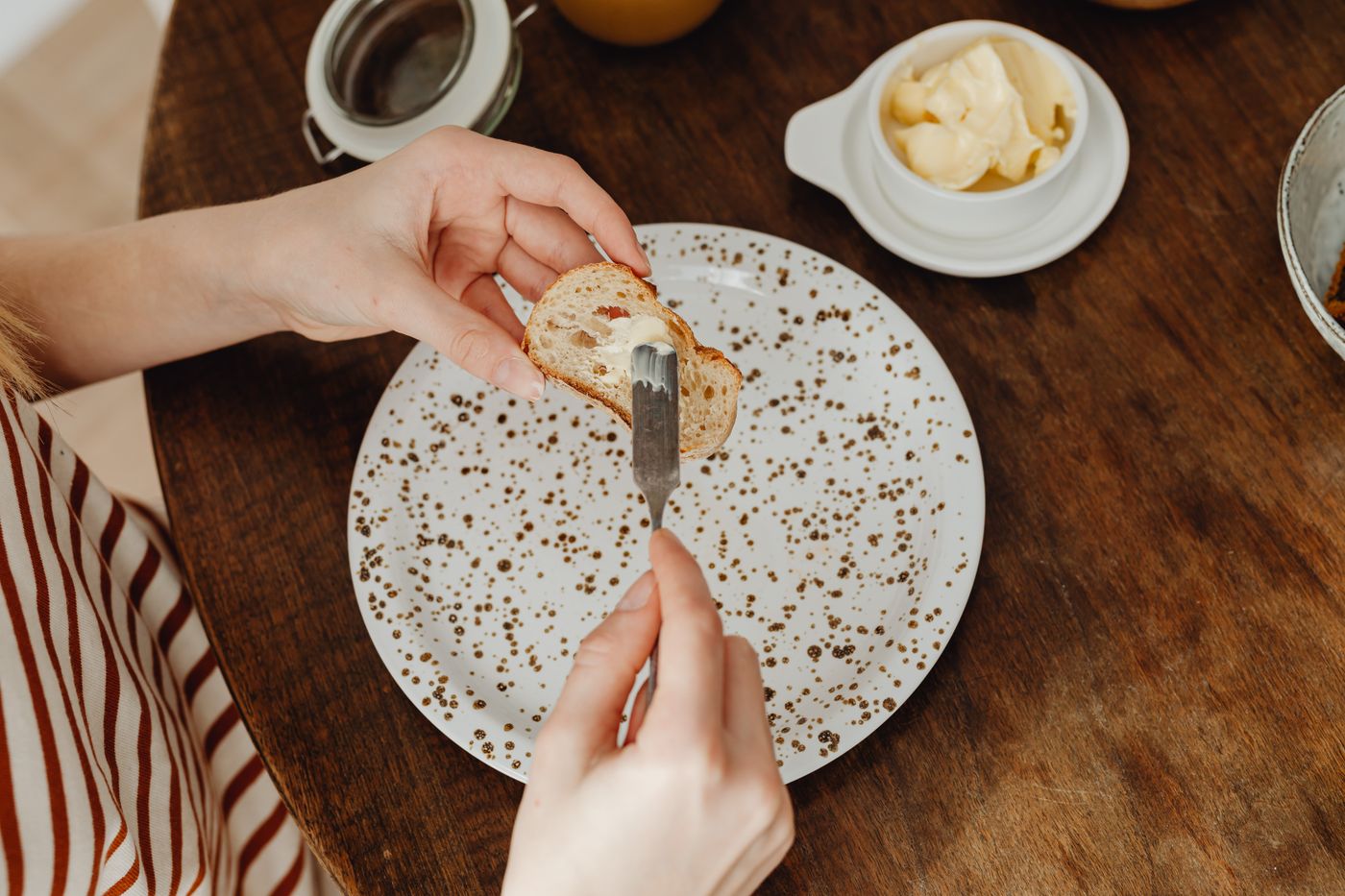
Countertop butter is a short serving convenience, not a long-term inventory. Image: Kaboompics.com / Pexels.
Common household scenarios
What if butter was left out overnight?
“Overnight” is not enough information. Ask which butter, how warm the room was, whether it was covered, how it was handled and what the exact package says. A small covered portion of plain salted butter in a room that stayed below 70°F can still fall inside the one-to-two-day general window. The same answer should not be used for every product.
Salted, covered, cool room
The overnight period may be within the general short window. Count it as part of the total exposure and use promptly.
Unsalted or whipped butter
Do not borrow the salted-butter allowance. Refrigeration is the stated default for these categories.
Garlic or herb compound
Added ingredients change the moisture and contamination profile. Keep compound butter refrigerated.
Warm or unknown kitchen
The cool-room premise is missing. Use the conservative product instruction rather than assuming overnight is acceptable.
Can you put it back in the refrigerator? Re-chilling a small portion may be reasonable only when it remained within the product’s applicable guidance, but cooling does not erase prior exposure. The better routine is to leave the reserve cold and avoid cycling the same stick every day.
Holder versus preservation system
Does a butter bell or covered crock make butter last longer?
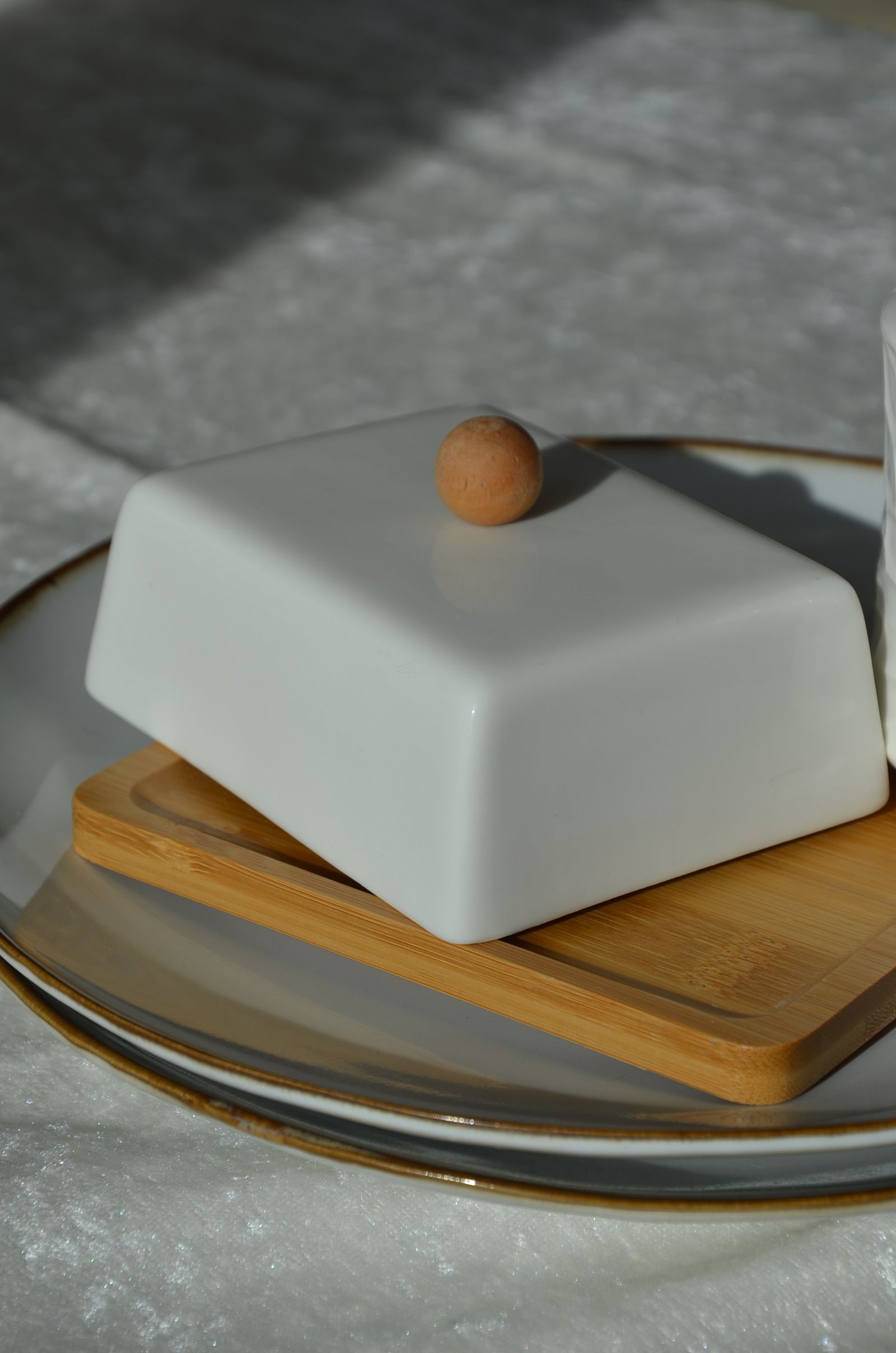
A covered holder has a useful but limited job. It can reduce exposure to light, air, dust, crumbs, odors and accidental handling. A clean dish also makes the working portion easier to manage. Those benefits protect quality; they do not change the butter type or make a warm kitchen cooler.
A water-seal butter bell introduces its own cleaning and handling requirements. Follow the holder manufacturer’s directions, keep the vessel clean, use potable water when instructed and do not assume the design extends the butter’s approved time. If the kitchen is warm or the product is unsalted, whipped, cultured or compound, use refrigeration.

Packaging boundary
Can a butter tub make refrigerated butter shelf-stable?
No package makes an unvalidated product shelf-stable by itself. A wrapper, rigid tub, lid, lidding film or IML-decorated container can protect against light, oxygen, odors, handling damage and foreign material. It can support reclosure, portioning, label clarity and lot traceability. The storage claim still belongs to the complete product-package system.
FDA explains that the regulatory status of a food-contact article depends on the authorized status, specifications and limitations of each substance reasonably expected to migrate under the intended conditions of use. Butter and spreads are fatty dairy foods, so buyers need documentation for the actual container, lid, label, ink, adhesive, colorant and use condition—not a generic “FDA-approved plastic” statement.
The intended storage condition matters as well. FDA’s food-contact reference distinguishes room-temperature, refrigerated and frozen storage. A material authorization for one food type or condition is not automatically evidence for every other condition. Product quality adds another layer: USDA ARS research found that time, temperature and package type affected stored-butter flavor and oxidation-related measurements.
Review Honokage’s live butter container range, testing overview and example 250 ml IML butter container as starting points. Treat website specifications as supplier information that must be confirmed for the selected construction, food, market and production lot.
What should a butter packaging brief include?
- Product definition: salted, unsalted, cultured, whipped, compound, clarified or spread
- Salt, add-ins, fat/moisture profile and relevant formulation controls
- Fill process, pack temperature and sanitation controls
- Refrigerated, frozen or proposed ambient storage profile
- Container, lid/lidding, IML, inks, adhesives and colorants
- Light, odor, oxidation, closure and distribution challenges
- Destination-market documents, label instruction and shelf-life evidence
- Sample quantities, acceptance criteria, forecast volume and change control

Sample inspection is one step. Product-specific food-contact, closure, distribution and shelf-life evidence still requires a defined validation plan.
Myths that create weak storage decisions
Five room-temperature butter myths
Frequently asked questions
Butter storage FAQ
Can butter sit out overnight?
A small covered portion of plain commercial salted butter in a room that stayed below 70°F can fall within the one-to-two-day general window. Do not use this answer for other types, warm conditions or a stricter package instruction.
Is salted butter safe at room temperature?
Current University of Maine guidance allows a short counter hold below 70°F when salted butter is covered and protected from heat, light and air. Refrigeration remains best for the reserve and longer storage.
Does unsalted butter last as long on the counter?
No. The type-specific 2026 guidance recommends refrigerating unsalted butter and removing it only briefly to soften or serve. A covered dish does not turn it into salted butter.
How much butter should I leave out?
Leave out only the amount of plain salted butter you realistically will use within one or two days. In a warm kitchen, soften only what is needed for the immediate meal or recipe.
Can I refrigerate butter again after it sits out?
Only when the portion remained within the applicable product guidance; re-chilling does not reset its history. Avoid cycling the same stick daily by keeping the reserve cold and portioning small.
How do I know when butter should be thrown away?
Discard butter with visible mold, unmistakable rancid or abnormal odor, marked discoloration, dirty-utensil contamination or a known storage problem that cannot be resolved from the label or producer guidance.
Is ghee the same as butter for counter storage?
No. Clarification removes most water and milk solids, creating a different product. Follow the ghee label for sealed and opened storage; do not use ghee guidance to justify leaving ordinary butter out.
Can compound garlic butter stay out?
Keep it refrigerated. Herbs, garlic and other additions can introduce moisture and microorganisms, so plain salted-butter guidance does not transfer to a compound product.
Turn the real storage target into a packaging brief
Discuss a butter or spread container around the exact product and cold chain
Share the butter type, salt and add-ins, fill process, target storage and distribution temperatures, lid or lidding concept, destination market, shelf-life objective, artwork, documentation needs and forecast volume. Honokage can use those inputs to discuss an existing format or a custom project; the container alone does not establish an ambient shelf-life claim.
Final recommendation
Use one to two days as a narrow convenience window, not a universal promise
For a cool household, a small covered portion of plain commercial salted butter can be used within one to two days below 70°F. Keep the main package refrigerated. For unsalted, whipped, cultured or compound butter, margarine, a warm kitchen, slow use, unclear handling or a stricter label instruction, refrigeration is the right default.
The same distinction protects brands and buyers. A tub, wrapper or lid may improve quality protection, presentation and handling, but it cannot issue a shelf-life claim. Only the exact formulation, process, complete pack, stated storage profile and market-specific evidence can support that decision.
Sources and further reading
- University of Maine Cooperative Extension: Is It Actually Safe to Leave Butter on the Counter? — 2026 type-specific guidance for salted, unsalted, cultured, European-style, whipped and compound butter and ghee.
- University of Nebraska-Lincoln: Home Food Storage — defines room temperature as 50–70°F and lists butter at one to two days.
- USDA Agricultural Marketing Service: Butter Grading — butter manufacture, minimum 80 percent milkfat and common product types.
- FDA: Are You Storing Food Safely? — refrigerator temperature, label checking, coverage and conservative handling guidance.
- USDA Agricultural Research Service: Characterization of the Effect of Storage on Butter — time, temperature, package form, flavor and oxidation-related measurements.
- FDA: Determining the Regulatory Status of Components of a Food Contact Material — authorization, specifications and conditions-of-use limits for complete food-contact articles.
- FDA: Food Types and Conditions of Use for Food Contact Substances — fatty dairy food categories and the distinction among room-temperature, refrigerated and frozen storage.
Editorial note: this article is general U.S.-oriented household and packaging information. It does not replace the exact product label, manufacturer direction, local food-safety requirement, medical advice or a validated commercial shelf-life programme.