


Fast decision
Keep refrigerated yogurt at 40°F (4°C) or below. Refrigerate it promptly if its total warm exposure remains within the applicable limit. If it has been warm too long, do not taste, smell or re-chill it to test safety—throw it away.
Remember three numbers
40°F
4°C or below: cold storage target for refrigerated yogurt.
2 hours
At 90°F or below: maximum cumulative time without reliable cold holding.
1 hour
Above 90°F: the shortened hot-weather limit.
In this guide
Yogurt safety decision table
This table is for products sold and labeled as refrigerated. When the label gives stricter storage directions, follow the label.
| Situation | Safe action | Why |
|---|---|---|
| Under 2 hours at 90°F (32°C) or below | Refrigerate promptly | It remains within the general consumer limit if all earlier warm periods are included. |
| Over 2 hours | Discard | FoodSafety.gov specifically lists yogurt for discard after more than two hours above 40°F (4°C). |
| Over 1 hour above 90°F (32°C) | Discard | FDA and CDC shorten the limit in hot conditions such as a car, picnic or sunny bag. |
| Left out overnight | Discard | The exposure is far beyond either consumer limit; smell and appearance cannot clear it. |
| Time or temperature unknown | Discard | There is no defensible way to show that the yogurt stayed within the limit. |
| Label says shelf-stable; unopened pack is sound | Follow the label | Shelf stability is a product-specific processing and packaging condition, not a property of every yogurt pouch or cup. |
What to do when you discover yogurt sitting out
Do not start by opening the cup. First reconstruct the cold history as accurately as you can. A quick, consistent process reduces guesswork and helps you avoid saving a low-value food when the evidence is poor.
1. Identify the product
Read the storage statement. Confirm whether it is normal refrigerated yogurt or an unopened product explicitly labeled for shelf-stable storage.
2. Establish the last known cold time
Use a receipt, delivery message, lunch period or another reliable event. Include travel, serving and earlier counter time—not only the most recent episode.
3. Check the hot-weather limit
Ask whether the yogurt was in air above 90°F, including a parked vehicle or direct sun. In that case, use one hour instead of two.
4. Make one clear decision
Refrigerate promptly only when the full history remains inside the limit. Discard when the limit was crossed or the history cannot be established.
Be especially conservative when serving a child under five, an adult aged 65 or older, a pregnant person, or someone with a weakened immune system. These groups have a higher risk of serious illness from foodborne infection. If someone develops severe symptoms after eating a questionable food—such as bloody diarrhea, repeated vomiting, dehydration, a high fever or symptoms during pregnancy—seek advice from a qualified healthcare professional rather than using this article to diagnose the cause.
The two-hour clock is cumulative
Add every period the yogurt spends outside controlled refrigeration. Putting it back into the refrigerator slows further warming and growth; it does not erase the exposure that already happened.
Grocery trip
35 min
Breakfast table
+ 30 min
Desk or tote
+ 55 min
Cumulative time
120 min
This example explains how to add time; it does not claim that every formulation follows an identical microbial growth curve. When history is uncertain, use the conservative discard decision.
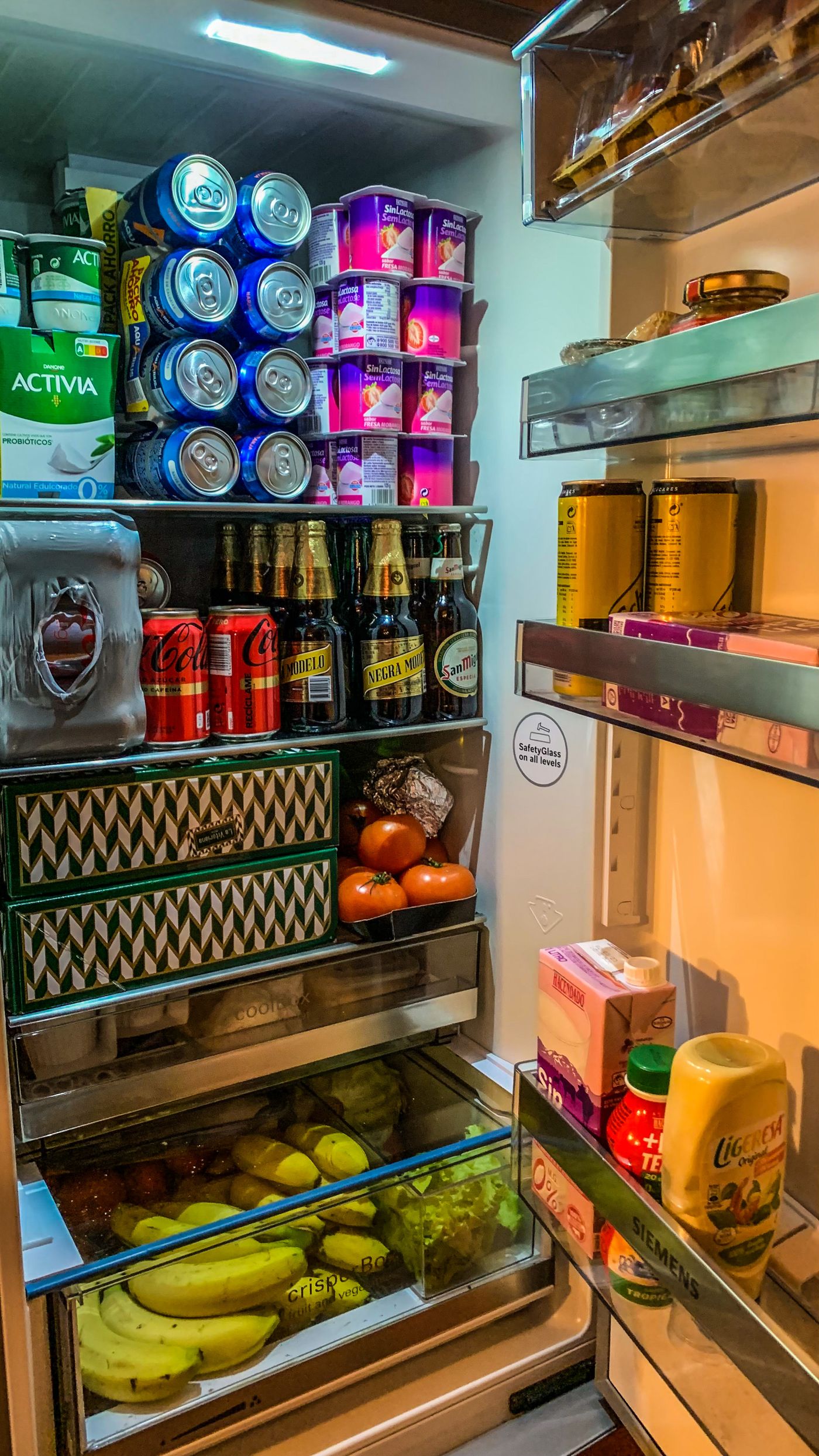
Use an appliance thermometer when possible; a refrigerator display or cool-feeling cup is not always a reliable product-temperature measurement. Photo: José Antonio Otegui Auzmendi via Pexels.
Why smell, acidity and live cultures do not override the rule
Yogurt is acidic because starter cultures convert milk sugar into lactic acid. FDA’s U.S. standard requires finished yogurt to have a pH of 4.6 or lower. That is part of a controlled manufacturing standard; it is not permission to leave ordinary refrigerated yogurt at room temperature.
Commercial safety relies on ingredients, pasteurization where applicable, controlled fermentation, hygienic filling, packaging, refrigeration and a validated shelf life working together. Live cultures are not an unlimited protective shield. Greek, high-protein, probiotic, low-sugar and plant-based cultured products should be treated according to their refrigeration label rather than their thickness or marketing description.
Smell and appearance also cannot prove safety. Spoilage may create mold, gas, swelling, leakage or an off odor, but disease-causing organisms do not always cause a visible or detectable change. FDA notes that food can cause illness even when it does not look, smell or taste spoiled.
Do not taste questionable yogurt. If its time-temperature history fails the rule, discard it. Chilling, freezing, cooking or blending it into another food does not turn an uncertain product history into a verified safe one.

An intact seal limits new contamination and leakage, but it does not keep refrigerated yogurt cold by itself.
Common situations: counter, car, picnic, buffet and delivery
Start with the same two questions: Was the yogurt held at 40°F (4°C) or below, and how much cumulative time did it spend warmer than that? Then account for the environment.
Breakfast counter
Serve one portion and return the large tub immediately. Include preparation and eating time in the total.
Grocery bag or car
Buy cold foods last, use an insulated bag with cold sources and go directly home. A hot car invokes the one-hour rule.
Picnic or sports field
Start cold, keep the cooler shaded and closed, and use adequate ice or gel packs. Direct sun accelerates warming.
Buffet or event
Set out small batches, maintain cold holding and record time. Replace pans rather than topping up old product.
Delivery tote
Use a qualified pack-out, defined refrigerant, route time and handoff limit. An insulated tote is not proof without test data.
Unknown doorstep dwell
If the receiver cannot show that cold holding or the applicable time limit was maintained, use the written rejection or discard rule.
How to keep yogurt safe in a lunch box or cooler
- Start cold. Move yogurt directly from a refrigerator at 40°F (4°C) or below into the travel pack.
- Use an insulated bag or cooler. A decorative tote, paper bag, backpack pocket or car cup holder is not a cold-holding system.
- Add at least two cold sources. USDA recommends two frozen gel packs, or a frozen gel pack plus a frozen drink, around perishable lunch food.
- Keep raw foods separate. In a shared cooler, use leak-proof separation so ready-to-eat yogurt cannot contact raw juices.
- Keep the cooler shaded and closed. Each opening and every minute in direct sun adds heat.
- Refrigerate on arrival. If a refrigerator is available at school or work, use it instead of leaving yogurt in a locker or desk.
- Discard uncertain leftovers. Do not save a partially eaten cup from an uncooled lunch for the trip home.
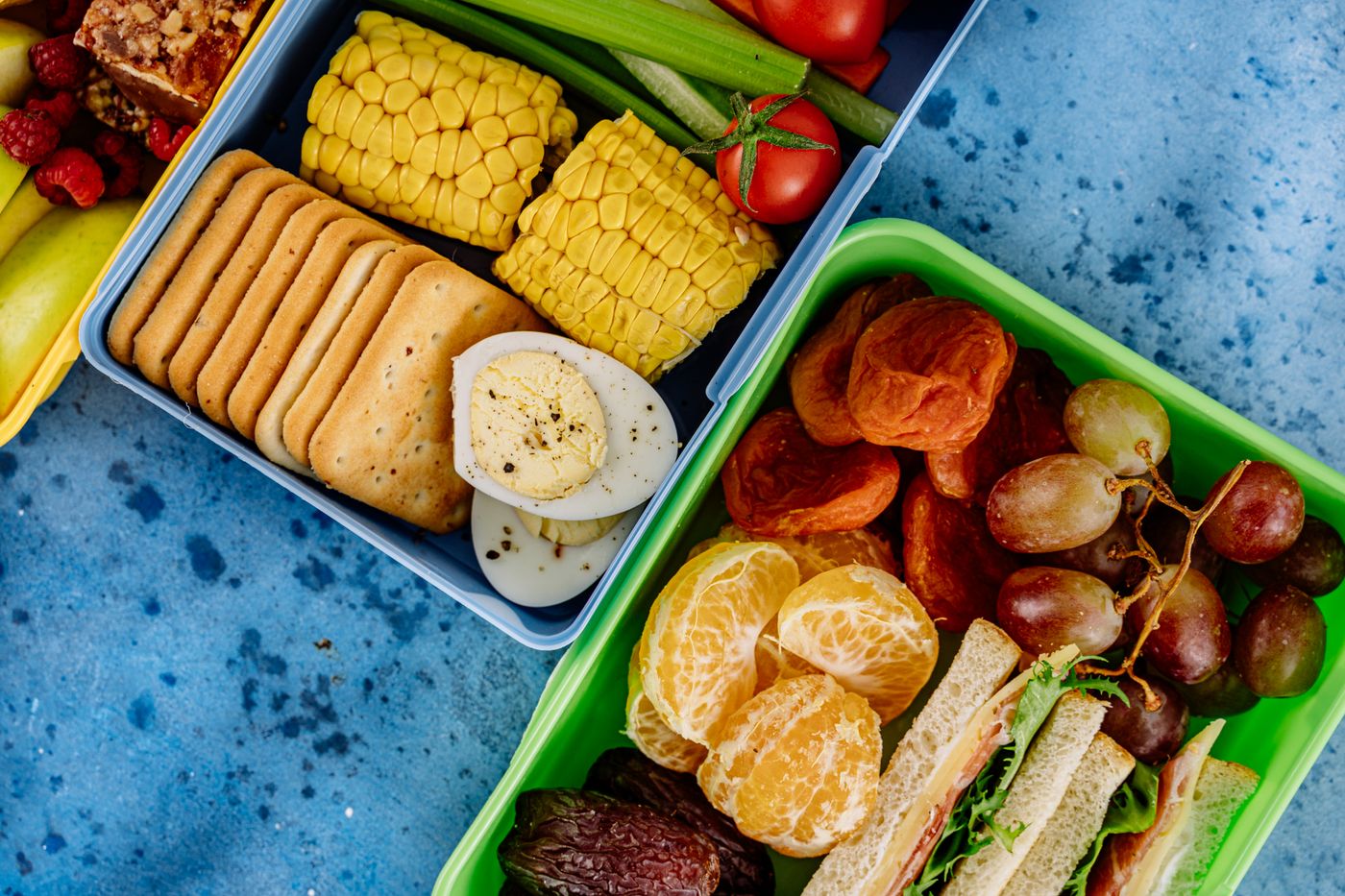
A balanced lunch still needs temperature control when it contains yogurt or another perishable food. Photo: Adventure Studio via Pexels.
What if the power goes out?
Keep refrigerator and freezer doors closed. An unopened refrigerator may remain cold for a limited time, but outage duration and yogurt time above 40°F are not the same measurement. Use an appliance thermometer or product-temperature evidence when available.
FoodSafety.gov specifically directs consumers to discard refrigerated yogurt after it has been exposed to 40°F (4°C) or above for more than two hours. Never taste outage-affected food to decide whether it is safe.
Frozen yogurt is different: The government’s frozen-food outage chart lists ice cream and frozen yogurt for discard even when they still contain ice crystals and feel refrigerator-cold. Use the product-specific frozen-food chart rather than applying ordinary chilled-yogurt advice.
Product differences and important exceptions
| Product type | What changes | Safe interpretation |
|---|---|---|
| Regular refrigerated yogurt | Plain, flavored, Greek, strained or high-protein | Use the two-hour / hot-weather one-hour limit and label instructions. |
| Refrigerated plant-based cultured product | Base and formulation differ | Treat as refrigerated perishable food unless the label establishes another condition. |
| Shelf-stable commercial yogurt | Validated processing and packaging allow ambient storage before opening | Follow the unopened storage statement, date and after-opening directions exactly. |
| Homemade yogurt | Process and cooling controls vary | Use pasteurized milk and a tested method; cool promptly and use the conservative time rule. |
| Raw-milk yogurt | Starting milk may carry serious pathogens | CDC recommends pasteurized dairy; fermentation is not a substitute for pasteurization. |
| Frozen yogurt | Frozen product and outage rules differ | Use current frozen-food guidance; do not apply chilled-yogurt handling blindly. |
Opened versus unopened yogurt
For ordinary refrigerated yogurt, an intact foil seal does not extend the room-temperature clock. It helps prevent new contamination, leakage and handling damage; it does not refrigerate the contents. Apply the same two-hour or hot-weather one-hour limit unless the product label explicitly identifies the unopened item as shelf-stable.
After opening, add hygienic handling: use a clean spoon, keep hands and raw foods away, reclose promptly and avoid repeated warm exposure. A partially eaten cup adds saliva and utensil contact, so it should not be saved when the cold history is uncertain.

What brands, retailers and foodservice teams must control
The household two-hour rule is a public-facing decision tool. Commercial operators need a documented cold-chain system that prevents the product from reaching that uncertain point. Define receiving, storage, staging, display, delivery and corrective action.
Receiving
Maximum product temperature, lot/date and seal inspection, calibrated measurement and rejected-load response.
Cold storage
Target and alarm limits, probe location, door discipline, calibration, records and backup-power response.
Picking and loading
Maximum staging time, summer/winter profile, carton or pallet pattern, refrigerant and dispatch timestamps.
Delivery
Qualified vehicle or shipper, data logger, handoff time, doorstep dwell, customer notice and rejection rule.
Foodservice display
Cold-holding method, batch size, time marking, utensil hygiene and written discard procedure under local requirements.
Packaging and label
Storage statement, tamper evidence, seal integrity, opening/reclosure and readable instructions after condensation.
FDA’s Food Code is a model for retail and foodservice jurisdictions. Its controlled time-as-a-public-health-control procedures require written controls, starting conditions, marking and discard actions; they should not be presented as a casual four- or six-hour household rule.
Developing a refrigerated yogurt packaging project?
Packaging cannot replace refrigeration, but it can support seal integrity, tamper evidence, label clarity, case handling and a validated delivery system. Share the product type, storage range, cup size, filling and sealing process, route duration, climate profile, target market and annual volume for a packaging feasibility discussion.
Frequently asked questions
How long can yogurt sit out at room temperature?
Refrigerated yogurt can sit out for up to two cumulative hours when the air temperature is 90°F (32°C) or below. Above 90°F, the limit is one hour. Refrigerate promptly within the limit; discard after it or when time is unknown.
Can I eat yogurt left out for three hours?
No. Three hours exceeds the general two-hour limit. Discard it even if it is unopened, looks normal or feels slightly cool. Refrigeration afterward does not erase the exposure.
What if yogurt was left out overnight?
Discard it. Overnight exposure is far beyond the safe consumer limit. Do not taste or smell it to decide, and do not attempt to make it safe by chilling or freezing it.
Does unopened yogurt last longer outside the refrigerator?
Not if it is ordinary refrigerated yogurt. A seal controls new contamination but not temperature. Use the same limit unless the label specifically permits unopened ambient storage.
Can Greek yogurt sit out longer?
Do not assume so. Refrigerated Greek yogurt follows the same consumer time-temperature rule unless its manufacturer supplies a different validated storage direction. Thickness is not a safety test.
Can I put yogurt back in the fridge after it sits out?
Yes, when cumulative exposure remains within two hours at 90°F or below, or one hour above 90°F, and the product is otherwise acceptable. If the limit was exceeded or history is uncertain, discard it.
Can smell tell me whether yogurt is safe?
No. Mold, swelling or odor can reveal clear spoilage, but harmful organisms may not create obvious sensory changes. Never taste questionable yogurt to test it.
Is shelf-stable yogurt safe without refrigeration?
Only when the commercial label specifically permits unopened room-temperature storage and the package remains sound. Follow its temperature, date and after-opening directions. Do not infer shelf stability from package shape.
Technical sources
This article gives general U.S.-oriented consumer food-safety guidance. It is not medical advice, a product-release decision or a substitute for the package label, local health rules or a manufacturer-validated shelf-life and cold-chain plan.
- FDA: Are You Storing Food Safely? — two-hour rule, hot-weather one-hour limit and 40°F refrigeration target.
- CDC: Preventing Food Poisoning — danger-zone and prompt-refrigeration guidance.
- FoodSafety.gov: Food Safety During a Power Outage — specific refrigerated-yogurt discard decision.
- FoodSafety.gov: Frozen Food and Power Outages — separate ice cream and frozen-yogurt rule.
- USDA FSIS: Keeping Bag Lunches Safe — insulated lunch bags and at least two cold sources.
- FDA: Yogurt Standard of Identity Update — finished-yogurt pH requirement and manufacturing context.
- CDC: Raw Milk — why pasteurized dairy is the safer choice.