


You want to store butter the way chefs do, right? Chefs use refrigeration, freezing, or even room temperature based on how quickly the butter gets used and the kitchen’s conditions. The right temperature and a good container help keep butter fresh and tasty. If you keep butter in the fridge, it stays good for months, while freezing stretches its life to a year. Choosing the best spot and wrapping it well can protect flavor and prevent spoilage.
Key Takeaways
- Keep butter in the coldest spot in the fridge. Do not put it in the door. This helps butter stay fresh for months.
- Wrap butter tightly in its own wrapper. You can also use a container that closes tightly. This stops smells and keeps butter from going bad.
- Put butter in the freezer if you want to keep it for a long time. Butter can stay good for up to a year in the freezer. It will not lose its taste or texture.
- Use butter crocks or dishes to keep butter soft. This makes it easy to spread at room temperature for a few days.
- Always check the temperature. Keep butter under 70°F if it is not in the fridge. This stops it from going bad.
How Chefs Store Butter in the Fridge

Best Fridge Placement
You want your butter to stay fresh and delicious, so where you put it in the fridge matters a lot. The best spot is the coldest part of your fridge, usually near the back on a middle or lower shelf. Avoid the fridge door. The door gets warm every time you open it, which makes butter soften and firm up again and again. This can cause spoilage, rancid flavors, and even a grainy texture. If you store butter in the main compartment, you keep it at a steady temperature and help it last longer.
Tip: Keep your fridge between 32°F and 40°F (0°C to 4°C). This range helps prevent spoilage and keeps your butter at its best.
Preventing Odor and Spoilage
Butter loves to soak up smells from other foods in your fridge. You do not want your toast tasting like last night’s leftovers! Chefs use a few smart tricks to keep butter fresh and odor-free. Here is a quick look at the best methods:
| Method | Description |
|---|---|
| Proper wrapping | Keep butter wrapped tightly in its original paper or use an airtight container. |
| Use of butter bell | A butter bell seals butter off from air with water, blocking odors. |
| Coldest part of the fridge | Store butter in the coldest area, not the door, to avoid temperature swings. |
You can also:
- Use a good butter container to keep air away.
- Divide butter into smaller portions and wrap each stick in parchment paper, foil, or plastic wrap.
- Store wrapped butter in an airtight container for daily use.
- Freeze extra portions and thaw them in the fridge when you need them.
If you follow these steps, you can store butter for up to three months without losing flavor or freshness. Unsalted butter lasts about one month in the fridge, while salted butter can go up to three months.
Wrapping and Packaging Tips
How you wrap your butter makes a big difference. Chefs often keep butter in its original packaging, which is designed to protect against air and moisture. If you need to rewrap, here are some top choices:
| Packaging Material | Key Properties | Best Use Case |
|---|---|---|
| Laminated Materials | Layers protect against gas and moisture. | Long-term storage. |
| Aluminum Foil | Blocks light, moisture, gases, and odors. | Everyday use and general storage. |
| Vegetable Parchment | Grease-resistant, some odor protection. | Short-term storage. |
| Wax-Coated Papers | Moisture-resistant, flexible. | Small portions or single servings. |
| Modern Flexible Films | Airtight, lightweight, cost-effective. | Extended shelf life in the fridge. |
You can also use leftover butter wrappers to cover small dishes. Press the edges down to keep air out. The little bit of butter left on the wrapper helps it stick and seals in freshness.
Note: Always store butter in an airtight container or wrap it tightly. This keeps out air and moisture, which helps your butter stay fresh and tasty.
If you store butter the right way in the fridge, you get the best flavor and texture every time you cook or bake.
Freeze Butter for Long-Term Storage
Freezing is the best way to keep butter fresh for a long time. You can freeze butter for months without losing flavor or texture. Chefs love this method because it saves money, reduces waste, and always keeps butter on hand for baking or cooking.
When to Freeze Butter
You should freeze butter if you buy in bulk, find a great sale, or just want to keep extra sticks for later. Freezing works well for both salted and unsalted butter. If you do not plan to use your butter within a month or two, pop it in the freezer.
Here’s a quick look at why freezing is so effective:
| Advantage | Description |
|---|---|
| Extended Shelf Life | Freezing butter allows it to last up to a year when stored properly. |
| Maintains Quality | Butter can last 6-9 months in the freezer while maintaining its best quality. |
| No Impact on Taste/Texture | Freezing does not affect the taste or texture of butter, making it ideal for long-term storage. |
You can see that freezing keeps butter safe and tasty for a long time. Most home cooks and chefs agree—this is the best way to store butter if you want to keep it fresh.
Freezing and Thawing Steps
You want your butter to taste just as good after freezing as it did before. Here’s how you do it:
- Portion the Butter
Cut butter into sticks, cubes, or even tablespoon-sized pieces. This makes it easy to grab just what you need later. - Wrap It Up
Use the original wrapper if you have it. If not, wrap each piece tightly in aluminum foil, plastic wrap, or freezer paper. For extra protection, place the wrapped butter in a resealable freezer bag or airtight container. - Label and Date
Write the date on the package. This helps you use the oldest butter first. - Freeze
Place the butter in the coldest part of your freezer.
Tip: Save used butter wrappers. Flatten them and keep them in a resealable bag in your freezer. You can use these wrappers to separate layers of food or to wrap small pieces of butter.
When you need butter, move it from the freezer to the fridge. Let it thaw overnight. If you need it fast, cut off a small piece and let it sit at room temperature for about 30 minutes.
Here’s a table to help you know how long you can freeze different types of butter:
| Type of Butter | Duration in Freezer |
|---|---|
| Stick Butter | 8–12 months |
| Bulk Blocks | Up to 18 months |
| Quarter-pound Stick | Up to 12 months |
| Bulk Butter | Up to 18 months |
Preserving Taste and Texture
You might worry that freezing will change your butter. Good news—it won’t! Freezing slows down oxidation and stops bacteria from growing. This keeps the flavor and texture just right. Studies show that butter stays fresh and tasty for up to a year in the freezer. Off-flavors usually do not show up until after 12 or even 18 months.
Here are some quick tips to keep your butter perfect:
- Use only high-quality butter made from pasteurized cream.
- Mold butter into shapes that fit your needs—sticks, cubes, or patties.
- Wrap butter tightly to keep out air and moisture.
- Store butter in a moisture-proof, airtight container.
- Thaw butter slowly in the fridge for best results.
If you follow these steps, you can always have fresh butter ready for any recipe. Freezing is a chef-approved way to store butter and keep it tasting great.
Store Butter at Room Temperature
Safe Temperature Range
You might want to keep butter on your counter for easy spreading. The trick is to watch the temperature in your kitchen. Butter stays safe and fresh at room temperature only if you keep it cool. Here’s a quick guide:
| Safe Storage Temperature Range | Duration Outside Refrigeration |
|---|---|
| Below 70°F (21°C) | Up to 1 day |
| Above 70°F (21°C) | Not recommended |
If your kitchen stays between 67°F and 72°F, you can leave butter out for a few days. When the temperature climbs above 70°F, butter can spoil faster. You should always check the weather and your kitchen’s temperature before you store butter outside the fridge.
Best Containers for Countertop
You want your butter soft and ready to spread, but you also want it safe from spoilage. Chefs recommend using butter crocks or butter dishes for countertop storage. Butter crocks use water to seal out air, keeping butter fresh and spreadable. You need to change the water every couple of days to prevent mold. Butter dishes work well too, especially if they have a tight-fitting lid. Both options help keep butter fresh for up to two weeks at room temperature.
Tip: Pick a container that blocks light and air. A dark, airtight dish or crock keeps butter tasting great and stops it from picking up kitchen odors.
How Long Butter Lasts on the Counter
You might wonder how long you can safely leave butter out. Most grocery store butter stays good for up to 10 days on the counter. The USDA says butter is safe at room temperature for one to two days. Salted butter lasts longer because salt acts as a preservative. Unsalted butter should go back in the fridge after a day.
- Salted butter can stay out for several days, sometimes up to two weeks.
- Unsalted butter should be stored in the refrigerator to keep it fresh.
- If you use a butter crock, you can keep butter soft and safe for longer.
Chefs often keep one stick of butter out for easy spreading and store the rest in the fridge. This way, you always have fresh butter ready for toast or baking.
Butter Containers and Storage Tips
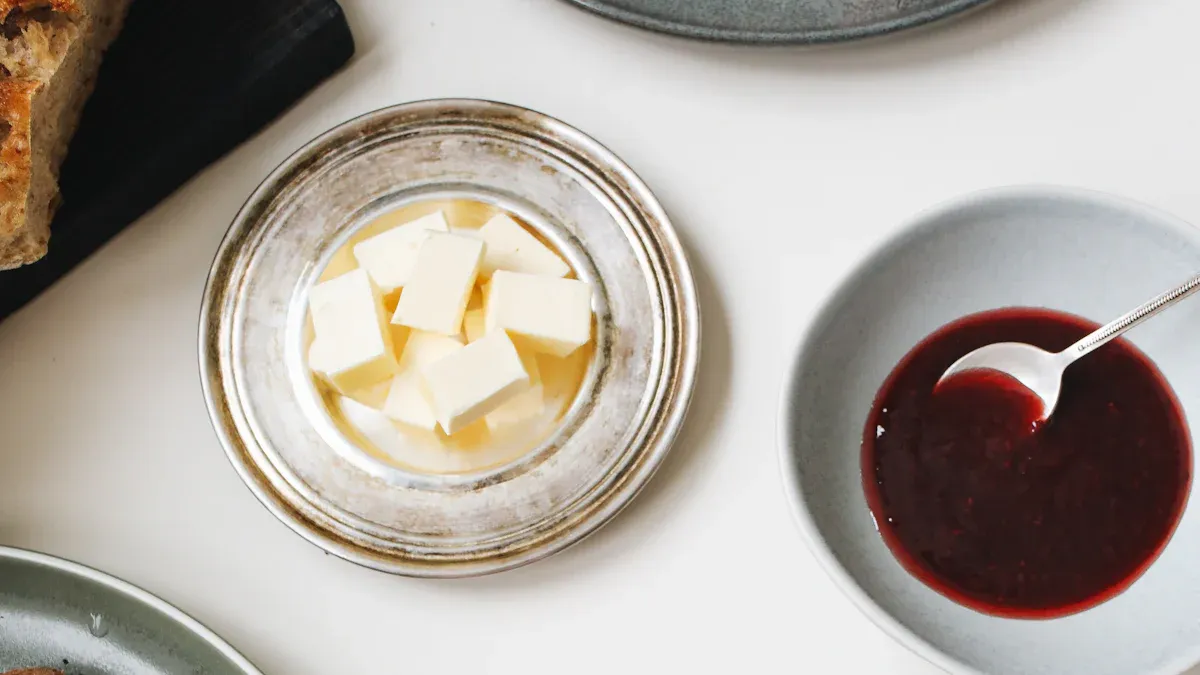
Choosing the Right Dish or Crock
Picking the right butter dish or crock makes a big difference in how fresh your butter stays. You want a container that fits your needs and keeps butter safe from air and light. Chefs look for dishes with sturdy materials and enough space for the amount of butter they use. A well-designed lid helps keep butter fresh and stops spoilage. Here’s a quick table to help you choose:
| Feature | Benefit |
|---|---|
| Material | Impacts how long your crock lasts and how well it works. |
| Size and Capacity | Lets you store just the right amount of butter. |
| Airtight Seal | Keeps butter fresh and blocks out air. |
| Tight-fitting Lid | Protects butter from light, heat, and air. |
If you use a crock with an airtight lid, you can keep butter soft and spreadable for days. You also protect it from picking up flavors from other foods.
Airtight and Light-Proof Options
You want your butter to taste great every time you use it. Airtight and light-proof containers help you do that. These containers stop air, moisture, and light from reaching your butter. You avoid freezer burn and keep butter fresh for months. Here are some tips:
- Wrap butter tightly before putting it in a container.
- Use a dish that blocks light to prevent rancid flavors.
- Keep butter away from heat sources like stoves or sunny windows.
- Store butter in an airtight container to keep it fresh for up to a year in the freezer.
Tip: Always cover your butter. This simple step keeps out unwanted smells and helps butter last longer.
Common Mistakes to Avoid
You might think any dish will work, but some choices can ruin your butter. Chefs see these mistakes all the time:
- Leaving butter exposed to light speeds up spoilage and flavor loss.
- Using metal containers causes oxidation and makes butter taste off.
- Forgetting to use an airtight or opaque dish lets air and light in, which lowers quality.
If you avoid these mistakes, you keep your butter tasting fresh and ready for any recipe. Choose the right container, store it in a cool spot, and always keep it covered. Your butter will thank you! 🧈
Quick Tips for Fresh Butter
Softening Butter Fast
You want soft, spreadable butter, but you do not want to wait forever. Here are some chef-approved ways to get butter ready in a hurry:
- Leave a stick of butter out on the counter. It will soften naturally in about an hour, reaching the perfect temperature for spreading.
- Cut the butter into small cubes. Smaller pieces soften much faster—usually in just 15 minutes.
- Use a stand mixer. Cut butter into chunks and beat it for 5 to 7 minutes until it becomes smooth and pliable.
- Try the warm bowl method. Place a warm (not hot) bowl over your butter. This gently warms it, making it soft in about 35 to 55 minutes.
- If you need butter from the freezer, grate it onto waxed paper. The thin shreds will soften in just a few minutes.
- Use the microwave with caution. Set it to low power and heat the butter in short bursts, checking often so you do not melt it.
Tip: Always return unused butter to the fridge after use. This keeps it fresh and prevents changes in color or flavor.
Avoiding Off-Flavors
Butter can pick up strange tastes if you do not store it right. Chefs use these steps to keep butter tasting pure and delicious:
- Start with a clean storage container. This stops bacteria and cross-contamination.
- Use an airtight container. This blocks out air and kitchen odors that can spoil the flavor.
- Store butter in the coldest part of your fridge. The back of the middle shelf works best, not the door.
If you follow these simple habits, your butter will stay fresh, flavorful, and ready for any recipe. 🧈
You now know how chefs keep butter fresh and tasty. Match your storage method to your kitchen and how fast you use butter. Here’s what you gain with chef-approved storage:
- Fresh butter gives you better flavor and texture in baking.
- Salted butter lasts longer and works well for cooking.
- Unsalted butter is best within a month.
| Chef | Storage Method | Container Type |
|---|---|---|
| Michael Symon | Room temp by toaster | Round caddy with lid |
| José Andrés | Kitchen table | Ceramic container with knife |
Try these tips at home. You’ll notice fresher butter and tastier results every time you cook or bake! 🧈
FAQ
How do you know if butter has gone bad?
Check for a sour smell, odd taste, or a change in color. If you see mold or the butter feels slimy, toss it out. Fresh butter smells clean and tastes creamy.
Can you refreeze butter after thawing it?
You can refreeze butter if you thawed it in the fridge and kept it cold. The texture might change a little, but it stays safe to eat. Always wrap it tightly before freezing again.
What is the best way to store homemade butter?
Wrap homemade butter in parchment paper or plastic wrap. Place it in an airtight container. Store it in the fridge for up to two weeks or freeze it for longer freshness.
Does salted butter last longer than unsalted butter?
Yes! Salted butter lasts longer because salt helps prevent spoilage. You can keep salted butter in the fridge for up to three months. Unsalted butter usually stays fresh for about one month.
Can you leave butter out overnight?
You can leave salted butter out overnight if your kitchen stays cool (below 70°F). If it gets warm, put the butter back in the fridge to keep it safe and fresh.
See also
How to Ensure Stable Delivery from Chinese Plastic Packaging Suppliers
Plastic food packaging: types, advantages, and applications
Why Honokage Is the Best Choice for Butter Storage Containers
Safety standards and testing requirements for food grade plastic containers