


Quick answer
How do you determine a safe temperature for food packaging?
Define the complete use profile first. State the food, highest and lowest contact temperature, duration, filling and sealing steps, cooling, storage, transport, reheating method, destination market and whether the pack is single-use or reusable. Then verify every relevant component and test the filled package under the worst foreseeable sequence.
Approve the claim only when all four checks below pass. One passing check cannot replace another.
Start with the right question
“Safe temperature” can describe five different things
A packaging discussion can fail before testing begins because people use one word for different measurements. A filler set point, food temperature and package-surface temperature may not match. A sealing jaw may be much hotter than the food-contact layer but touch it for less than a second. A microwave can create a hot oil pocket even when the food’s average temperature is lower.
Do not use melting point as the limit. A package can soften, creep, shrink, crack, lose its seal, delaminate or create an odor concern well before the main material melts.

A polymer family is only the start. Grade, additives, conversion history, thickness and geometry affect the finished article. Image: Honokage.
Build the use profile
Map the whole journey, not only the hottest moment
The most difficult stage is not always the stage with the highest number. Long warm storage can matter for migration and creep. A fast freezer-to-microwave change can cause more mechanical stress than either cold storage or heating alone. Use the following map to define what needs evidence.
| Use stage | Specify | Check first |
|---|---|---|
| Frozen | Lowest temperature, dwell, freeze rate, fill and thaw | Cold impact, ice expansion, seal and lid fit |
| Hot fill | Food and flange temperature, delay to close, cooling curve | Rim shape, paneling, hot seal and vacuum |
| Retort | Time, temperature, pressure, medium, agitation and headspace | Scheduled process, closure integrity and critical factors |
| Microwave | Food, fill, wattage, time, venting, stirring and rest | Local hot spots, steam, opening and carry surfaces |
| Oven | Mode, set point, time, rack, support and film/lid state | Radiant heat, tray contact, instructions and handling |
| Reuse | Cycle count, washing, detergent, heating, freezing and damage | Migration stability, warpage and discard criteria |
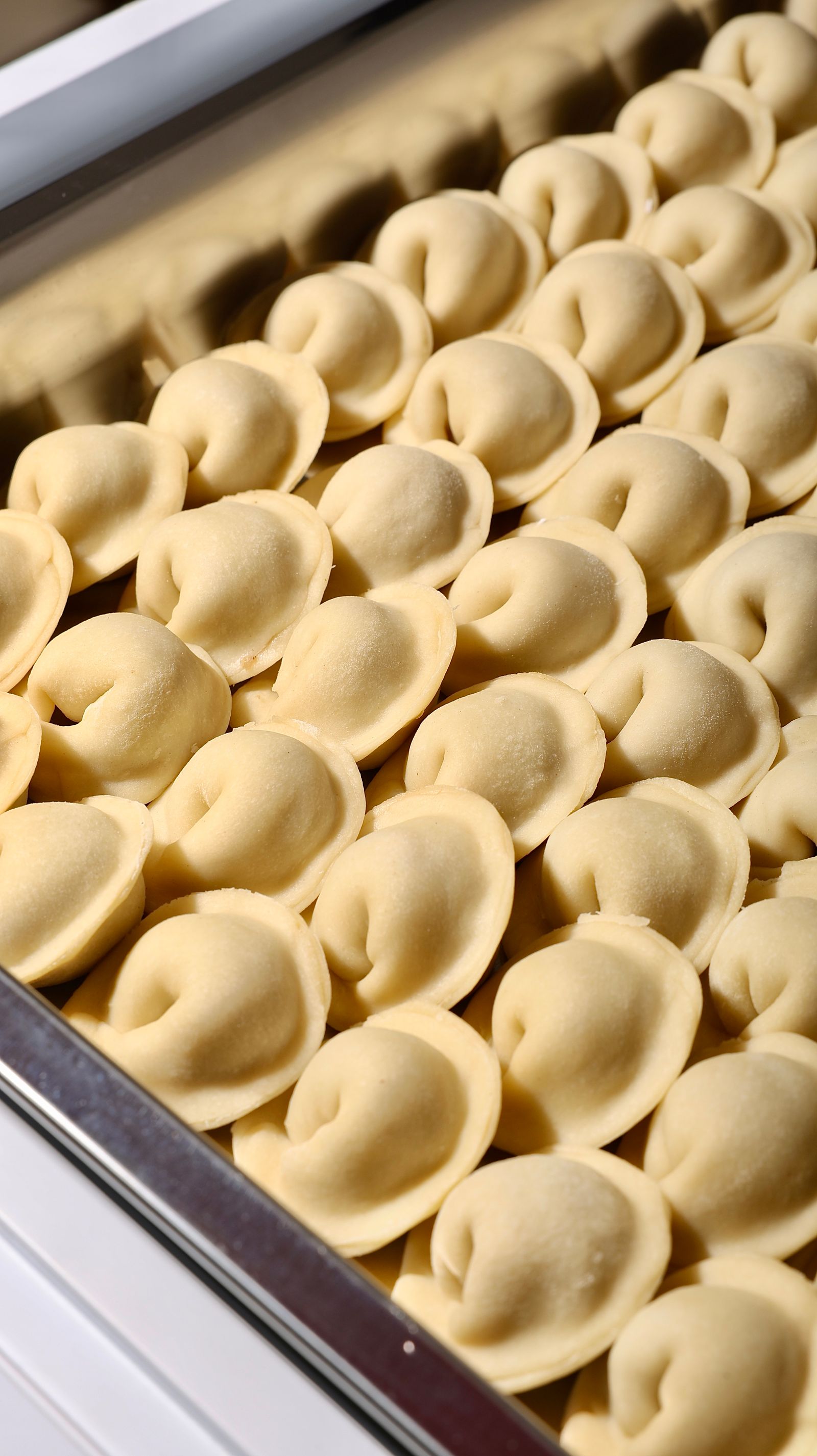
Cold storage adds impact, expansion and transition risks that a room-temperature test can miss. Photo: Samira Abdullaeva / Pexels.
Screen materials, then qualify the article
What common packaging families can and cannot tell you
Material names help create a shortlist. They do not establish a product claim. Grades within one family may differ in composition, molecular structure, additives, crystallinity, recycled content and processing history. The same resin can also behave differently in a thin lid, a thick tub and an oriented film.
Compostable does not mean heat-safe. Crystallized, filled, coated or blended compostable structures can behave differently. A compostability mark does not prove microwave, hot-food or oven suitability.
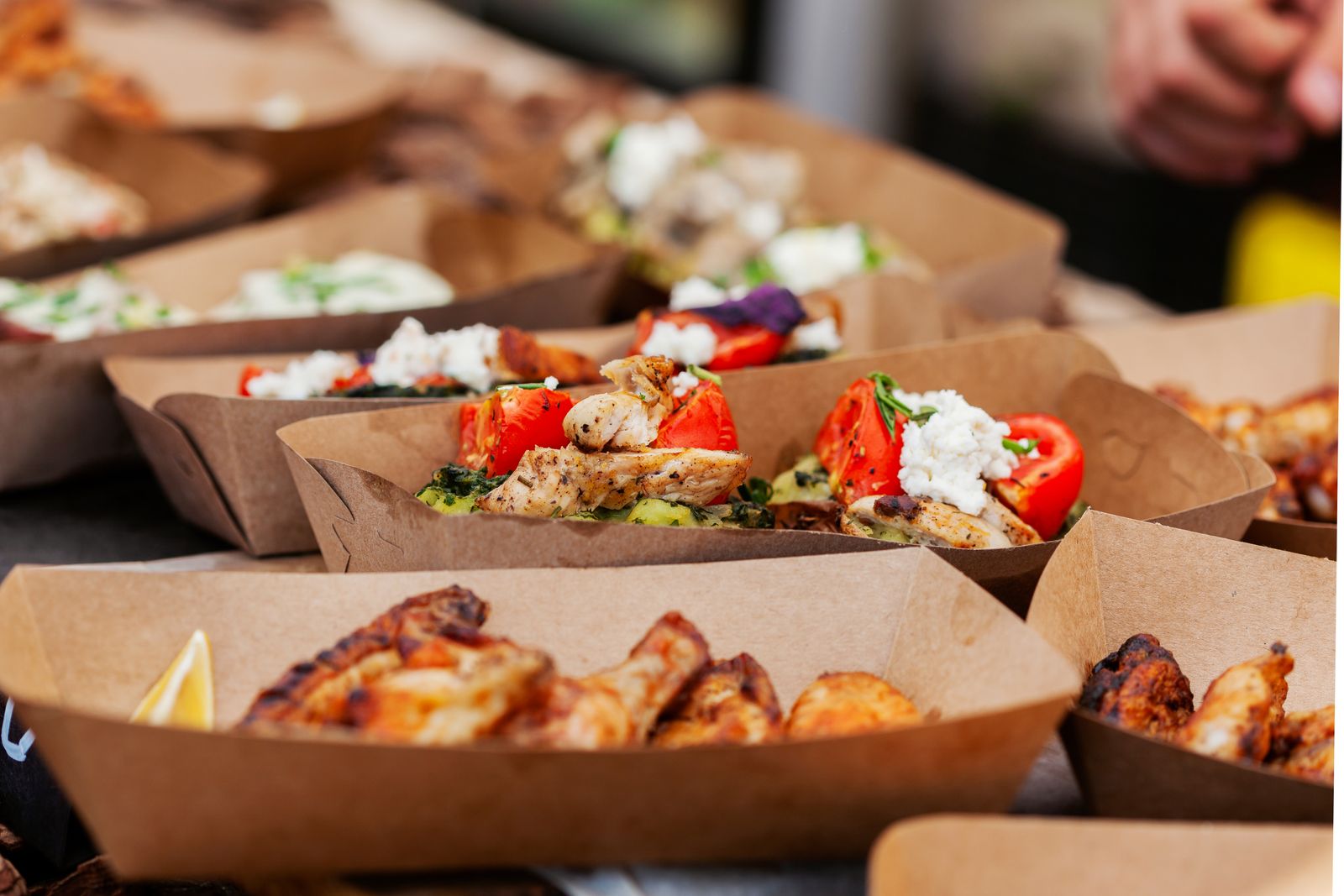
Paper-based packs are complete structures. Liner, seam, adhesive, ink, lid, moisture and grease exposure all matter. Photo: Julia Filirovska / Pexels.
Regulatory context
FDA and EU rules use intended conditions, not universal resin ratings
In the United States, FDA’s food-contact reference separates food types and conditions of use. Conditions include frozen storage, refrigerated storage, hot fill or pasteurization above or below 150°F (65.6°C), boiling-water sterilization, high-temperature sterilization, reheating in the container and cooking above 250°F (121°C). These are regulatory-use categories. They are not a chart of safe maximum temperatures for every article made from PP, PET, paper or another family.
FDA also explains that the overall regulatory status of a food-contact material depends on the substances reasonably expected to migrate. Identity, specifications, purity, manufacturer or source, and conditions of use must match the relevant authorization. This is why an “FDA-approved material” statement without the exact grade, source and intended use is not enough for a buyer.
For EU plastic materials and articles, Regulation (EU) No 10/2011 links compliance testing to intended and foreseeable use. Its OM0–OM7 overall-migration test conditions are standardized laboratory conditions and coverage categories. They are not consumer heating directions and not a temperature ranking for polymers. The regulation sets an overall migration limit for covered plastics and also applies specific migration limits and other restrictions where relevant.
The 2025 amendment also strengthened requirements for repeated-use plastic articles. Design must prevent migration from increasing over successive intended uses, and users need information about safe use and observable deterioration where applicable. EU requirements also include a Declaration of Compliance and supporting documentation at the relevant supply-chain stages.
Scope warning: EU Regulation 10/2011 is a plastics measure. Do not copy its migration table or limit onto paper, metal, glass, rubber, silicone or every layer of a multi-material pack without checking the laws that apply to that material and market.

Container, lid, label and food-contact construction must be treated as one controlled package system. Image: Honokage.
The weakest component controls
A heat-capable container does not make the whole pack heat-capable
Most food packages are systems. The body, lid, lidding film, seal layer, gasket, valve, coating, ink, adhesive, label and secondary pack can experience different temperatures and loads. A body may keep its shape while the rim moves enough to release the lid. A film may seal when cool but open while hot. An adhesive may lose bond after a wet thermal cycle.
Create a controlled bill of materials. Give each component an intended-use statement, regulatory basis, performance check and change-notification rule. Do not let a resin data sheet stand in for this package map.
Application limits
Hot fill, retort, microwave and oven claims are not interchangeable
For U.S. low-acid foods in hermetically sealed containers: 21 CFR Part 113 says scheduled processes must be established by qualified persons with expert thermal-processing knowledge and must cover the variations and critical factors in commercial production. Packaging selection does not replace that process work.
Qualification workflow
How to validate a food packaging temperature claim
A defensible program connects regulatory review to filled-pack performance and production control. Scale the work to the risk, but do not replace it with a generic certificate or an empty-container heat test.

Sample inspection should verify the controlled construction, but release also needs tests tied to the real use profile. Image: Honokage.
Worked example
How would you approve a freezer-to-microwave meal tray?
Suppose a brand wants to sell a frozen meal in the same tray used for reheating. The first shortcut would be to ask whether the tray resin is freezer-safe and microwave-safe. That question is too small. The tray may pass both separate tests and still fail during the change from cold to hot.
Start with the actual meal. Record the lowest storage temperature, storage time, fill weight and headspace. Include the fattiest recipe and any part with little water. Those zones can get hotter than the rest of the meal. Define the microwave power, heating time, vent position, stirring step and rest time. State whether the film stays on, is pierced or is removed.
Next, test complete filled packs. Condition them at the stated frozen temperature. Drop and handle them while they are still cold. Then heat the worst recipe using the highest allowed power and time. Measure the food-package interface, not only the middle of the food. Check the rim, seal, vent, base and hand-contact areas. Open the pack as a consumer would.
A passing result means more than “no melting.” The tray must stay stable. The seal must manage steam. The pack must not leak or crack. Instructions must be clear. Regulatory evidence must cover the exact construction and use. Repeat the work when the recipe, tray, film, supplier, thickness or heating directions change.
Troubleshooting
What common failures usually tell you
Buyer documentation
What should a buyer request before approving heat-resistant packaging?
Ask for records that connect the shipped article to the approved use. Document names vary by market and supply-chain position. Do not ask only for an “FDA certificate” or one worldwide compliance letter.
For recycled plastic, also request source and process controls, the market-specific regulatory basis, contaminant-removal or purity evidence, and requalification rules. FDA evaluates proposed recycled-plastic food-contact uses case by case and asks for the intended temperature, food type, contact duration and whether the article is single-use or repeated-use.
Useful RFQ sentence: Please confirm whether the exact finished article and every relevant component are supported for the attached food, time-temperature-pressure profile and target markets. State the validated limits, exclusions, test sample and BOM revision, methods, acceptance criteria and all changes that require notification or requalification.

Production settings and material history can affect the final package, so sample approval must connect to controlled mass production. Image: Honokage.
Frequently asked questions
Food packaging temperature FAQ
What temperature is safe for plastic food containers?
There is no universal number. Use the exact grade and finished-article evidence for the food, contact time, process, heating method, use cycles and target market. The lid, seal and decoration must be covered too.
Can polypropylene hold boiling food?
Some PP grades and articles are designed for near-boiling contact, while others are not. Grade, wall, load, time, geometry, additives, closure and regulatory scope all affect the answer. Test the exact filled article.
Is PET safe for hot fill?
PET structures differ. Standard amorphous thermoformed PET can behave differently from heat-set PET or CPET. Confirm the grade, heat-setting or crystallinity, geometry, cooling curve, seal and food-contact support.
Does microwave-safe mean oven-safe?
No. Microwave and conventional-oven heating expose packages in different ways. Use a container in an oven only when the manufacturer has explicitly validated and labeled that use.
Does freezer-safe mean freezer-to-microwave safe?
No. The transition adds thermal shock, local hot spots, steam pressure, venting, opening and handling risks. Validate the full sequence with the actual food and worst fill.
What temperature should retort packaging withstand?
It must withstand the product-specific scheduled process, including temperature, time, pressure, medium, fill, headspace, orientation and cooling. There is no generic retort time-temperature pair for every food and pack.
Are paper food containers safe for hot food?
They can be when the complete construction is designed and supported for that use. The coating, seam, adhesive, ink, grease, moisture, lid and handling temperature may be the limiting parts.
How is a safe temperature range tested?
Define the real use profile, verify regulatory and migration suitability, then test production-intent filled packs for the likely chemical, dimensional, seal, leak, impact, pressure, barrier, sensory, distribution and consumer-use failures.
For commercial food-packaging projects
Send the use profile before asking for a temperature claim
Share the package drawing and BOM, food formulation, fill weight, time-temperature-pressure history, lid or film, sealing method, cooling, storage, transport, microwave or oven instructions, target markets and acceptance criteria. Honokage can use this information to discuss relevant material and container directions, sample needs and validation gaps.
Practical next step
Choose the lowest-cost system that passes the real journey
Do not select the material with the highest advertised temperature. Select a manufacturable package that keeps its regulatory support, shape, seal, barrier, food quality and handling safety through the exact food journey. A narrower validated range can be safer and more economical than an over-specified material platform.
Review Honokage’s material overview and plastic food-container formats as early direction only. Every final temperature, food-contact and performance claim still needs evidence for the selected construction and application.
Keep packaging qualification separate from food-cooking guidance. A safe internal food temperature is a microbiological target measured in the food; it does not approve the package that holds it.
Sources and further reading
- FDA: Food Types & Conditions of Use for Food Contact Substances — U.S. food categories and intended-use conditions.
- FDA: Determining the Regulatory Status of Components of a Food Contact Material — component, source, specification and condition-of-use requirements.
- FDA: Chemistry Recommendations for Food Contact Substances — intended use, maximum time-temperature conditions and migration-study design.
- FDA: Recycled Plastics in Food Packaging — case-by-case review, source controls and intended-use information.
- eCFR: 21 CFR Part 113 — scheduled processes and critical factors for covered low-acid foods in hermetically sealed containers.
- European Commission: Food Contact Materials — EU framework, GMP and material-specific legislation.
- EUR-Lex: Regulation (EU) No 10/2011, consolidated 23 February 2026 and Regulation (EU) 2025/351 — plastic migration, documentation, testing and repeated-use updates.
- ASTM F88/F88M-23 — active seal-strength method for flexible barrier materials; project acceptance limits remain application-specific.
Technical limitation: this guide is a qualification framework, not a legal opinion, material certification, scheduled thermal process, migration assessment or product-specific temperature approval. Verify the current rules, exact construction and intended conditions in every destination market.