


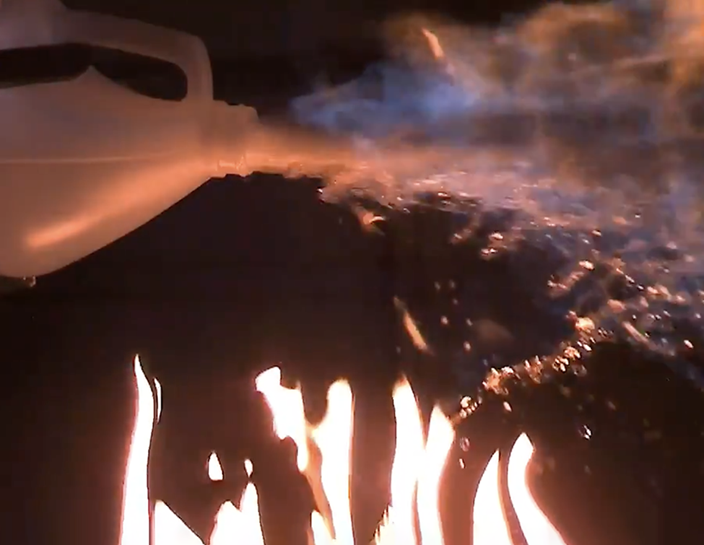
Direct answer
For personal use, choose a complete portable fuel container explicitly intended for gasoline, keep it closed and undamaged, and follow its label plus local fire-authority requirements. Store it in a cool, ventilated, secure place outside living space and away from every ignition source.
When filling, take the portable can out of the vehicle, place it on the ground outdoors and follow the station and manufacturer instructions. CPSC, USFA and NIOSH all support the ground-filling precaution; NIOSH documented static-related fires when portable cans were filled in pickup beds or vehicle interiors.
Stop when the context changes. A workplace, landscaping fleet, retailer, construction site or shipment in commerce may trigger OSHA, fire-code and PHMSA requirements that a household guide cannot approve. Do not transfer a consumer recommendation into a business procedure without a site-specific review.
The three decisions readers often confuse
Article navigation
Selection gate
Which plastic containers can hold gasoline?
Do not begin with color, thickness or a familiar recycling code. Begin with the finished container’s identity and its documented intended use. The table below gives a conservative first decision; product instructions and the authority governing the actual location still control.
If product identity, condition or use evidence is uncertain, the safe selection decision is no. Do not perform a homemade soak, flame or pressure test.
Material is only one input
Why is “HDPE” not enough to make a gasoline container safe?
HDPE is used in many products, including some legitimate portable fuel containers. That fact does not turn every HDPE object into a gasoline can. Resin grade, formulation, processing, wall distribution, seams, impact resistance, permeation behavior, cap threads, gasket material, spout attachment, venting strategy, labels and every substituted component can change the performance of the finished package.
A food pail and a fuel can may share a broad polymer family while solving completely different hazards. The food pail may never have been designed for gasoline vapor, closure cycling, fuel additives, outdoor aging, flame propagation or controlled dispensing. Chemical resistance that prevents immediate dissolution is not proof of fire safety, consumer compliance, workplace approval or authorization for transportation in commerce.

General injection-molding process image from Honokage. It does not show or establish an approved gasoline container; fuel-container suitability requires product-specific design, test and compliance evidence.
U.S. consumer framework
What labels and safety features should a U.S. buyer verify?
The CPSC consumer safety page describes portable fuel containers as consumer products with a capacity of five gallons or less intended for flammable liquid fuels. Under 16 CFR Part 1461, a covered portable fuel container includes its spout, cap and other closure components. Containers sold empty to consumers must meet the applicable flame-mitigation requirement in ASTM F3326-21, while qualifying safety cans may use the specified UL 30 route. The regulation also has a separate path for containers sold pre-filled.
Child resistance is a related but distinct requirement. CPSC business guidance explains that specified consumer gasoline, kerosene and diesel containers with a maximum capacity of 8.45 gallons (32 L) are within the child-resistance framework. Because definitions, exemptions and standards differ, a buyer should map each claim to the exact product, capacity, sale condition and market instead of collapsing everything into a single “CPSC approved” phrase.
A flame-mitigation device is not a fireproofing claim
CPSC explains that escaping vapor can meet an external spark or flame, ignite and flash back into a container. A required flame-mitigation device is intended to impede flame propagation in the defined scenario. It does not authorize open storage, pouring fuel near flame, using a damaged cap, filling in a vehicle, or ignoring local storage rules.
A UN mark is not automatically an OSHA storage approval
Transport packaging and workplace storage are different scopes. A transport-related mark may be relevant to a shipment, but it does not by itself prove that the same package is an approved safety can for the workplace or that a local fire authority permits the intended storage and dispensing arrangement.
Location controls vapor and ignition risk
Where should a plastic gas can be stored?
CPSC tells consumers to keep portable fuel containers in cool, well-ventilated areas, closed after use and out of reach of children. It specifically says never to store gas cans inside a house or basement or near ignition sources such as fuel-burning appliances, open flames, pilot lights, stoves, heaters or electric mowers. USFA likewise emphasizes label compliance, secure storage and fire prevention.
“In the garage” is not a complete safety answer. A garage may contain a water-heater pilot, vehicle electrical equipment, chargers, hot engines, sparks, heat and poor ventilation. A shed can overheat or violate local rules. A porch may be accessible to children or exposed to sunlight. Select the location by hazard and applicable code—not by convenience.
Do not copy a universal quantity or distance from a general blog. Permitted quantities, cabinets, separations and building conditions depend on the jurisdiction, occupancy, container and activity. Ask the local fire marshal or authority having jurisdiction when the location is uncertain.
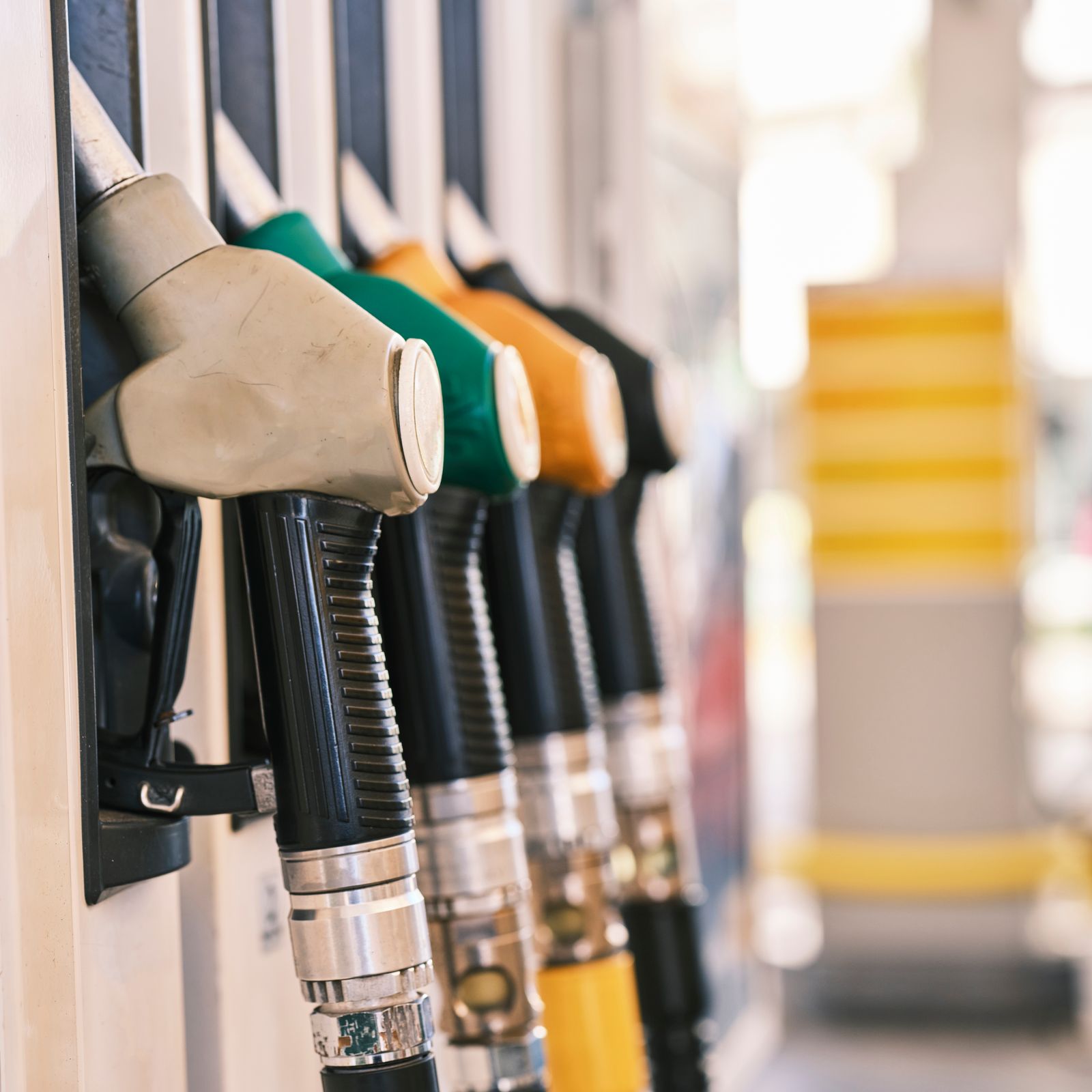
At a fuel station, follow posted instructions and the portable-can label. Image: Engin Akyurt / Pexels.
The high-risk moment
How should you fill and handle a portable gasoline container?
Gasoline vapors may be released while filling. CPSC and USFA tell consumers to fill portable gasoline containers outdoors in an airy area with the container on the ground. NIOSH investigated fires associated with filling portable cans in pickup beds with plastic liners and in carpeted vehicle interiors; the insulating surface can prevent static charge from dissipating.
1
2
3
4
If gasoline leaks, strong vapor is present or ignition may be possible, stop handling. Keep people away, avoid switches, flames and improvised transfer, and contact the local fire or emergency service. This article is not a spill-response procedure.
Condition changes the answer
What should you inspect before every use?
A container that was appropriate when new can become unsafe through impact, heat, ultraviolet exposure, aging, repeated closure cycles, incompatible parts or modification. Inspection is a decision gate, not permission to perform a repair.
Never tape a leaking cap, glue a seam, drill a vent, add homemade mesh, substitute an unmatched spout or pour fuel into a drink bottle “temporarily.” Each shortcut creates a new unidentified and unverified fuel package.
One hazard, three regulatory contexts
How do home storage, workplace storage and commercial transport differ?
The same gasoline can move between different legal and operational contexts. Consumer guidance helps a homeowner select and handle a portable fuel can, but it does not approve a company’s construction-site procedure. OSHA addresses flammable liquids in workplaces; local fire codes and the authority having jurisdiction may govern storage arrangements; PHMSA’s Hazardous Materials Regulations govern transportation in commerce.
Home and personal equipment
Ask whether the exact can is intended and labeled for gasoline, remains complete and sound, and can be stored according to the label plus local fire guidance. Personal transportation in a private vehicle is not the same federal HMR scenario as transportation in commerce, but state, local, carrier, ferry and property rules may still apply.
Workplace, facilities and construction
The employer must determine whether the exact container is approved for the task, how quantities and storage areas are controlled, whether dispensing or transfer is performed, what training and inspections are needed, and which OSHA and fire-code provisions apply. OSHA defines a safety can as an approved container of not more than five gallons with a spring-closing lid and spout cover that safely relieves internal pressure under fire exposure; not every consumer can meets that definition.
Transport in commerce
PHMSA explains that gasoline cans carried by a landscaping or construction business are transportation in commerce, although the materials-of-trade exception may apply when all its conditions are met. Packaging, quantity, securement, employee training, documentation and route-specific rules must be evaluated before movement—not after a general consumer can has been purchased.

Manufacturing equipment can support repeatability, but machinery alone does not establish a fuel-container approval. Product scope, materials, closures, validation and change control remain SKU-specific.
Procurement and private-label control
What should a B2B buyer request from a plastic fuel-container supplier?
A defensible RFQ asks for an exact finished product in an exact market and operating scenario. “Please quote an HDPE gas can” invites a resin declaration and a product photo. A better request ties the SKU, components, use, standards, tests and production controls together so the buyer can see what has actually been demonstrated.
Useful RFQ wording: “Provide the exact model’s intended gasoline use, market-specific compliance basis, applicable listing and test evidence, closure/FMD configuration, current revision and documented limitations. State separately what is covered for storage, dispensing and transport in our described scenario.”

A first-sample inspection is one manufacturing control, not a gasoline-use certification. Accredited testing, applicable standards and authority review must be defined for the actual fuel-container project.
Fast myth check
Which common gasoline-storage shortcuts fail?
Damage, old fuel and disposal
What should you do with old gasoline or a damaged can?
Do not pour gasoline down a drain, onto soil or into a storm sewer, and do not place liquid gasoline in ordinary trash. EPA advises households to follow product labels and contact local environmental, health, solid-waste, household-hazardous-waste or fire authorities for instructions. Community collection requirements differ.
Keep hazardous products in their original, labeled containers when possible and never mix them. If a container is corroded, leaking, unknown or unsafe to move, call the local hazardous-materials official or fire department before changing its condition. Do not solve a disposal problem by decanting gasoline into a food container or bottle.
Emergency boundary: if vapors are strong, liquid is actively leaking, people are exposed or an ignition source may be present, move people away and contact the appropriate emergency service. Do not operate switches, start engines or attempt a homemade cleanup.
Frequently asked questions
Gasoline storage in plastic containers: quick answers
Can gasoline be stored in HDPE?
Not because the object is HDPE. Use only a complete, purpose-designed container explicitly intended and qualified for gasoline in the relevant market and scenario. An HDPE food pail, water jug or detergent bottle is not an acceptable substitute.
Is a plastic gas can safer than a metal gas can?
Neither material wins automatically. The exact finished can, approval route, closure, venting/pressure behavior, condition and correct handling determine suitability. Select by verified product and use evidence, not material preference alone.
Can I keep gasoline in the garage?
Do not assume so. CPSC says never to store gas cans in a house or basement or near ignition sources, and garages may contain pilot lights, electrical equipment, hot engines and local-code restrictions. Confirm the label and local fire authority’s requirements for the specific property.
How long can gasoline stay in a plastic can?
No universal number is safe for every gasoline formulation, additive, climate, container and engine. Follow the fuel supplier and equipment OEM, inspect the container and do not infer fuel quality from appearance or odor alone.
Can I transport a gas can in my car?
Personal use and transportation in commerce are different federal scopes. In every case use an appropriate, fully closed, upright and secured container and follow manufacturer, state, local, property and carrier rules. A business or fleet should complete a DOT/PHMSA review before movement.
Does a flame arrestor make a can safe near fire?
No. A compliant flame-mitigation device addresses flame propagation under its specified standard. It does not make gasoline safe to pour onto flame or replace ignition control, secure storage, intact closures and label compliance.
OEM project boundary
Developing a technical injection-molded container?
Honokage’s website describes broader custom injection-molding capabilities, production equipment y general quality-control processes. Those capabilities are not presented here as approval for gasoline containers.
For a fuel-related concept, the enquiry should define the market, exact fuel, capacity, storage/dispensing scenario, transport route, required standard, accredited laboratory and regulatory reviewer before tooling. Product-specific compliance evidence—not a generic resin statement or factory capability page—must support every safety claim.
Primary technical sources
Official references used for this guide
This article is educational and U.S.-oriented. Current product instructions, the local authority having jurisdiction, the employer’s safety program and applicable transport rules control the actual use.
- CPSC: Fuel Container, Gasoline and Other Liquid Fuel Safety — consumer storage, filling, ignition and inappropriate-container guidance.
- CPSC: Portable Fuel Container Business Guidance — child-resistance and flame-mitigation scope for businesses.
- 16 CFR Part 1461 — portable fuel-container definitions and flame-mitigation requirements.
- U.S. Fire Administration: Home Hazardous Materials — label, outdoor filling and fire-prevention advice.
- NIOSH: Fire Hazard from Filling Portable Gas Cans in Pickup Trucks and Cars — static-related filling precautions.
- OSHA 29 CFR 1910.106: Flammable Liquids — workplace definitions, containers, storage and handling.
- PHMSA: Hazardous Materials Regulations Applicability FAQs — personal use, business transport and materials-of-trade distinctions.
- EPA: Household Hazardous Waste — handling and local disposal-program guidance.