Quality Controls Built Around the Packaging Specification
Honokage’s quality control flow covers materials, production preparation, sample review, packing and finished product checks.
Start with an agreed product specification and sample reference. Define the features that matter for your container, lid and decoration, then confirm the inspection scope for the order.
Identify the model, material and artwork revision.
Agree the relevant checks and acceptance criteria.
Confirm which inspection records and supporting documents can be provided.
Review Your Inspection Requirements

Quality Control from Materials to Dispatch
Follow the key stages in the quality control flow. Confirm the applicable checks, records and order-specific requirements with our team.
-
 Incoming Material Review
Check incoming material identification and the relevant delivery information against the approved requirements. Define how discrepancies are held for review.
-
 Material Receipt and Identification
Keep accepted materials identified during receipt and storage so the intended production input can be selected.
-
 Material Issue for Production
Confirm the material identity and production requirement when materials are issued for a run.
-
 Resin Weighing and Preparation
Review the specified material quantities and preparation instructions for the agreed formulation. Record any permitted additions under the production procedure.
-
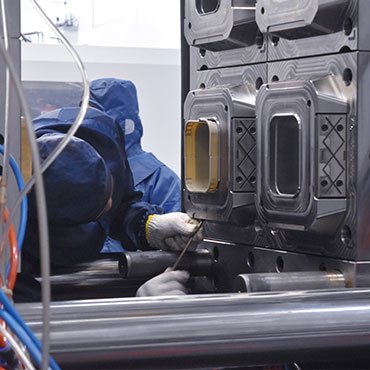 Mold Setup
Confirm the mold and required product configuration before the molding setup is prepared.
-
Machine and Robot Setup
Review the machine and robot setup for the intended molding operation, including label handling where applicable.
-
 Resin Feeding
Confirm that the material supplied to the molding process matches the production specification.
-
 Moldeo por inyección
Produce the molded components using the specified setup and material. Review proposed process changes under the applicable procedure.
-
 First-Off Sample Review
Compare the initial molded samples with the agreed specification before continuing under the approved production arrangement.
-
 Protective Product Packing
Use the agreed inner and outer packing arrangement to protect the product and identify the packed quantity.
-
Finished Product Inspection
Review the agreed inspection characteristics for the finished product and record the lot decision under the inspection plan.
-
 Metal Detection Checks
Confirm the detection arrangement for the proposed product and pack format, including routine checks and the handling of rejected product.
-
 Storage and Dispatch
Keep finished goods identified through storage and dispatch, with the packing and shipment details checked against the order.
Airborne Particle Monitoring
Airborne particle monitoring supports the review of cleanliness conditions in the production environment.
- Identify the monitored locations and operating conditions.
- Use the defined method, limits and equipment checks in the monitoring plan.
- Review results and follow-up actions when limits are exceeded or trends need attention.
Ask about the applicable monitoring records during supplier evaluation. Air particle results alone do not establish product sterility or food-contact suitability.


Workshop Microbiological Monitoring
Microbiological monitoring is a separate part of workshop hygiene management. Sampling locations may include air, surfaces and relevant equipment as defined in the monitoring plan.
- Specify the sampling locations, method and monitoring schedule.
- Review results against the applicable limits and trends.
- Record investigations and the corrective actions required by the procedure.
Workshop monitoring should not be presented as a sterility claim for every finished container.
Personnel Hygiene and Entry Controls
Personnel practices help reduce the introduction of foreign material into production and packing areas.
- Follow the designated entry and protective-clothing procedure.
- Keep hair covered and control loose personal items where required.
- Observe the hygiene rules for handling products and packing materials.
Entry controls support the wider hygiene program; they do not replace environmental monitoring or product inspection.


Training for Consistent Quality Work
Quality-related training connects procedures with the tasks people carry out in production, packing and inspection.
- Foreign-material prevention and hygiene practices.
- Product inspection and recognition of nonconforming conditions.
- Escalation, complaint handling and role-specific technical knowledge.
Review the relevant training scope and how staff understanding is checked for their assigned work.
Product Appearance and Defect Criteria
Set defect criteria around the pack’s intended use and agreed appearance reference. A difference should be assessed against defined limits, not described as harmless simply because it appears small.
- Molding: review the specified limits for deformation, short shots, flash and surface damage.
- Decoration: define acceptable label position, print appearance and color variation.
- Finished pack: assess any defect that affects fit, function, handling or presentation.
Agree defect categories and examples before inspection, including how unclear cases and nonconforming product will be reviewed.