


Quick answer
How much does a 5-gallon bucket weigh?
A plastic 5-gallon pail body may weigh around 2 lb, but the useful number is the weight of the configured pail, lid and contents together. One current 90-mil HDPE pail example weighs 2.10 lb and its compatible standard lid weighs 0.63 lb. Filled with exactly five gallons of water, that example calculates to about 44.4 lb gross.
For another material, multiply the actual fill volume by its density, then add the entire package tare. If density changes with moisture, compaction, temperature or formulation, weigh the filled bucket instead of trusting a generic chart.
Fast formula: gross weight = pail + lid/accessories + (actual gallons × product density in lb/gal). The result estimates weight; it does not prove that the bucket, handle, stack or person is approved for the load.
Use the right number
Tare, net and gross weight are different
Most bad estimates start by mixing three terms. At home, that creates an unexpectedly heavy lift. At work, it can affect a cart, pallet, shelf, parcel limit or package trial.
A pail body alone is not the full tare. A standard lid can add more than half a pound, while a specialty lid, liner or pump can add more. Weigh the same configuration that will actually be stored, moved or shipped.

The named bucket size, true fill line and finished gross weight answer different questions. Image: Honokage.
Capacity is not a fill instruction
Is a 5-gallon bucket five gallons to the rim?
Usually not. Five gallons is a nominal size. The physical overflow volume can be higher. A current 5-gallon pail example lists 5.4 gallons at overflow, and Washington State University’s bulk-density procedure tells users to measure five gallons of water and mark the real five-gallon line because the brim can exceed that volume.
Headspace—the unfilled space above the product—may be needed for lid application, movement, foaming, thermal expansion, mixing or the product specification. Filling to the rim can add unexpected weight and make closure or spilling problems more likely.
Calculation method
How do you calculate full bucket weight?
For a liquid with density in pounds per U.S. gallon:
Gross weight (lb) = package tare + actual gallons × product density (lb/gal)
For a bulk solid listed in pounds per cubic foot, five U.S. gallons equals about 0.668 cubic foot. Multiply the material’s relevant bulk density by 0.668, then add the package tare. Bulk density includes both material and the air space between particles; it can shift when a powder, sand or soil is wet, vibrated or compacted.
Worked water example: 5 gal × 8.34 lb/gal = 41.70 lb of water. Add a documented 2.10 lb pail and 0.63 lb lid: 41.70 + 2.10 + 0.63 = 44.43 lb, or about 20.2 kg gross.
Metric formula: gross mass (kg) = package tare (kg) + actual liters × density (kg/L). Five U.S. gallons is 18.927 L. Use density at the relevant product temperature and condition.
When the input is uncertain, use a scale. Record the complete empty tare, fill to the real working line with a representative product condition, and weigh the finished pail. A direct measurement is better than a generic online density when the result affects lifting, shipment, stacking or dosing.
Planning comparison
How heavy are water, sand and concrete?
These are contents-only estimates at exactly five U.S. gallons. Add the actual pail and closure tare. They are not permission to fill an ordinary pail to that load, and they are not safe-lifting limits.
Dry sand estimate uses 100–130 lb/ft³ from a U.S. Army Corps of Engineers handbook. Concrete uses 145–155 lb/ft³ from a U.S. Bureau of Reclamation reference. Both are qualified planning ranges, not universal material specifications.

Equal volume does not mean equal weight; the material condition is part of every useful estimate. Image: Honokage.
Empty package examples
How much does an empty 5-gallon pail weigh?
There is no universal tare. Resin, wall thickness, shape, handle, lid, gasket, liner and performance rating all change it. Current published product examples show why a documented configuration is better than a single internet average.
These examples do not define a market-wide range and do not describe Honokage products. They simply demonstrate that a lightweight general pail and a regulated shipping system have different starting weights and different use conditions. Read the current data sheet for the exact bucket in front of you.
Manual handling boundary
Can one person safely lift a full 5-gallon bucket?
Weight alone cannot answer that question. NIOSH’s Revised Lifting Equation evaluates two-handed lifting and starts with a 51 lb load constant under ideal conditions. It then reduces the recommended weight based on reach, hand height, travel distance, twisting, frequency, duration and grip quality.
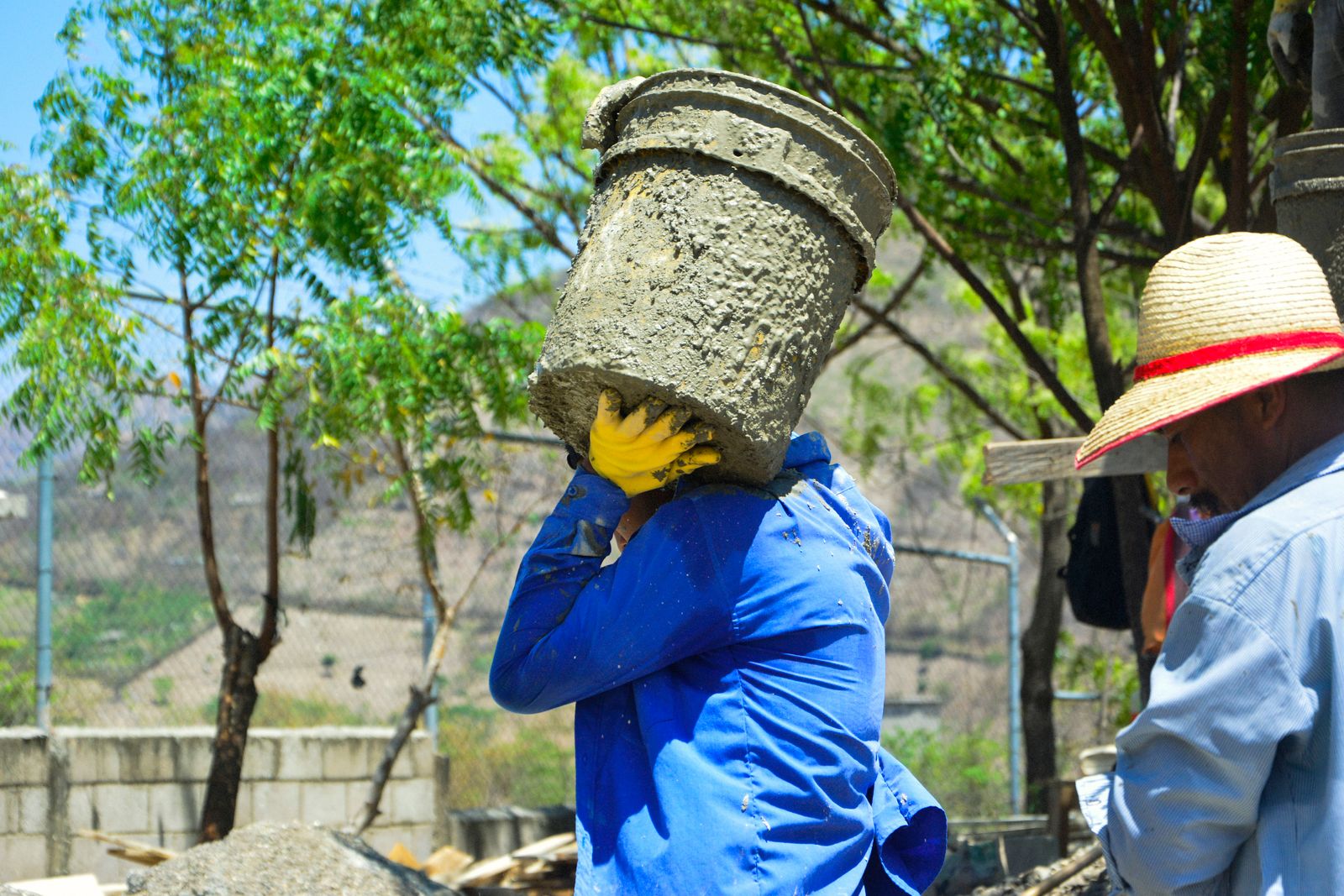
A bucket carried by one wire handle is not an ideal two-handed lift. It can swing or slosh, sit away from the body and create uneven loading. OSHA notes that one-handed lifts, carrying, walking, unstable loads, constrained spaces, wheelbarrows and shovel tasks are not what the equation was designed to cover. OSHA also states that it does not have one federal standard that sets a universal number every person may lift or carry.
Therefore, 51 lb is not a bucket rating, a legal carry limit or proof that a 44 lb water pail is safe for every person and route. Repetition, stairs, wet floors, fatigue, poor footwear, a weak handle and a long carry can make a lower load unacceptable.
Do not drill new holes into a pail rim to improvise a shoulder strap. That can weaken or crack the package and creates a load path the manufacturer did not approve. Use purpose-built handling equipment or a documented accessory.
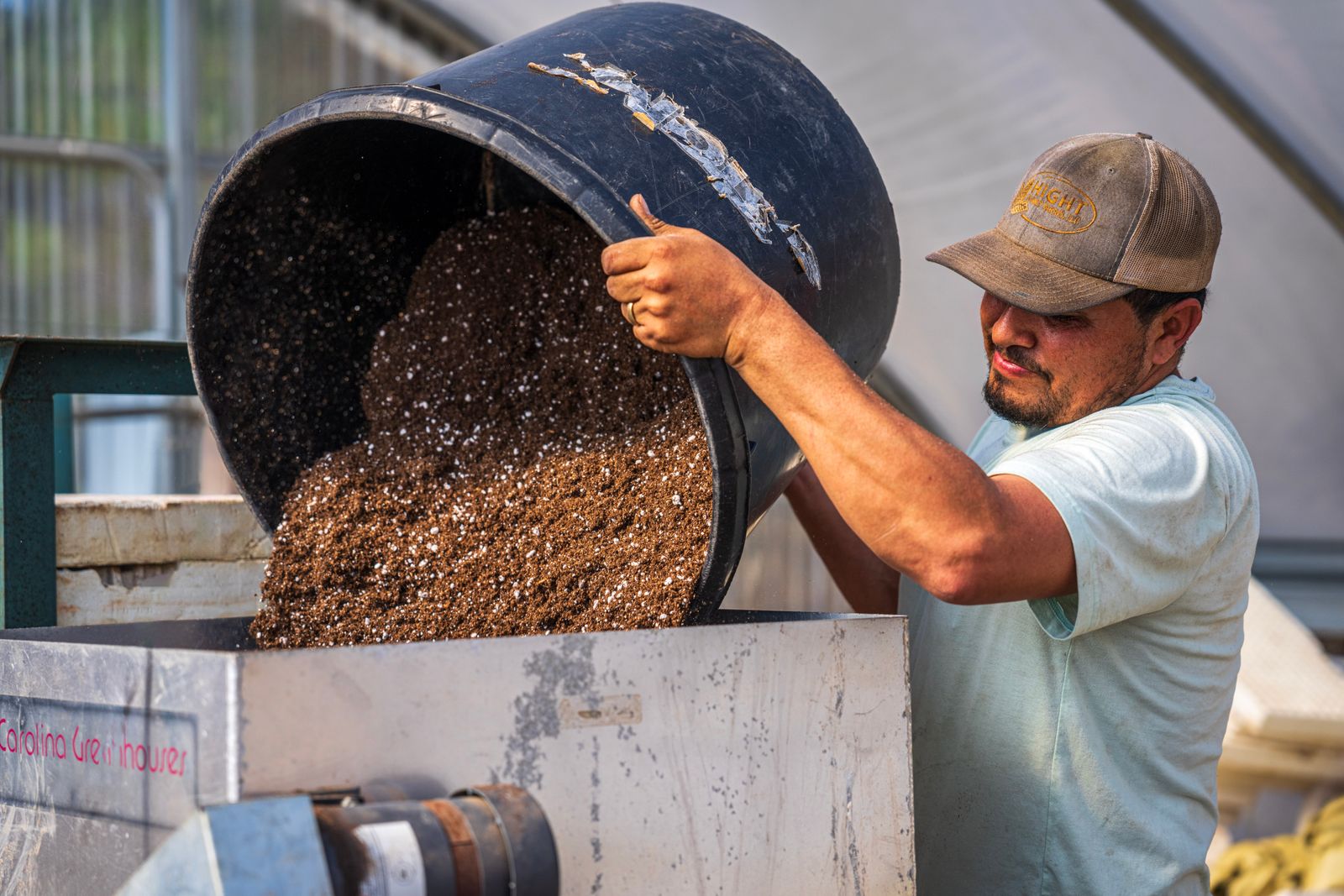
Soil and similar bulk materials should be weighed in their real moisture and compaction condition. Image: Mark Stebnicki / Pexels.
Simple home method
What is the safest way to estimate a home bucket?
Young-child warning: the U.S. Consumer Product Safety Commission warns that large buckets containing water or other liquids are drowning hazards, even when partly filled. Never leave an accessible bucket of liquid unattended around young children. Empty it promptly and store it safely.
Do not reuse a bucket that held a toxic chemical for food or drinking water. A white color, recycling symbol or familiar shape does not prove safe food contact or remove residues from previous use.
Work and warehouse decisions
Load, stack, handling and shipment require separate checks
Two pails with the same nominal volume may have different wall sections, handles, closures, filling temperatures, food-contact documentation, maximum loads, stack conditions and transport marks. A number from one model cannot be transferred to another model because both are called “5 gallon.”
A UN-marked pail is not automatically acceptable for every substance, lid or route. PHMSA materials emphasize following manufacturer closure instructions for UN specification packaging. Substitution or incomplete closure can invalidate the tested system.
Flammable or hazardous products: do not use an ordinary household bucket just because it holds the volume. Follow the safety data sheet, applicable packaging instruction, workplace rules, chemical-compatibility evidence and qualified hazardous-material guidance.

For a commercial pail, the product, closure, decoration, handling route and evidence must be specified as one system. Image: Honokage.
For food and packaging buyers
What belongs in a 5-gallon pail RFQ?
A useful request does not ask only for a “5-gallon food bucket.” FDA’s food-contact framework is based on the substances in the finished article and their intended food and conditions of use. The actual food, fill temperature, storage, fat or acid content and package components matter.
Then run filled-pack trials with the real product. Verify closure application, leakage, handle use, pallet behavior, transport conditions, code legibility and the maximum gross load. Honokage’s food-grade plastic bucket overview shows supplier format directions, and its testing overview can help frame questions. Any final claim or limit still needs evidence for the exact selected system.
Buyer rule: calculate from the heaviest credible product condition, not the average batch. Ask the supplier to state whether its tare and performance numbers include the lid, liner, handle and decoration.
Avoid these errors
Common 5-gallon bucket weight mistakes
Frequently asked questions
5-gallon bucket weight FAQ
How much does an empty 5-gallon bucket weigh?
It depends on the exact pail. One current 90-mil HDPE example weighs 2.10 lb without its separately sold lid. Another specialty pail/lid system weighs 3.10 lb. Use the data sheet or a scale.
How much does 5 gallons of water weigh?
About 41.7 lb (18.9 kg) using 8.34 lb per U.S. gallon. Add the package tare; a 2.73 lb pail-and-lid example becomes about 44.4 lb gross.
How much does a 5-gallon bucket of sand weigh?
A USACE dry-sand range gives about 67–87 lb of contents at exactly five gallons, before the pail. Moisture and packing change the result, so weigh the actual load.
How much does five gallons of concrete weigh?
A federal 145–155 lb/ft³ planning range gives about 97–104 lb of contents. Mix design and compaction vary. Confirm the pail system and use mechanical handling.
Is a 5-gallon bucket exactly five gallons at the top?
Not usually. The nominal size can have a higher overflow capacity. Mark a measured five-gallon line if volume matters and follow the required working fill and headspace.
Can one person safely carry a water-filled bucket?
Not from weight alone. A roughly 44 lb gross pail may still be unsuitable because of one-handed carrying, distance, stairs, repetition, reach, grip or the person. Reduce the fill or use a cart when needed.
Does the lid count in shipping weight?
Yes. Include the lid, liner, pump, label and other accessories in tare. Gross shipping weight is the complete configured package plus the contents.
Can a 5-gallon bucket hold food?
Only when the complete pail system is supported for the intended food and use conditions. Do not infer suitability from color or a recycling mark, and never reuse a toxic-chemical bucket for food.
For commercial pail projects
Specify the product and gross load before selecting the bucket
Share the product density range, actual fill, maximum gross weight, filling temperature, food or chemical contact, lid and tamper-evidence needs, pallet pattern, storage conditions, transport route, destination market and planned validation. This gives Honokage enough context to discuss a relevant pail direction without treating gallon size as the whole specification.
Final recommendation
Use a formula for planning and a scale for the real answer
Remember 41.7 lb for five gallons of water, then add the complete pail and lid. That produces a useful mid-40-lb benchmark for a common water-filled plastic system.
For sand, soil, concrete, paint, food or chemicals, use the actual density and fill condition or weigh the finished pail. Keep the structural package limit, stack plan, transport approval and human handling assessment separate. The words “5 gallon” describe a nominal volume—not a universal gross weight or safe carrying load.
Sources and further reading
- U.S. Geological Survey: A Million Gallons of Water — 8.34 lb per U.S. gallon.
- Washington State University: Calculating Compost Bulk Density — measured five-gallon line and representative weighing method.
- U.S. Army Corps of Engineers: Flood Emergency Handbook — dry-sand bulk-weight range and packing/moisture limitation.
- U.S. Bureau of Reclamation: Concrete Properties Considerations — normal concrete unit-weight context.
- NIOSH: Revised Lifting Equation y OSHA Technical Manual — task factors, 51 lb load constant and application limits.
- CPSC: Large Buckets Are Drowning Hazards for Young Children — household liquid-bucket warning.
- FDA: Determining the Regulatory Status of Food-Contact Material Components — finished-system and intended-use context.
- Uline 5-Gallon Pail, standard lid y UN-rated pail/lid example — current configuration-specific examples.
Safety limitation: calculations are planning estimates, not a pail certification, lifting assessment, hazardous-material instruction, food-contact approval or shipping authorization. Follow the exact manufacturer documents and qualified workplace, regulatory and transport guidance for the real package and task.