


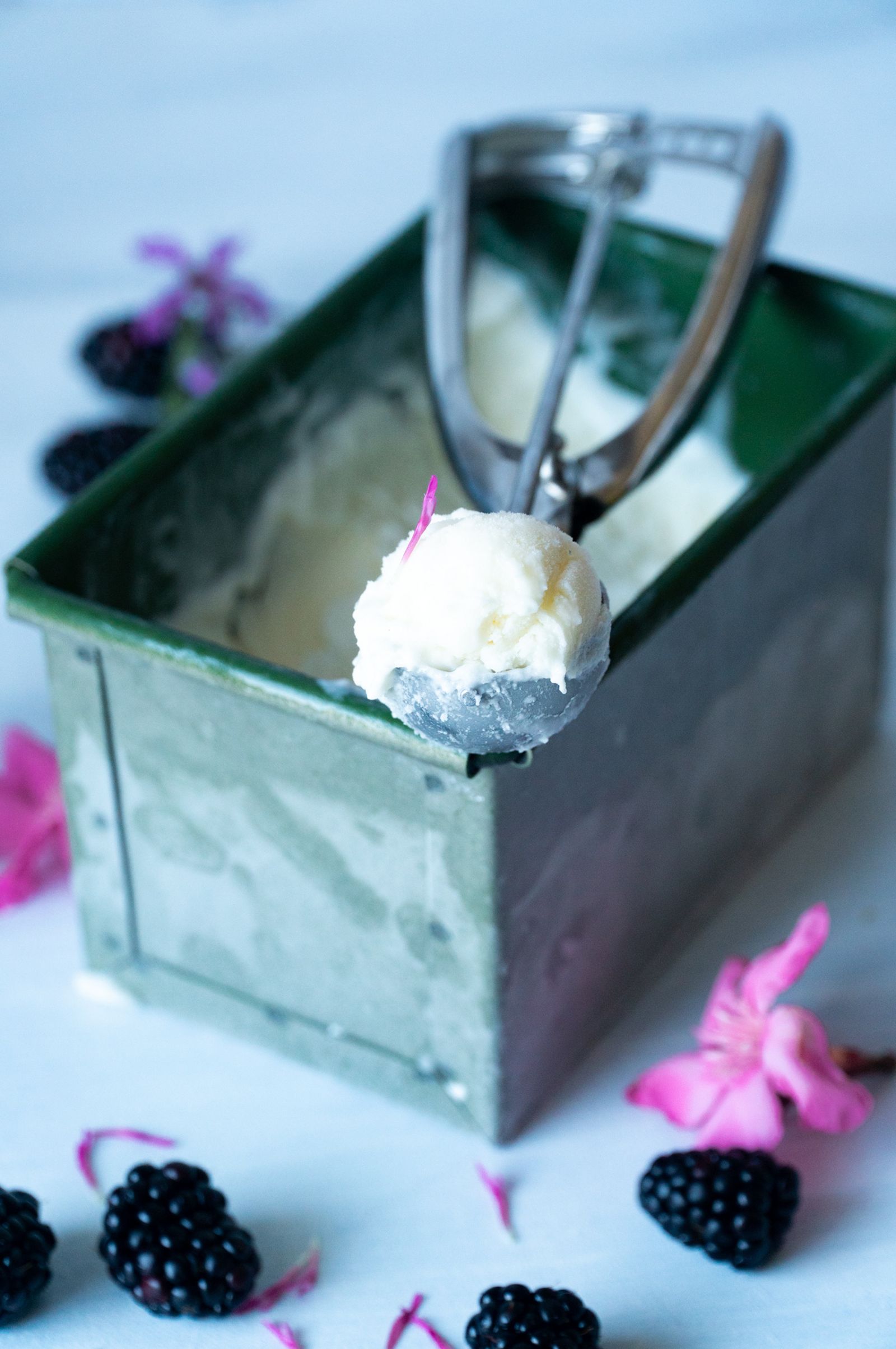
Quick answer
Set and verify a home freezer at 0°F (-18°C) or colder. More importantly, keep the temperature steady.
USDA and FDA use 0°F as the home-freezer target. This keeps properly handled food frozen and slows quality loss. It does not promise that an opened tub will stay creamy forever, and it cannot undo melting, repeated softening, a damaged closure, or poor handling before the tub reached your freezer.
The practical rule: measure the freezer, limit warm exposure, close the lid fully, and follow any more specific storage or disposal instruction on the product label.
Four decisions that are often confused
Temperature guide
What temperature should you use for each ice cream decision?
One temperature cannot answer every question. Separate the consumer baseline from a factory process, a commercial cold-chain specification, and the brief temperature change used for serving.
The commercial reference is 7 CFR §58.622 in the cited U.S. dairy-plant standards. It is included as context, not as a universal home, retail, or international specification.
Smooth texture depends on more than the freezer dial; temperature stability protects the ice crystal structure. Image: Pexels.
Texture science
Why does a steady temperature keep ice cream smoother?
Ice cream is a frozen foam and emulsion. It contains many small ice crystals, air cells, fat structures, sugar, water, milk solids, and other ingredients. The texture feels smooth when the crystals stay small enough that the tongue does not notice them as coarse particles.
When the product warms, some of the smallest crystals melt first. If it becomes colder again, that water does not always return to the same tiny crystals. It can freeze onto larger crystals. Repeated warm-cold cycles therefore move water toward fewer, larger crystals. This is called recrystallization, and it creates an icy or grainy texture.
Temperature swings can happen during a long trip home, repeated door opening, an overloaded display case, defrost cycles, poor airflow, or leaving the tub on a counter while everyone serves. A very low setpoint does not protect quality if the product repeatedly warms. Stable exposure is the real control.
Almacenamiento en casa
How do you keep ice cream fresh in a home freezer?
The best routine is simple enough to repeat every time. It limits both long warm events and small temperature cycles that slowly damage texture.
Do not press a freezer control to its coldest setting without checking the result. Excessively cold operation may waste energy, cause other products to freeze harder than intended, or mask a poor loading pattern. The useful result is a verified, stable cabinet that keeps the ice cream frozen.
Measure before adjusting
How should you check your freezer temperature?
Use a freezer-safe appliance thermometer and allow enough time for the reading to settle. Check it before changing the control, then check again after the appliance has had time to respond. A quick reading immediately after opening the door can reflect incoming room air rather than normal storage conditions.
If ice cream is often soft or icy, take readings in more than one location over several normal door-opening cycles. The back, door area, upper shelf, and space near an air outlet may not behave alike. Do not place packages against a sensor or block a vent just to create a colder reading.
A thermometer helps prevent guesswork, but it is not a complete history. After a known outage or melting event, use the product-specific disposal guidance rather than assuming that one cold reading proves the ice cream remained acceptable throughout the event.

Retail performance depends on actual product exposure during loading, defrost, door opening, and sale. Image: Pexels.
Retail and delivery
Why is the freezer display not enough evidence?
A display can show a setpoint or the reading from one sensor. That number may not represent the warmest package. Ice cream near a door, above a load line, beside a weak seal, in blocked airflow, or inside a cabinet during defrost can have a different exposure.
Retailers and distributors need controls that match the risk: product checks at receiving, mapped cabinet positions, alarm review, loading rules, defrost review, door and gasket maintenance, data loggers where justified, and a written action for deviations. A soft carton should trigger isolation and investigation, not a decision to place it deeper in the freezer and sell it later.
Power outage and melting
Can softened or melted ice cream be refrozen?
Do not use a generic frozen-food rule for ice cream after a power outage. The U.S. FoodSafety.gov product chart lists ice cream and frozen yogurt as discard items even in the column for products that still contain ice crystals and feel refrigerator-cold. It also lists them for discard when they were above 40°F (4°C) for more than two hours.
Refreezing only makes the product hard again. It does not restore the original small-crystal structure, remove contamination introduced during handling, or reveal how long the product stayed warm. Do not taste it to make the decision.
- Keep the freezer door closed and note when power failed.
- Use the thermometer and official local guidance when power returns.
- Evaluate each food category using its product-specific instruction.
- Discard ice cream and frozen yogurt according to the federal chart; do not rely on smell or appearance.
Quality versus safety
Do ice crystals or freezer burn mean ice cream is unsafe?
Not by themselves. Large crystals and graininess often show recrystallization or age. A pale, dry, shrunken surface can be freezer burn caused by moisture loss and air exposure. USDA describes freezer burn as a quality issue, not proof that a food became unsafe.
These signs still matter because they show that the product is no longer at its best. They may also prompt you to ask whether the lid was loose or the freezer temperature changed. But appearance cannot reconstruct time-temperature history. A normal-looking scoop does not clear a known outage, broken package, recall, or melting event.
Use the stronger evidence first: known thawing or outage history, package integrity, recall information, and manufacturer instructions. Judge minor crystals and freezer burn as quality clues only when the storage history is stable and the package stayed intact.
Factory process
How is hardening different from frozen storage?
After dynamic freezing and filling, ice cream is still relatively soft and contains unfrozen water. Manufacturers move the filled package through a rapid hardening step. Very cold, fast-moving air removes heat quickly so more water freezes before large crystals can grow. The University of Guelph describes hardening air commonly around -30°C to -40°C (-22°F to -40°F), depending on equipment and product.
Those air temperatures describe a process, not the final temperature of every package at every moment. Package size, shape, fill temperature, recipe, overrun, airflow, spacing, equipment load, and time all change the hardening curve. A family tub and a single-serve cup will not cool in the same way.
After hardening, the product moves into storage and distribution under a validated specification. A brand should not copy a number from another product and assume equal texture life. It should define the product temperature to achieve, the measurement location, maximum time, alarm response, and acceptance criteria for its real route.

Packaging and cold-chain fit
Can better packaging replace temperature control?
No. A container cannot make warm storage safe or stop recrystallization caused by temperature cycling. Packaging can support containment, lid retention, moisture and odor control, stacking, decoration, tamper evidence, and traceability. These functions protect the product only when the cold chain also works.
Performance must be confirmed with the filled product. A lid that fits at room temperature may behave differently after hardening, low-temperature impact, case compression, transport vibration, retail handling, and repeated opening. Food-contact status also depends on the materials and intended conditions of use, not merely the words “freezer safe.”
Honokage publishes an ice cream container range for formats from single-serve to family size. Use it as a starting point, then confirm the cup, lid, seal option, print system, fill conditions, hardening route, transport, display, and destination-market requirements for the actual project.
What should an ice cream brand validate?
- Recipe, overrun, inclusions, fat and sugar system, and expected texture endpoint
- Fill temperature, package size, hardening curve, storage setpoint, and allowed variation
- Cup, lid, seal, headspace, label, inks, adhesives, date code, and food-contact basis
- Case and pallet pattern, loading, vibration, low-temperature impact, and compression
- Warehouse, transport, retailer defrost cycles, door opening, and display position
- Temperature logger locations, alarm limits, deviation response, complaint data, and recall traceability
- Shelf-life sample plan, sensory scoring, crystal growth, package inspection, and change control

Supplier checks should become written, project-specific methods, sample sizes, limits, and responsibilities. See Honokage’s testing overview.
Common mistakes
Six ice cream storage mistakes to avoid
Frequently asked questions
Ice cream storage temperature FAQ
Is 0°F cold enough for ice cream?
Yes. USDA and FDA recommend 0°F (-18°C) as the home-freezer target. Keep the temperature steady and use a thermometer. Quality still declines with time, opening, air exposure, and temperature cycling.
Is -10°F better than 0°F?
A lower, stable temperature can slow physical quality changes, but -10°F is not a universal household requirement. Commercial specifications must reflect formula, process, route, equipment, energy use, local rules, and product testing.
Why is my ice cream hard at 0°F?
Serving hardness depends on sugar type and level, fat, milk solids, stabilizers, water, air, inclusions, and temperature. A firm tub does not mean the freezer is wrong. Let the portion temper briefly according to the product instructions rather than repeatedly warming the whole container.
Where should ice cream be placed in the freezer?
Use a consistently cold area toward the back, while keeping air vents clear. Avoid the door. Check different locations if the appliance has warm spots or if the tub often develops crystals.
Can I refreeze ice cream that softened in the car?
Do not rely on refreezing to reset an unknown warm history. If the product melted or its safe handling is uncertain, return or discard it. For a power outage, follow the ice-cream-specific FoodSafety.gov discard direction.
Do large ice crystals prove the ice cream thawed?
They support a quality diagnosis such as recrystallization, age, or temperature fluctuation. They do not reveal the peak temperature or warm time. Use stronger evidence if a safety decision is required.
How long does ice cream stay fresh at 0°F?
There is no one accurate duration for every product. Formula, overrun, package barrier, closure, opening frequency, storage stability, and the manufacturer’s quality target all matter. Follow the date and storage instructions on the actual package.
Can a freezer display replace a product temperature check?
No. It may show a setpoint or one sensor. Businesses should define where and how temperature is measured, map warm locations, review defrost and loading, and respond to deviations under their quality system.
For frozen dessert brands
Match the container to the real cold chain
A useful packaging discussion starts with the ice cream, fill and hardening process, storage target, transport and display route, opening experience, and destination-market requirements. Share these facts before choosing a cup or lid so testing reflects the conditions the package will actually face.
Supplier pages describe available capabilities. Final performance, shelf life, compliance, and suitability require project-specific confirmation by the responsible parties.
Final recommendation
For home storage, keep ice cream at 0°F (-18°C) or below and keep it steady. Verify the temperature, store the tub away from the door, serve promptly, close it fully, and follow the package instructions.
For businesses, separate hardening, warehouse storage, transport, retail display, and serving. Define each stage through product-specific validation. The goal is not the coldest possible number; it is a controlled cold chain that protects safety, texture, package integrity, and the customer experience.
Sources and further reading
- USDA AskFSIS: What is the right temperature for the freezer?
- FDA: Are You Storing Food Safely?
- USDA FSIS: Freezing and Food Safety
- FoodSafety.gov: Food Safety During Power Outage
- University of Guelph: Ice Cream Shelf-Life
- University of Guelph: Hardening
- U.S. Government Publishing Office: 7 CFR §58.622
- FDA: Food Types and Conditions of Use for Food Contact Substances
This article provides general educational information. Food businesses should follow their validated food-safety system, product specifications, contracts, destination-market law, and instructions from competent authorities.