


Choose Packaging Around the Food and How It Is Used
A treat tub and a large storage bin serve different purposes. Start with the food type, target pack weight and whether the container is sold filled or used for repeated storage.
Honokage offers injection molded PP formats with model-specific lid and accessory options. Review the complete configuration before choosing a size, seal or dispensing feature.
Compare Pet Food Container Models
Use the model reference to request a current drawing, usable volume and component list. Check the actual pet food weight with filled samples; nominal liters do not convert directly into pounds or kilograms of every food.

HL07-001
Dimensioni: Vasca: 124*93,1*161 mm
Coperchio: 129,3*98,3*13 mm
Capacità: 16 OZ
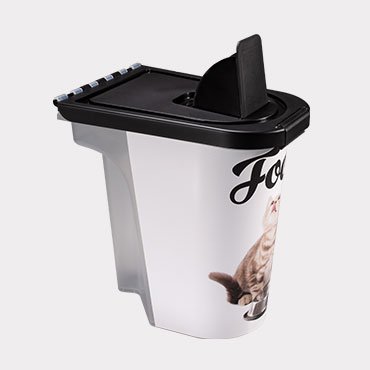
HL07-002
Dimensioni: 271,8*195,8*287,5 mm
Capacità: 7000 ml

HL07-003
Dimensioni: 320,5*259,3*337,3 mm
Capacità: 14300 ml

HL07-004
Dimensioni: 167,5*118,5*64,2 mm
Capacità: 1000 ml

HL07-005
Dimensioni: 124,3*95,3*75,7 mm
Capacità: 500 ml

HL07-006
Dimensioni: 124,3*95,3*41,8 mm
Capacità: 250 ml

HL07-007
Dimensioni: Vasca: 151*114mm
Coperchio: 156*120*13mm
Capacità: 887 ml

HL02-008
Dimensioni: 145,6*94,3*75,3 mm
Capacità: 500 ml
Applicazione dei contenitori per alimenti per animali domestici IML
-

Choose a bin around the intended food weight and storage routine. Review opening access, scooping, lid closure and the space needed to lift or move the filled container.
-

Plan the opening and pack size around the treat shape, portion and retail presentation. Coordinate IML artwork with flavor variants, feeding information and the selected lid configuration.
-

For a moisture-sensitive product, review the complete pack and storage conditions. Discuss any inner bag or separate seal and agree on product-specific evaluation before making a shelf-life claim.
Choose the Main Lid and Closing Method
Start by defining how the container is opened, closed and carried. Ask which matching lid is available for the selected body and whether the project needs a separate inner pack.
Agree on closure and storage-performance requirements using the intended food and handling conditions. A tight fit alone does not establish a moisture barrier or shelf life.


Review Material and Filled-Container Handling
Specify direct food contact, expected filled weight, storage conditions and the intended use cycle. Request material information and documents applicable to the food-contact use and destination market.
Evaluate the molded body and lid as a set. For large bins, include lifting, stacking and any movement expected during use.
IML Artwork for Your Pet Food Brand
Use the available label areas for brand identity, food type and pack information. Plan flavor or species variants with clear artwork references and quantities.
Check small text, barcode position and decoration around the dispensing area on samples. Explore our IML packaging solutions for design and development support.


Review Wheels for the Intended Load
If the project needs a mobile bin, provide the maximum filled weight, floor conditions and way the container will be moved. Ask whether a wheel configuration exists for the chosen model or requires development.
Evaluate loaded samples for movement, stability and clearance. Confirm wheels, fittings and assembly in the quotation rather than assuming they are standard accessories.
Match the Scoop to the Food and Opening
Review the scoop size, grip and storage location with the food particle size and container opening. Confirm whether the scoop is supplied separately or held by a feature in the lid or body.
A scoop volume is not a universal feeding weight. Verify portion information with the actual food before using it in customer instructions.


Confirm the Seal as Part of the Lid System
For a sealing-ring design, request the gasket material, seating arrangement and replacement or cleaning information relevant to the intended use. Confirm compatibility with the exact lid and body.
Evaluate the assembled pack under the agreed conditions. Keep any airtight or moisture-protection claim tied to evidence for that configuration.
Dispensing Openings for Everyday Access
A smaller opening may suit pouring or scooping without removing the full lid. Check its usable opening against the food size, intended portion and handling method.
Evaluate opening force, closure and cleaning access on the selected design. A dispensing window is an option to review, not a feature shared by every model.

1. Fill a sample with the intended food and confirm its weight and usable volume.
2. Check the lid, dispensing opening and scoop with the actual handling routine.
3. Evaluate carrying or wheel movement at the planned load.
4. Confirm contact materials, cleaning instructions and any storage-performance evidence.
5. Approve the component list, artwork, packing and inspection criteria for the bulk order.
Fill a sample with the intended food and confirm its weight and usable volume.
Check the lid, dispensing opening and scoop with the actual handling routine.
Confirm contact materials, cleaning instructions and any storage-performance evidence.
Evaluate carrying or wheel movement at the planned load.
Approve the component list, artwork, packing and inspection criteria for the bulk order.
Prodotti correlati


IML Pet Food Storage Container Purchasing FAQs
It includes formats that can be reviewed for either purpose. State whether the container will be sold filled, supplied empty for household storage or used commercially. The required closure, accessories and handling checks differ.
Honokage produce contenitori per alimenti per animali domestici in PP stampato a iniezione, disponibili in diverse capacità e strutture. I nostri prodotti sono adatti per la conservazione di alimenti secchi, il confezionamento di snack, il confezionamento di mangimi per insetti, l'esposizione al dettaglio e lo stoccaggio commerciale.
Gli acquirenti possono scegliere stampi esistenti per progetti più rapidi oppure sviluppare stampi personalizzati per capacità specifiche, struttura del coperchio, design del cucchiaio, funzionalità della ruota o posizionamento del marchio.
Honokage supporta progetti personalizzati di contenitori per alimenti per animali domestici con stampa IML, dalla selezione degli stampi alla produzione in serie. Che si tratti di piccoli contenitori per snack, contenitori per mangimi per insetti, contenitori per cibo secco per cani, contenitori per cibo per gatti o imballaggi per alimenti per animali domestici con etichetta privata, il nostro team può assistervi nella scelta delle dimensioni, nella progettazione della struttura, nella realizzazione della grafica IML, nella verifica dei campioni e nella produzione.
No. Confirm the configuration available for the selected body and lid. Ask the quotation to list each accessory, its quantity and any assembly needed.
Use the actual food to check a filled sample. Kibble shape, particle size and bulk density affect the weight that fits within the usable volume. Product names in pounds or kilograms should be confirmed for your food.
Confirm the intended use cycle, approved cleaning method and drying instructions for the complete set. Check the body, lid, gasket and accessories together. PP material alone does not define an unlimited reuse or dishwasher claim.
Review the food, complete closure, inner packaging and expected storage conditions together. Agree on appropriate product and packaging evaluation. Do not infer a shelf-life period from IML decoration or a sealing ring alone.
Provide the specific product, contact conditions and pack weight for review. Check dispensing, closure and labeling requirements for that use rather than assuming one specification covers every feed product.
Send a model or drawing, food type, target filled weight, intended use, lid and accessory requirements, artwork versions and quantities. Include carton needs and destination so sampling, MOQ and timing can be confirmed.