



The short answer
What is the best container for homemade ice cream for kids?
Choose by how the dessert will be served, not by a material slogan. A shallow lidded tub is the easiest default for scoopable ice cream. A simple silicone or plastic mold works for one-at-a-time pops. Small lidded cups help separate flavors and make a modest first serving easy to offer.
Look for an intended-use statement for both food contact and freezer storage. The lid should close fully after freezing. The inside should be easy to wash. The container should stay intact when cold. Around young children, avoid breakable glass and loose decorative pieces.
Important limit: a container can support portioning, hygiene and frozen quality. It cannot lower the recipe’s sugar or saturated fat, remove allergens, make raw eggs safe or decide how much a particular child should eat.
Match the format to the job
Homemade ice cream container comparison
These are format recommendations, not product endorsements. Check the exact item and follow its care instructions.
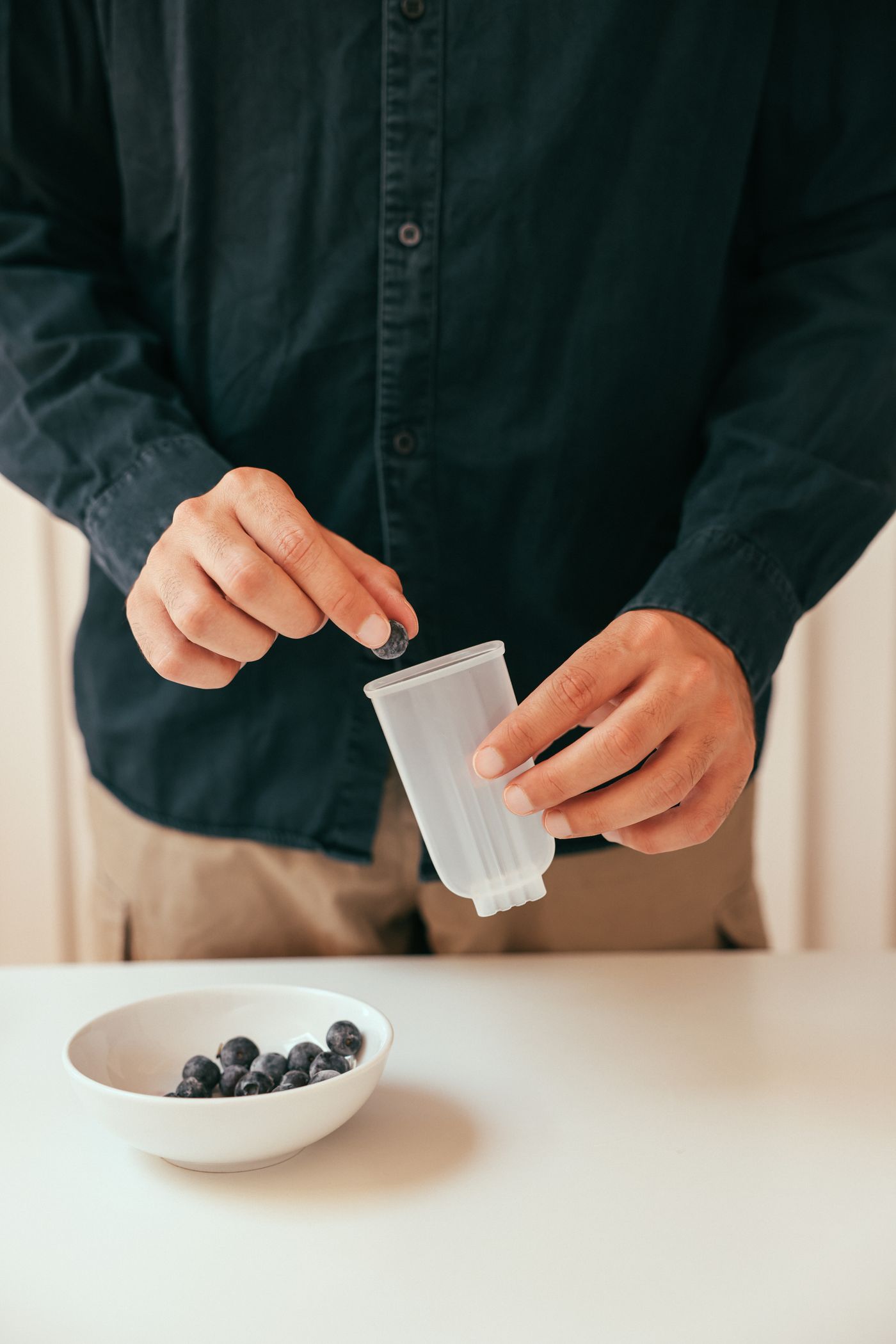
A mold creates separate servings, but its stick slots and small recesses still need to be easy to wash. Image: Cup of Couple / Pexels.
Nutrition and packaging are different decisions
What can a container do for a “healthier” frozen treat?
At home, “healthy” is best treated as a family-planning idea, not a promise made by the container. The recipe, the child’s needs, allergies, serving pattern and overall diet matter. A small cup or mold can make the amount visible. It cannot change the ingredients inside.
The American Academy of Pediatrics suggests offering a child less first and allowing the child to ask for more if still hungry. That approach is more useful than declaring one cup size correct for every child. Appetite, age, growth, activity and medical needs vary.
The American Heart Association advises that children ages 2–18 keep added sugars to no more than 25 g per day and that added sugars should not be part of the usual diet of children under 2. This is whole-day guidance. It is not a target for one dessert and not a reason to turn one cup size into medical advice.
For a packaged U.S. product: “healthy” is a regulated voluntary nutrient-content claim. FDA’s updated definition considers food-group content and limits for added sugars, saturated fat and sodium. A smaller cup, fruit picture or yogurt ingredient does not prove that a product qualifies.

Cup and tub formats can support different serving routines. Their capacity is a packaging choice, not a universal child portion. Image: Honokage.
Air, time and temperature shape the texture
How does the container help prevent icy homemade ice cream?
Freezer burn is a quality problem caused by air reaching the food surface. It can dry the top and harm flavor and texture. A close-fitting lid and less empty air above the ice cream can help. They cannot correct a weak recipe or repeated melting.
USDA advises keeping the freezer at 0°F (-18°C) or below. It also notes that quick freezing forms smaller ice crystals than slow freezing. At home, use a practical batch depth, make room for cold air and avoid leaving the tub on the counter during a long serving session.
Do not confuse quality with safety. Freezer burn alone does not make food unsafe. But freezing does not kill most bacteria, and a strong container cannot make mishandled or repeatedly softened ice cream safe.
Food safety comes before packaging
Which food-safety checks matter most?
A clean freezer container is useful, but it is not a cooking or pasteurization step. Plan the recipe, tools and cold storage together.
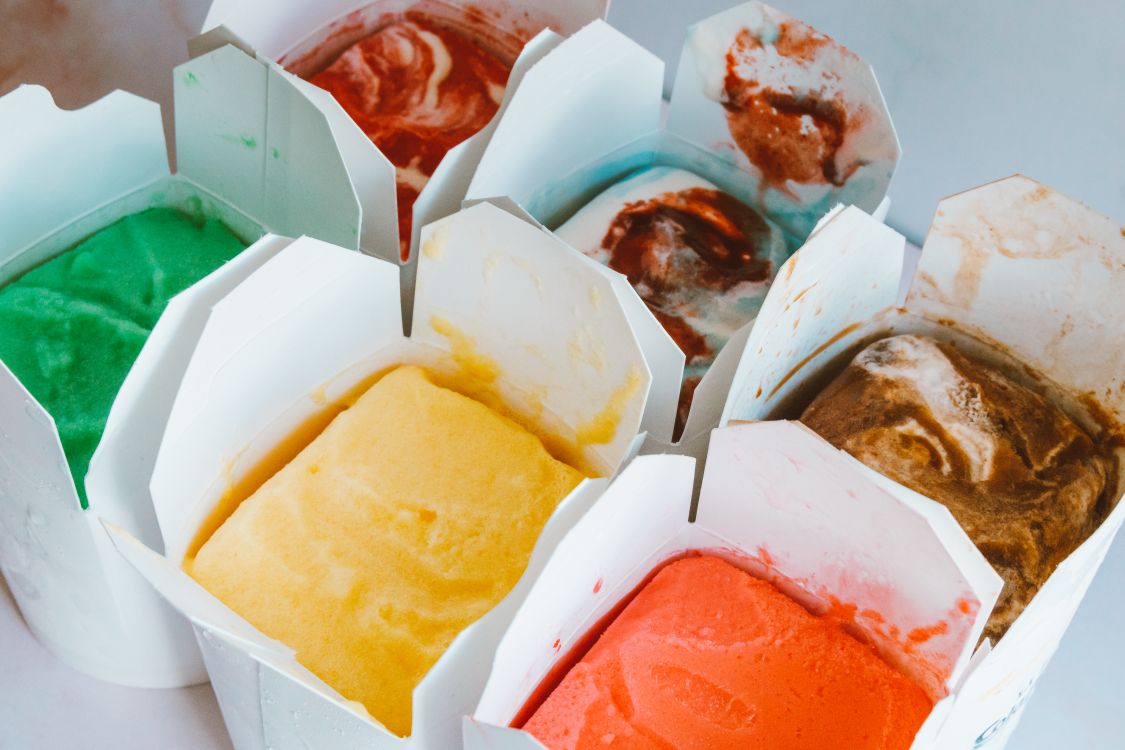
Small formats can separate flavors and serving occasions, but they do not define one correct amount for every child. Image: Jess Loiterton / Pexels.
Kid-friendly does not mean toy-like
Which container features make serving easier for children?
The goal is calm, supervised serving. Choose a stable base, rounded intact edges, enough room for a spoon and a lid that an adult can remove without using a knife. A cold lid may become stiff, so test it after a full freeze cycle.
Do not add loose toppers, detachable decorations or small accessories just to make the pack look playful. U.S. CPSC small-parts rules apply to certain products intended for children under three. A food container is not automatically a toy, and legal classification depends on the full product and its marketing. The safer design lesson is simple: avoid unnecessary detachable pieces and get specialist review for child-directed commercial packs.
A seven-step family check
How should a family choose and test a container?
What do common storage problems tell you?

A catalog size is only a starting point. Brands should confirm working capacity, lid fit, frozen performance, artwork and real-product handling. Image: Honokage.
For small brands and packaging buyers
How do you turn family needs into a package specification?
A child-focused package needs more than a fun shape. Treat it as a system: dessert + fill process + container + lid or membrane + decoration + spoon or stick + hardening + cold chain + label + consumer use.
In the United States, FDA food-contact evaluations depend on the intended food type and use condition. Frozen dairy is not the same use as a dry snack or a hot-filled product. Review the complete article, including resin, colorants, label, ink, adhesive, lid and sealant. “BPA-free,” “food grade” or a generic material sheet is not the full answer.
Start with Honokage’s ice cream container range e il 500 ml container example. Then test the format with the real product and process. Product availability and all performance or compliance claims must be confirmed for the selected pack and market.
Quello di Honokage testing overview can help frame sample checks. The food brand, filler and qualified advisers remain responsible for the product’s food-safety plan, legal labeling, qualification and release decisions.
Frequently asked questions
Homemade ice cream container FAQ
Qual è il contenitore migliore per il gelato fatto in casa?
For most families, use a small, rigid food-contact container with a close-fitting lid when the maker says it is suitable for freezer storage. A low, broad tub is easier to scoop from than a tall narrow container.
Are silicone molds good for homemade frozen treats?
Yes, when the exact mold is intended for food contact and freezer use. Choose a simple design that can be washed fully around the stick, handle and drip guard. A mold is better for pops than for a bulk scoopable batch.
Can homemade ice cream go in glass?
Only use a glass container that its maker rates for freezing. Follow its headspace and temperature-change instructions, and keep handling with an adult. Do not use an ordinary drinking glass or random jar.
Does BPA-free mean a container is safe for every use?
No. BPA-free describes one issue. It does not prove freezer strength, lid performance, cleanability or the regulatory status of every component. Check the complete product and its intended-use statement.
What size ice cream cup is right for a child?
There is no universal size. Offer a modest amount that fits the child and the meal, then allow more when appropriate. A small cup is a routine tool, not a nutrition prescription.
How do I stop freezer burn?
Use an intact, close-fitting freezer container, limit extra air, freeze promptly and hold at 0°F (-18°C) or below. Return the family tub quickly after serving and avoid repeated softening.
Can I freeze ice cream made with raw eggs?
Freezing does not make raw eggs safe. Use pasteurized shell eggs, pasteurized egg products, an egg substitute, a cooked base or an egg-free recipe, as appropriate.
Should I use cups or one family tub?
Use cups or molds for separate flavors, parties and planned servings. Use a family tub when an adult will scoop and return it to the freezer quickly. Many homes benefit from both.
Can a small brand print “healthy” on the pack?
Not without formula- and market-specific review. In the United States, the claim has FDA criteria. A small pack, fruit image or homemade position does not show that the finished food qualifies.
For family and kid-focused frozen dessert projects
Discuss the real product, closure and freezer cycle
Share the dessert type, target net quantity, fill condition, container shape, lid or membrane, serving method, intended age group, hardening cycle, cold chain, destination markets, artwork and forecast. Honokage can discuss format options and samples; all food-contact, child-use and performance claims must be confirmed for the final system.
Final recommendation
Choose the serving routine first, then verify the container
Use a small, reusable freezer-rated tub as the default for scoopable homemade ice cream. Add molds for pops and small lidded cups for separate servings. Use glass only when the exact product permits freezing and an adult handles it.
Then focus on what matters most: a safe recipe, clean tools, prompt freezing, a stable 0°F (-18°C) freezer, a portion that fits the child and a package claim that does not go beyond the evidence.
Sources and further reading
- FDA: Enjoying Homemade Ice Cream Without the Risk of Salmonella Infection — pasteurized eggs, cooked bases and egg-free alternatives.
- USDA FSIS: Freezing and Food Safety — 0°F storage, freezer burn, quick freezing and softened ice cream.
- National Center for Home Food Preservation: Containers for Freezing — low-temperature durability, leak resistance, sealing and glass limitations.
- American Academy of Pediatrics: Making Sure Your Child Is Eating Enough — child-sized portions and responsive serving.
- American Heart Association: Added Sugars and Children — whole-day added-sugar guidance.
- FDA: Food Types and Conditions of Use for Food Contact Substances — dairy foods and frozen-storage use conditions.
- FDA: Updated “Healthy” Nutrient Content Claim — current U.S. claim framework.
- CPSC: Small Parts and Choking Hazard Labeling FAQs — U.S. child-product scope and small-parts context.
Limitations: this page provides general family and packaging information. It is not pediatric nutrition advice, a food-safety plan, a product certification or a legal classification. Follow the exact recipe, container instructions and requirements of the intended market.