


Quick answer
To source custom plastic storage boxes, define the storage job before requesting prices. Give every qualified supplier the same usable dimensions, payload, stack or nest requirement, lid and handle functions, service environment, appearance, packaging, forecast, and destination-market requirements. Compare the same customization scope and total landed cost. Approve only production-intent samples that pass written tests, then lock the material, mold, process, site, inspection, and packaging before mass production.
Start with
The storage job
Contents, load, users, route, and environment.
Define
Usable space
Not just catalog or brimful capacity.
Compare
One RFQ basis
Expose assumptions, exclusions, and deviations.
Release after
Real-box tests
Verify the intended tool, grade, process, and pack.
This guide is for importers, distributors, retail brands, product managers, procurement teams, and industrial buyers sourcing storage boxes, bins, organizers, lidded totes, or related injection-molded systems. It explains the buying process; exact safety, legal, customs, and compliance duties still depend on the product, use, market, and contract.
Choose the right level of customization first
“Custom” can mean four very different projects. An existing stock box is fastest and carries the least tooling risk. Color, logo, label, and retail packaging changes add brand identity without changing the core product. A modified design may use interchangeable inserts or limited tooling changes. A fully custom box creates new geometry and usually needs a new mold, deeper validation, and stronger ownership controls.
Existing design
Best when fit, load, appearance, and supply terms already meet the need.
Brand customization
Change color, decoration, labels, inserts, or packaging while keeping proven geometry.
Modified platform
Use when one controlled feature creates value without rebuilding the entire system.
New custom tool
Justify it with unique function, volume, branding, automation, or supply control.
Ask suppliers to quote the lowest-risk path that still meets the business case. A new mold is not automatically better, and a catalog item is not automatically cheaper after decoration, packaging, freight cube, inventory, and market fit are considered.
Define the storage job in operating terms
Write a short use-case statement before drawing the box. Name the contents, typical and maximum payload, center of gravity, users, carrying frequency, shelf or conveyor, stack height, stack duration, indoor or outdoor exposure, temperature, chemicals, cleaning, transport route, and realistic misuse. “Heavy duty” is not measurable; “six loaded boxes stacked for eight weeks in a warm warehouse” can become a validation condition.
Think about failure beyond a cracked wall. A box can bow until its lid releases, jam while nesting, tip in a stack, pull out a handle, break a latch, scuff in transit, or creep slowly under load. State which outcomes are unacceptable and what happens after a minor deformation.

Warehouse stacking makes time, temperature, support, alignment, and payload part of the specification. Photo: Aibek Skakov / Pexels, Pexels License.
Specify usable dimensions and capacity correctly
Capacity is not one number. Record external length, width, and height; usable internal dimensions at the limiting points; opening clearance; and the exact capacity method. Nominal, brimful, and practical usable capacity can differ because of draft, ribs, lid domes, wheel pockets, curved corners, and fill lines.
Send the largest real contents, a packing diagram, mating shelf or pallet dimensions, and lid or divider interfaces. Mark dimensions that control fit, stacking, automation, labeling, or closure as critical-to-quality. For each critical feature, define datums, limits, conditioning, support or fixture, measurement method, and sample frequency. Tighten only what protects function; large molded boxes can warp and move with time, temperature, and loading.

Outside size, opening size, inside clearance, and lid geometry should be controlled separately.
Select a material grade—not only PP or HDPE
PP and HDPE are common starting families, but neither is best for every storage box. The exact grade, additives, colorant, recycled content, wall design, molding conditions, and use temperature affect stiffness, impact, creep, hinge life, chemical resistance, warpage, appearance, and cost. PC or ABS can suit narrower performance or appearance needs, but they bring different processing, chemical, UV, compliance, and price questions.
The RFQ should name the approved manufacturer and grade or define measurable performance and an alternate-approval process. Control virgin material, post-consumer recycled content, in-process regrind, UV or impact modifiers, masterbatch, traceability, and substitution. A suitable unfilled PP may support a molded living hinge, but hinge thickness, flow direction, weld lines, process, temperature, and cycle test still determine the result. A resin data sheet is not a finished-box load rating.
Engineer the whole box as one system
Review the body, rim, base, lid, hinge, latch, handles, wheels, dividers, labels, stack interface, nest release, and transport packaging together. Follow each load path. A stiff wall does not help if the rim spreads, the base concentrates load, the handle creates a crack point, or the lid disengages after creep.
Before steel is cut, complete design-for-manufacturing review. Keep walls reasonably uniform, core out thick masses, transition gradually, add practical draft, and use ribs where stiffness is needed. Review gate and weld-line location, parting, ejection, cooling, shrinkage, warpage, texture, logos, snap fits, wheel pockets, and contact surfaces. Ask the supplier to show proposed gate, runner, cooling, parting, and ejection layouts and to record unresolved risks.

The box, lid, closure, handles, stack features, and packaging need compatible tolerances and tests.
Use six approval gates to control the project
A gate should name the released revision, evidence reviewed, open risks, owner, and decision. The labels T0, T1, and T2 vary by supplier, so define the evidence instead of relying on the label.
Approval allows the next commitment; it does not erase recorded risk or authorize later changes.
Qualify the legal seller and the real factory
Verify the business registration, invoice entity, production site, mold location, export entity, and bank beneficiary. Learn what is subcontracted: tooling, molding, printing, labels, assembly, testing, or packing. A trader may be useful and an integrated factory may be capable, but accountability, control, and visibility must be clear.
Request equipment relevant to the box size and projected cavities, material handling, tool maintenance, inspection capability, recent comparable work, capacity by peak month, preventive maintenance, backup plans, lot traceability, and corrective-action examples. An ISO 9001 certificate can support quality-system screening, but it is not product approval. Confirm that its legal entity, site, scope, and status match the proposed source.

Machine size alone is not capacity evidence; tooling, cycle, labor, auxiliaries, maintenance, and reserved production time also matter.
Send one controlled RFQ to every bidder
Use a part number, revision, issue date, units, and attachment list. Include drawings or approved references; outside and usable inside dimensions; payload and stack/nest conditions; exact components; material and color rules; appearance zones; forecast and peak demand; samples and tests; quality records; pack-out; destination; schedule; and commercial terms.
Require a requirement-by-requirement response. Each supplier should separate confirmations, proposals, assumptions, exclusions, deviations, and missing information. Ask for the exact grade, proposed part weight, cavities, mold construction, runner, expected tool life basis, trial rounds, press/site, cycle and yield assumptions, monthly capacity, inspection, sample quantities, packing data, MOQ, price tiers, lead times, payment milestones, and exact Incoterms 2020 rule with named place.
Compare total landed project cost—not piece price
Normalize each quotation first. A lower unit price may assume a different resin, thinner part, shorter tool life, larger MOQ, bulk packing, fewer reports, no testing, or a different delivery point. Calculate scenarios that combine qualified part cost, tool amortization, decoration, components, sample and test costs, inspection, packaging, freight and insurance, duties and clearance, local delivery, inventory financing, expected defects and returns, tool maintenance, and contingency.
MOQ is usually driven by material and color purchase lots, machine setup, production run economics, decoration, component order quantities, cartons, and logistics—not a universal factory rule. Compare how each MOQ fits your release pattern and forecast risk. Then score suppliers on technical understanding, material control, tooling, quality evidence, capacity, cost transparency, logistics, change control, and communication. Adjust the weights to the application.
Put mold ownership and exit rights in writing
Paying a mold invoice does not by itself settle ownership, authorized use, storage, maintenance, data rights, or transfer. Before tooling starts, define ownership of the mold base, cavities, inserts, hot-runner components, fixtures, gauges, CAD, drawings, programs, spares, and approved improvements. Mark buyer-owned assets with unique identification where appropriate.
The agreement should cover tool location and permitted products, third-party use, shot-count and maintenance records, wear and damage, repairs, warranty, insurance, inspection access, inactivity, transfer condition, packing, timing, costs, lien treatment, and cooperation with a successor. Use legal and customs advice for the actual transaction and jurisdiction.

Tool scope, correction responsibility, maintenance, records, and transfer rights should be agreed before irreversible machining.
Approve production-intent samples in stages
A prototype can check size, ergonomics, shelf fit, branding, and obvious interference. It cannot prove molded shrinkage, warpage, hinge life, stack strength, surface consistency, or production repeatability. Initial tool samples should identify the resin lot, color, cavity, tool revision, machine, settings, sample count, known handwork, dimensions, weight, and open actions.
Correction samples should cover all cavities and the agreed dimensions, fit, appearance, lid, latch, handle, nesting, stacking, and environmental tests. Final approval needs the intended tool, grade, color, components, decoration, process window, production site, and packaging. Keep the signed drawing, reports, deviations, process record, and serialized golden or limit samples together. A golden sample helps align appearance; it does not replace numerical or written acceptance criteria.
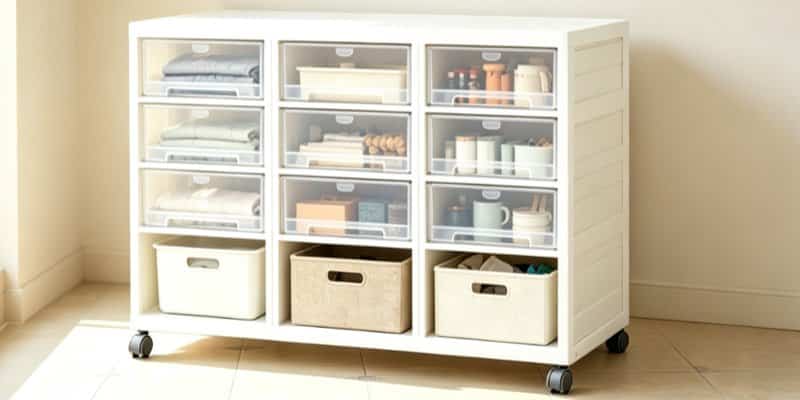
Sample approval should identify what was made, how it was made, what passed, and what remains open.
Validate the actual box under realistic conditions
Build tests from the use-case risks. Verify dimensions and mating fit after conditioning; payload and handle performance under realistic loading; lid and latch cycles; filled drop orientations; nest and denest force; temperature, UV, detergent, oil, or disinfectant exposure when relevant; and the complete distribution pack. Record configuration, resin, cavity, conditioning, payload, center of gravity, temperature, duration, sequence, support, and pass/fail limits.
Do not turn one peak compression result into a warehouse stack rating. Short-duration compression and long-duration constant-load behavior answer different questions, and plastics may creep faster as temperature increases. Likewise, an accelerated weathering comparison is not automatically a guaranteed number of outdoor years. Use a suitable published method as a framework, then define conditions and acceptance for the real product.
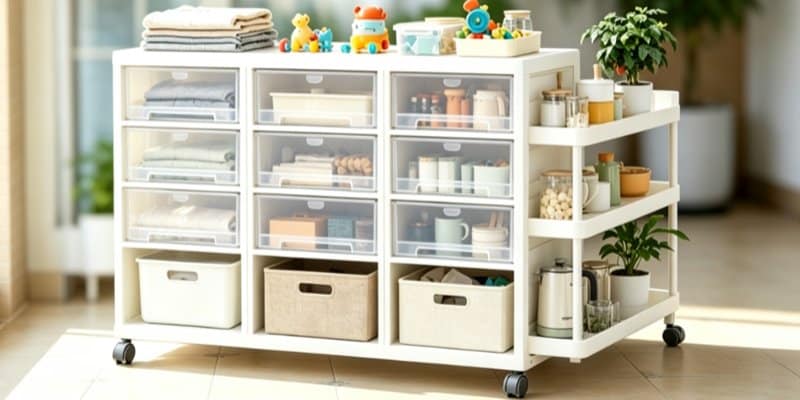
Validate the approved box, lid, components, label, and pack—not a resin coupon or unrelated showroom sample.
Lock production quality and change control
The control plan should state what is checked, how, when, by whom, and what happens after failure. Control incoming grade, lot, color, additives, and recycled or regrind rules. At startup and during production, verify tool revision, cavity, machine, approved process window, part weight, critical dimensions, appearance, lid and accessory fit, and inspection frequency. Final lot release should include traceability, quantity, labels, pack-out, reports, and authorized disposition.
If acceptance sampling is used, define the complete plan rather than writing only “AQL 2.5.” State the standard and version, lot, inspection level, AQL by defect class, sample selection, acceptance and rejection numbers, critical-defect policy, reinspection, and records. Require written approval before changes to material, color, recycled content, tool, gate, cavity, machine, process, site, subcontractor, component, inspection method, decoration, or packaging.

Early inspection should connect part results to the material lot, cavity, tool revision, machine, and process record.
Match compliance and claims to the intended use
An ordinary household organizer, a direct-food-contact box, a child-directed toy chest, and an industrial distribution tote have different risks and obligations. Create an intended-use and destination-market matrix. Identify users, contents, contact conditions, foreseeable hazards, required labels or warnings, tests, declarations, traceability, and the party responsible for each item.
PP or HDPE is not automatically “food safe.” Food-contact review may need the exact resin, additives, colorant, recycled content, food type, temperature, contact time, repeated-use conditions, cleaning, and evidence for the target market. Child-use designs may need assessment of lid fall, pinch, locking, entrapment, ventilation, small parts, and marketing scope.
Environmental claims need equal care. A resin identification code names a plastic category; it does not prove that the complete product is recyclable in the buyer’s market. State the exact recycled-content percentage and component, calculation basis, and evidence. Qualify recyclability claims for collection, sorting, labels, lids, mixed materials, and local availability.
Approve packaging and freight with real pack data
Storage boxes are bulky, so packaging can change the sourcing decision. Define nesting orientation and depth, lid and accessory position, scuff protection, anti-jam features, bags or sleeves, units per carton, carton strength basis, gross and net weight, pallet size, pattern, height, overhang, labels, lot identification, and safe unloading.
Do not calculate container quantity from CAD alone. Measure an approved production pack and allow for pallet clearance, protection, bracing, doors, weight limits, humidity, deformation, and unloading sequence. Validate the actual route where risk justifies it. Write the exact Incoterms 2020 rule and named place, then separately define title, payment, insurance, documents, inspection, duties, remedies, and import responsibility.
Watch for sourcing red flags
Price before technical questions
Require a written assumption and deviation matrix before comparing it.
Material listed only as PP or PE
Approve an exact grade, color system, content rules, and no-substitution process.
Very cheap mold with vague scope
Ask for steel, cavities, runner, trials, life basis, maintenance, and transfer terms.
Unrelated showroom sample
Release production only from correctly identified production-intent evidence.
Universal “unbreakable” claim
Ask for configuration, conditions, method, limits, and market basis.
No change-notification rule
Contract prior approval and risk-based revalidation before changes.
Final buyer checklist
- Document contents, payload, handling, stack/nest, environment, cleaning, users, route, and market.
- Control outside, usable inside, opening, capacity method, components, interfaces, revision, and critical features.
- Approve exact material, color, additive, recycled/regrind, traceability, and substitution rules.
- Complete DFM for walls, draft, ribs, gate, parting, ejection, cooling, warp, and system loads.
- Verify seller, sites, equipment, subcontractors, records, peak capacity, continuity, and payment identity.
- Normalize mold, part, MOQ, samples, testing, packaging, delivery, and total landed-cost assumptions.
- Contract tool scope, ownership, use, maintenance, records, storage, correction, and transfer.
- Approve all-cavity production-intent samples, tests, pilot run, traceability, pack, and deviations.
- Lock quality controls and prior approval for material, tool, process, site, supplier, and pack changes.
Frequently asked questions
Which plastic is best for storage boxes?
There is no universal best resin. PP often suits stiffness, low density, and correctly designed living hinges; HDPE can suit impact and chemical-resistance needs. Exact grade, additives, temperature, load duration, design, process, appearance, supply, and compliance decide the choice. Test the production-intent box.
Should I use an existing box or open a new mold?
Use an existing design when its usable size, function, performance, appearance, supply terms, and packaging fit. Consider new tooling when unique geometry, branding, automation, volume, landed cost, or supply control creates enough value to repay the added risk and validation.
What determines the MOQ for custom storage boxes?
MOQ can come from resin and color lots, machine setup, efficient run length, decoration, accessory orders, cartons, or freight. Ask suppliers to separate each driver and quote quantity tiers. A useful MOQ must match the buyer’s release pattern and inventory risk.
Which box dimensions should appear in the RFQ?
State maximum outside dimensions, usable internal dimensions at limiting points, opening clearance, capacity method, lid height, nest depth, stack pitch, and mating shelf, pallet, carton, divider, or automation interfaces. Identify critical features and their measurement conditions.
How should a stack-load claim be verified?
Define payload per box, stack levels, alignment, lid state, support, duration, temperature, humidity, conditioning, allowable deflection, recovery time, and failure limits. Short compression may help compare structures, but sustained-load testing is needed when warehouse creep controls the decision.
Is a polypropylene storage box automatically food safe?
No. Food-contact status depends on the exact resin, additives, colorant, recycled content, every relevant component, food type, contact time and temperature, repeated use, cleaning, manufacturing controls, and destination-market rules. Match documentary and test evidence to the final product.
Who owns a custom storage box mold?
Ownership is a contract issue; payment alone may not answer every right. Define the included assets and data, authorized use and location, markings, maintenance, inspection, storage, modifications, insurance, transfer, liens, costs, timing, and exit cooperation before tooling begins.
How can buyers reduce freight cost on bulky boxes?
Compare nest depth, lid and accessory placement, carton or pallet configuration, scuff protection, anti-jam design, measured production-pack cube, damage risk, route, and unloading. Optimize total delivered cost and product protection—not container count alone.
Prepare a useful sourcing review
Send the use case—not only a catalog photo
Share usable dimensions, contents and payload, stack or nest requirements, lid and handle functions, material target, branding, demand forecast, destination market, pack-out, and launch timing. Honokage can review project fit, customization direction, tooling needs, sampling, and quotation scope.
Technical sources
- ISO 20457:2026: Plastics moulded parts—Tolerances and acceptance conditions — current dimensional and geometrical tolerance context; specified surface imperfections remain outside its scope.
- ISO 9001:2015: Quality management systems—Requirements — supplier-system evidence, not product approval.
- ASTM D642-25: Compressive resistance E ASTM D4577-19(2023): Constant-load compression — different frameworks for short applied compression and sustained loading.
- ASTM D7386-25: Single-parcel delivery testing — applies to a complete packed shipping unit within its scope, not a bare box rating.
- ASTM D7611/D7611M-21: Resin identification — a resin code does not by itself establish recyclability.
- U.S. FDA: Inventory of food-contact substances listed in 21 CFR — food-contact review must match substance and conditions of use.
- European Commission Regulation (EU) No 10/2011 — plastics intended for food contact in the EU require use-specific compliance work.
- U.S. FTC: Environmental Claims—Summary of the Green Guides — environmental claims need substantiation and appropriate qualification.
Sources were checked on 12 August 2026. Standards supply frameworks; the buyer must still define product-specific conditions, samples, acceptance limits, and the governing edition in the contract.