



Quick answer
Yes, you can freeze yogurt. Keep the freezer at 0°F (−18°C) and plan to use it within un à deux mois for practical quality. The main trade-off is texture: after thawing, yogurt may release whey, become grainy or lose its thick body. Freeze fresh yogurt in small airtight portions, leave expansion space, thaw it in the refrigerator, then stir or blend it.
Freezing works best when avoiding food waste or preparing smoothie, baking and cooking portions matters more than preserving a perfect fresh texture. A cup of ordinary refrigerated yogurt also will not turn into soft commercial frozen yogurt dessert. It usually freezes into a firm, icy block because it was not formulated and processed as a frozen dessert.
Keep three questions separate
Food safety: Was the yogurt fresh, continuously cold and protected by an intact package?
Texture quality: Did ice crystals weaken the yogurt gel and release liquid?
Live cultures: Were the exact microorganisms tested through the intended frozen storage period?
What to expect before you freeze yogurt
Why frozen yogurt becomes watery or grainy
Yogurt is a protein gel, not simply a thick liquid. Fermentation changes milk proteins so they form a fine network that holds water, dissolved solids and fat droplets. When part of that water freezes, ice crystals press against the network and concentrate the material that remains unfrozen.
After thawing, the disturbed gel may not hold all its water again. A pale liquid layer can appear on top, and the yogurt may feel loose, curd-like or sandy. The release of liquid from a gel is called syneresis. A small amount of separated whey is usually a texture change, not proof of spoilage.
Fresh gel
A connected protein network holds serum and gives yogurt its smooth body.
Ice formation
Water becomes ice, crystals create physical stress and the unfrozen phase becomes more concentrated.
Thawed yogurt
The weakened network releases whey and may not rebuild its original texture.
Fast freezing generally forms smaller crystals than slow freezing. Temperature swings can also let crystals melt and grow again, a process called ice recrystallization. Small shallow portions and stable freezer temperatures help reduce damage, although they cannot guarantee a perfect texture.
How to freeze yogurt in seven practical steps
- Start with fresh, cold yogurt. Do not freeze yogurt with mold, an abnormal odor, a broken seal, a leaking cup or a history of being left warm. Freezing pauses microbial growth; it does not restore freshness.
- Choose single-use portions. Freeze one snack, smoothie or recipe amount at a time. Small portions freeze faster and avoid thawing more than you need.
- Use freezer-suitable packaging. Choose a clean, food-contact container or freezer bag that is leakproof, moisture-vapor resistant and unlikely to become brittle at low temperature.
- Leave expansion space. Do not fill a rigid container to the rim. Yogurt contains water, so the package needs headspace as the contents freeze.
- Seal and label it. Record the yogurt type, portion, freeze date and planned use. A tight seal reduces odor pickup and moisture loss.
- Freeze at 0°F (−18°C). Put new portions in one layer with space for cold air. Stack them only after they are solid.
- Use the one-to-two-month window. This USDA period is a practical quality guide. A delicate formula may become less appealing sooner.
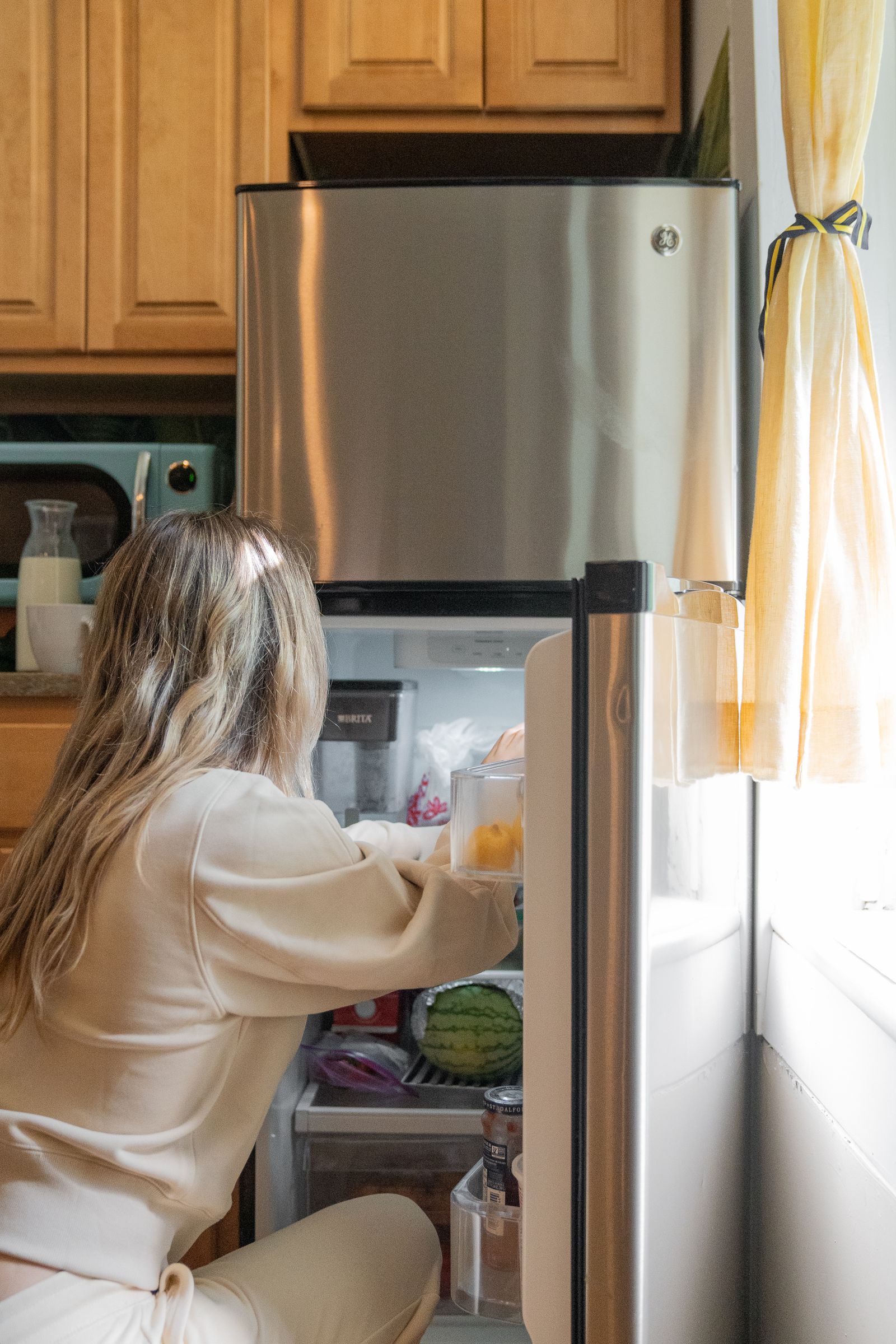
Can you use the original yogurt cup?
An unopened single-serve cup is convenient, but it is not automatically validated for freezer use. Keep it upright inside a freezer bag or rigid secondary container to contain leaks. Do not freeze ordinary glass unless its manufacturer identifies it as freezer-safe.
How to thaw frozen yogurt safely
Move only the portion you need into the refrigerator. Place it on a plate or inside another container in case the package leaks. A small portion may thaw overnight, but the time depends on its size, shape and refrigerator temperature.
Wait until the center has thawed before judging the result. Ice makes partly frozen yogurt look temporarily thicker. When fully thawed, stir gently for mild separation, whisk for a smoother spoon texture, or blend when the original gel is less important than an even appearance.
Do not thaw yogurt on the counter. The outer layer can become too warm while the center remains frozen. FDA recommends keeping the refrigerator at or below 40°F (4°C). Perishable foods should not remain at room temperature for more than two hours, or more than one hour when the air temperature is above 90°F (32°C).
How to make the texture more useful
- Stir after full thawing so you can see the true amount of separated whey.
- Whisk when mild separation is the only problem.
- Blend when a smoothie, dressing or sauce matters more than spoonable body.
- Recombine the whey unless the recipe specifically needs a thicker result.
- Use the thawed portion promptly and follow any instructions on the product label.
Which types of yogurt freeze best?
There is no dependable ranking that works for every brand. Total solids, protein structure, fat, sugar, fruit and stabilizers can matter more than the category printed on the front label.
Yaourt ordinaire
May separate or become grainy. Test a small portion and expect to stir or blend.
yaourt grec
Higher solids may help retain body, but whey separation and curd-like texture can still occur.
Fruit yogurt
Sugar and stabilizers affect freezing, while fruit may soften, darken or release juice.
Drinkable yogurt
Separation is easy to see, but shaking after full refrigerator thawing may restore an acceptable drink.
Plant-based yogurt
Soy, oat, almond and coconut products use different proteins, fats and thickeners. Test each formula separately.
Set-style yogurt
The original set structure will usually be disturbed by ice and by stirring after thawing.

Best uses for yogurt after freezing
If thawed yogurt tastes normal but no longer has an attractive spoon texture, use it where mixing or cooking makes separation less visible.
Smoothies
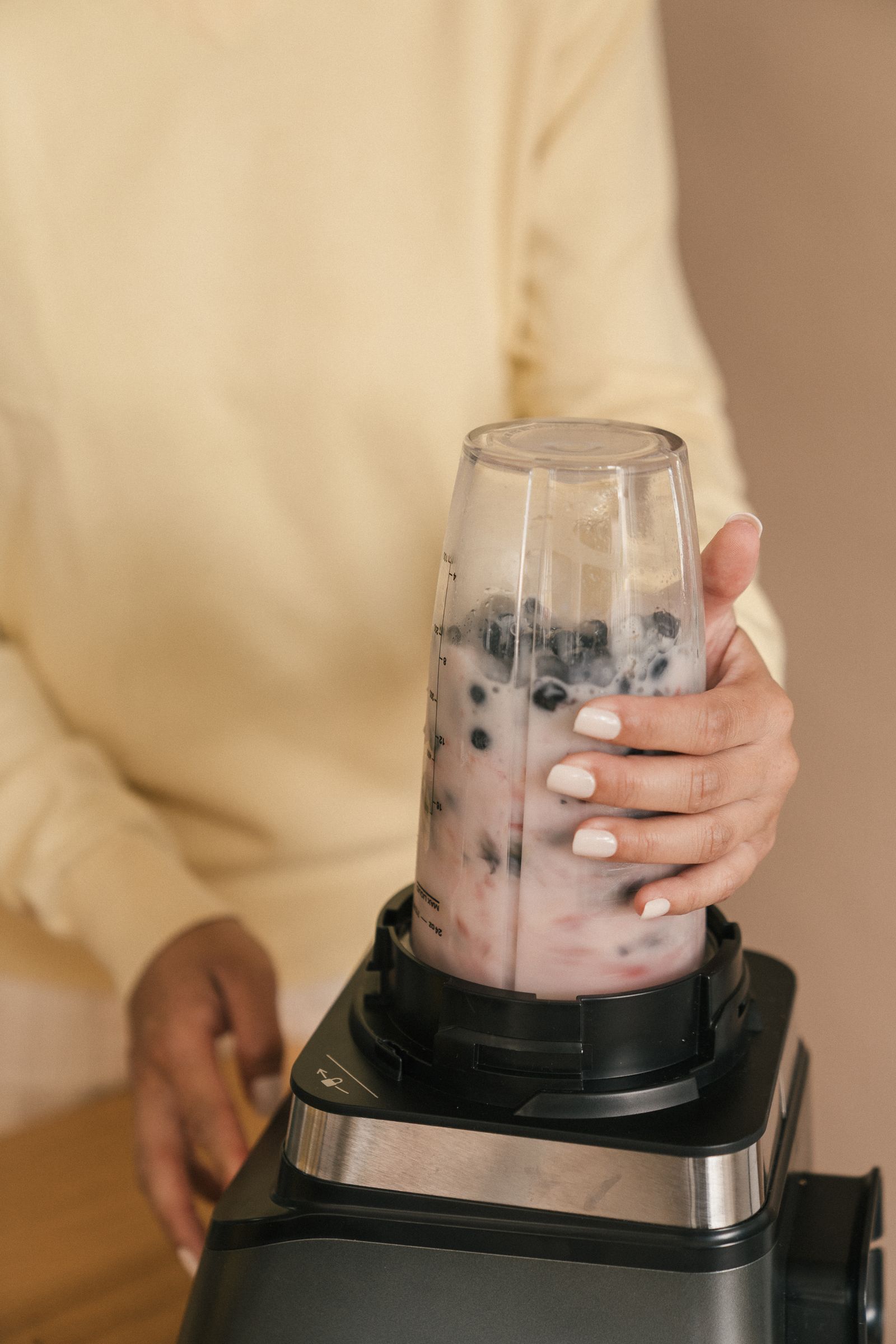
Blending hides mild graininess and makes separated whey useful.
Pâtisserie
Muffins, pancakes and quick breads use moisture, acidity and milk solids.
Marinades
Texture matters less, but keep the marinade refrigerated.
Sauces and dips
Whisking or blending can create a more even finished texture.
Does freezing yogurt kill the probiotics?
The accurate answer is not a simple yes or no. Freezing may injure or reduce viable microorganisms, but it does not necessarily kill every cell. Survival depends on the strain, yogurt formula, acidity, oxygen, freezing rate, storage time and temperature cycling.
In the United States, FDA’s yogurt guidance sets conditions for a voluntary “contains live and active cultures” statement at manufacture and through the shelf life assigned by the manufacturer. Home freezing is normally outside a refrigerated product’s validated storage instructions. Detecting some surviving cells is also not the same as proving the labeled count or a health benefit remains unchanged.
If cultures are the reason you buy the yogurt
Follow the manufacturer’s storage directions. Do not assume that freezing preserves the original strain count or probiotic claim unless the company provides evidence for frozen storage.
When to discard thawed yogurt
A thin whey layer or mild graininess alone does not prove spoilage. Use the entire handling history and package condition. Discard yogurt when:
- There is visible mold. Do not scrape mold from a soft, moist food such as yogurt.
- The cup, lid or seal cracked, leaked or opened and contamination may have entered.
- The color or odor is clearly abnormal.
- It stayed above 40°F (4°C) for more than two hours, or more than one hour above 90°F (32°C).
- Its time-temperature history is unknown and you cannot establish that it remained safely cold.
Do not taste questionable yogurt as a safety test. Harmful bacteria do not always change appearance, smell or taste.
Can thawed yogurt be refrozen?
General USDA guidance allows food thawed in the refrigerator to be refrozen when it remained safely cold, but quality usually falls because another cycle causes more moisture movement. Yogurt is especially likely to become more watery and grainy. Portion it before freezing so refreezing is unnecessary. Never refreeze yogurt to rescue it after unsafe warm storage.
For yogurt brands, freezer use needs a full validation plan
A consumer being able to put a retail cup in a freezer does not prove the product is ready for frozen distribution. A freezer claim changes the food’s intended storage condition and affects the formula, live-culture evidence, package, seal, label and cold chain.
Formula and texture
Measure syneresis, viscosity, graininess, flavor and sensory acceptance before freezing and after the stated thawing method.
Cultures and shelf life
Test the relevant strains and counts at meaningful frozen and post-thaw shelf-life points when a claim depends on them.
Cup and seal
Check low-temperature cracking, drop resistance, expansion headspace, lid or film seal, leakage and opening after thawing.
Distribution
Include realistic freezing profiles, temperature cycling, stack loads, case compression, condensation and data-logger evidence.

FDA’s food-contact reference tables distinguish refrigerated and frozen storage as different conditions of use. A material may have an appropriate food-contact basis and still need mechanical testing for cracking, seal integrity and low-temperature handling. Buyers comparing Honokage yogurt container formats should disclose the food type, fat and pH range, fill mass, headspace, seal system, frozen temperature and duration, thaw instruction, distribution route and target markets. Treat “freezer-safe” as a project-specific requirement, not a generic material promise.
Frequently asked questions
Can you freeze yogurt in its original container?
Often an unopened single-serve cup can be frozen for short-term home use, but the package is not automatically freezer-validated. Keep it upright inside a freezer bag or rigid secondary container. Never freeze ordinary glass unless it is marked freezer-safe.
How long can yogurt stay in the freezer?
USDA lists one to two months at 0°F (−18°C). This is a practical quality period, not a promise that every formula will keep an ideal texture for the full time.
Why is yogurt watery after freezing?
Ice formation disturbs the yogurt’s protein gel. After thawing, the weakened network releases whey. This is called syneresis and does not by itself prove spoilage.
Can you freeze Greek yogurt?
Yes. Its higher solids may help it keep some body, but it can still become grainy or release liquid. Test one portion before freezing a large amount.
Can you freeze plant-based yogurt?
Yes, but results vary because soy, oat, almond and coconut products use different protein, fat, starch and hydrocolloid systems. Freeze a small test portion first.
Can yogurt be eaten straight from the freezer?
Safely handled yogurt can be eaten as a frozen snack, but plain refrigerated yogurt will usually be much harder and icier than commercial frozen yogurt dessert. Avoid repeatedly softening a large container on the counter.
Is separated yogurt after thawing spoiled?
Not necessarily. Separation can be ordinary freeze-thaw damage. Check the time-temperature history, package, mold, color and odor. Discard questionable yogurt rather than tasting it to decide.
Planning yogurt for consumer freezing or frozen distribution?
Define the formula, fill amount, cup, lid or film, headspace, frozen profile, thaw instruction, culture claim and acceptance tests before selecting the package.
Sources and storage notes
This page provides general food-storage and product-quality guidance. Follow the product label and local advice. Commercial products require validation of the exact food, package, process, claims and market.
- USDA AskFSIS: Yogurt Storage — one to two months at 0°F.
- USDA FSIS: Freezing and Food Safety — safety versus quality, freezing speed, thawing and refreezing.
- FDA: Are You Storing Food Safely? — appliance temperatures, two-hour rule and spoilage limits.
- National Center for Home Food Preservation: Freezer Containers — package durability, sealing and glass limitations.
- FDA Yogurt Compliance Guide — live-and-active-culture labeling context.
- NIH Office of Dietary Supplements: Probiotics — strain, CFU and storage-instruction context.
- FDA: Food Types and Conditions of Use — refrigerated and frozen food-contact conditions.