


The direct answer
Is glass or plastic safer for storing ice cream?
Neither material is automatically safer. Choose the exact container for the job. A rigid plastic tub should be identified by its maker as suitable for food contact and freezer use. A glass container should be wide-mouthed and explicitly made for freezing. Both need an undamaged body and a lid that closes securely.
For frequent family use, freezer-rated plastic is often the easier choice because it is light, shatter-resistant and easy to scoop from. Freezer-rated glass can work well for small batches or portions when you value visibility and reuse. Do not freeze ice cream in ordinary drinking glasses, thin jars or narrow-neck glass containers.
The real safety controls: keep the freezer at 0°F (−18°C) or below, avoid contamination, close the package, limit warming and discard soft or melted ice cream after an outage. A later refreeze does not erase an unknown warm period.
Compare the full container system
Glass vs plastic for ice cream storage
This comparison assumes the product is intact, food-contact suitable and freezer-rated. An ordinary glass jar and a disposable plastic cup do not become suitable just because the material appears in the table.
A tight lid can matter more to texture than the body material. Check the lid when cold: it should sit fully on the rim without lifting, cracking or becoming difficult to close.

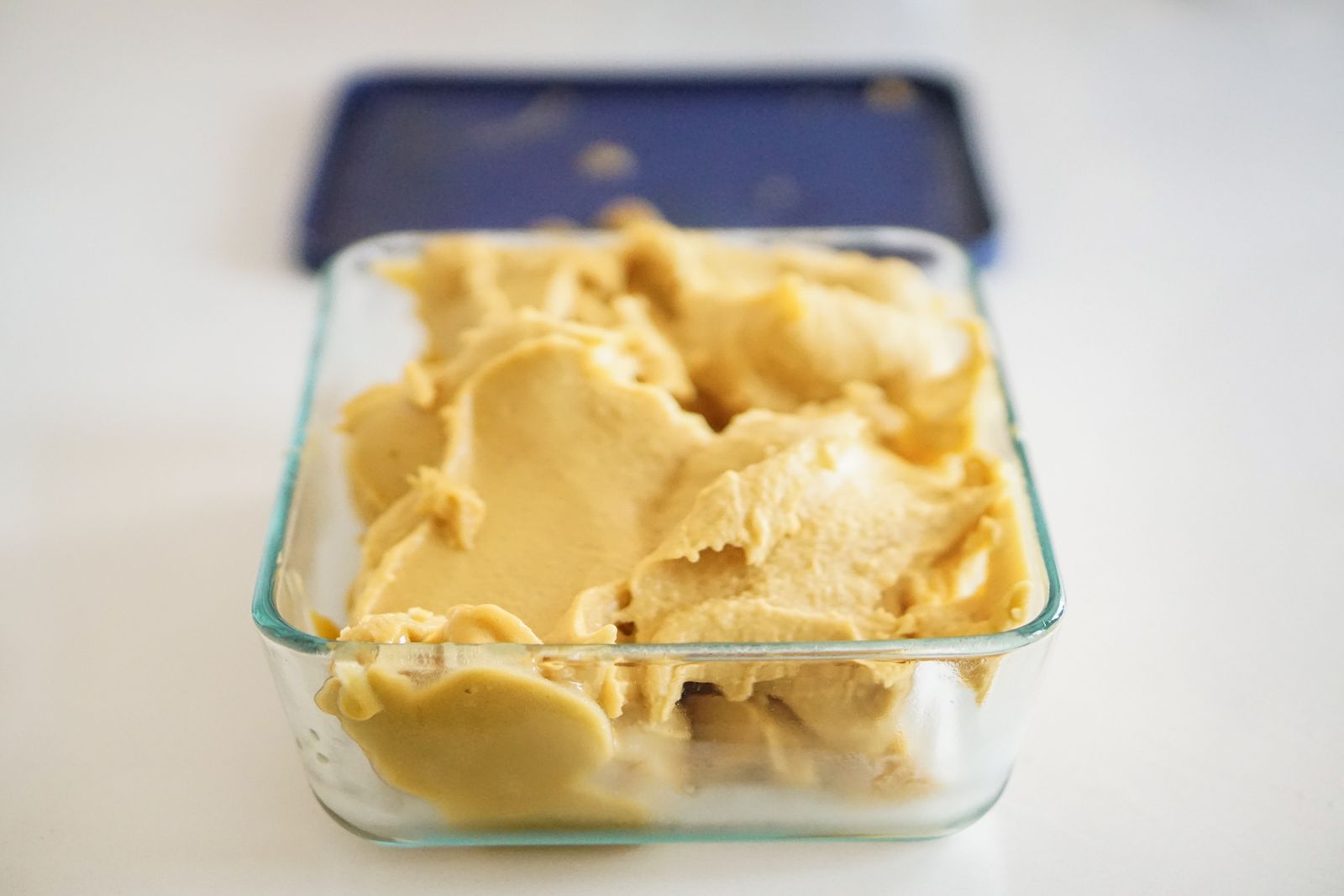
A food package is a body-and-closure system. Product photos do not replace confirmation of the exact resin, lid, freezer conditions and intended food. Image: Honokage.
Two questions, two different answers
Separate food safety from texture quality
A rough, icy surface usually signals a quality problem. Freezer burn is moisture loss from exposed frozen food. Ice recrystallization is the growth of larger crystals during storage. These changes can make ice cream dry, coarse or stale, but they do not automatically mean that it will cause food poisoning.
Safety depends on ingredients, cleanliness, storage temperature and what happened before the product became firm again. Freezing at 0°F stops the growth of many microbes, but it does not sterilize food. A damaged lid, dirty scoop, melted period or unsafe homemade base can create a separate concern.
Do not taste-test a questionable tub. Discard ice cream with mold, clear contamination, damaged or leaking packaging, or an unknown warm history. During a power outage, FoodSafety.gov specifically lists ice cream and frozen yogurt for disposal.
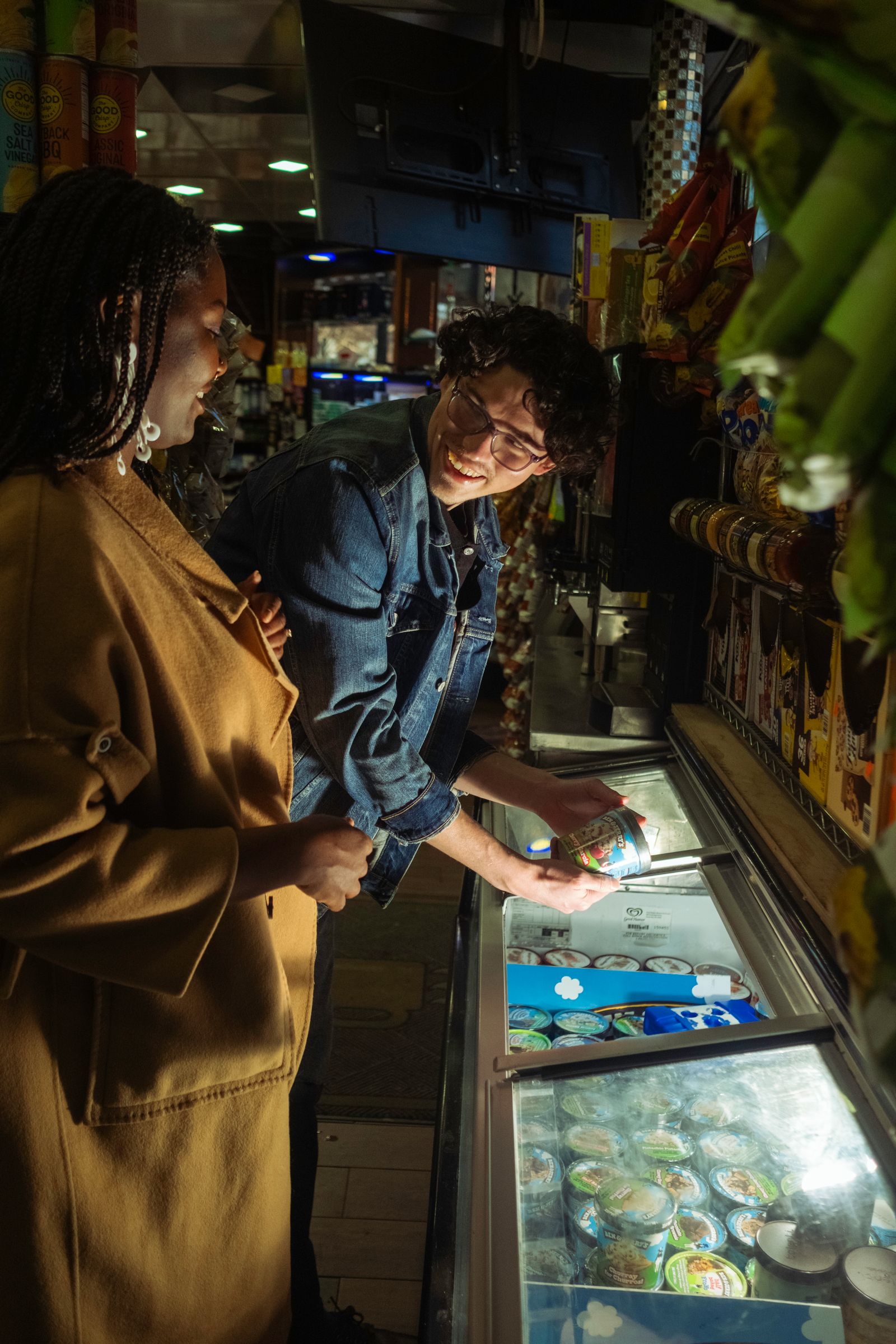
An intact retail pack is normally the first storage system. Transfer the product only when the closure no longer works or portioning will reduce repeat warming. Image: Scott Foltz / Pexels.
Use glass well
When is glass a good choice?
Choose wide-mouth glass that the manufacturer identifies for freezing. Inspect the body, rim and lid. Retire a container with chips, cracks or deep scratches. Leave the recommended headspace and keep the lid area clean.
Avoid thermal shock. Do not move a hot glass container directly into the freezer or pour hot liquid into frozen glass. Let a cooked ice cream base cool safely before packing it according to the recipe and container instructions.
Use plastic well
When is plastic a good choice?
Choose a rigid food container whose instructions cover freezer storage. Check both the tub and lid. Low temperatures can make an unsuitable plastic brittle, so discard a package that is cracked, warped or no longer closes.
A resin identification number does not prove the final package fits every food and condition. The words “BPA-free” or “food-grade” also do not replace intended-use instructions for the finished product.

Package shape, fill size and closure design affect how often the product warms during serving. Image: Honokage.
Do not transfer without a reason
Should ice cream stay in its original carton?
Yes, if the commercial package is intact, closes well and fits the way you serve the product. It was selected for that ice cream and avoids another handling step. Wipe the rim, press the lid into place and return it promptly after scooping.
Transfer can help when the original carton is torn, the lid is loose, or you want smaller portions that stay closed until needed. Use a clean, dry, freezer-rated container. Record the original product and opening date. Moving the product does not restart its quality clock.
The National Center for Home Food Preservation notes that ordinary ice cream cartons are not moisture-vapor resistant enough for long-term freezer storage unless overwrapped. Its separate ice cream guidance gives about one month in the original carton as a best-quality guide. This is not a universal food-safety expiry date.
A simple home routine
Store ice cream safely in seven steps
Helpful extra: place a piece of freezer-safe wrap directly on the ice cream only if the product instructions allow it and the material is meant for food and freezer contact. A good lid is still the primary closure.
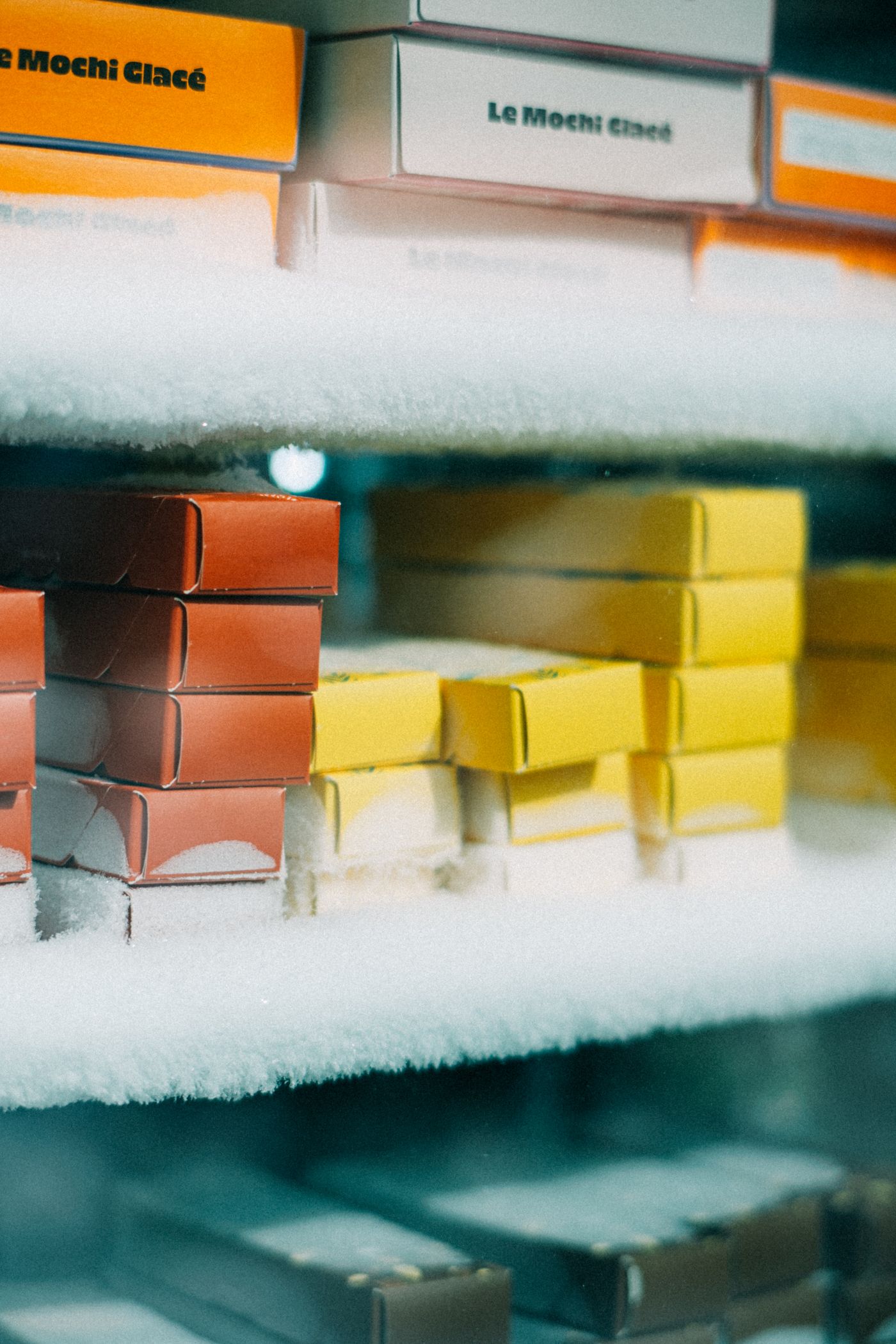
Frost on packages can point to moisture movement or temperature cycling. Check the freezer temperature and package closure before blaming the body material. Image: Mathias Reding / Pexels.
Temperature beats marketing language
Why ice cream becomes coarse and icy
Smooth ice cream contains many small ice crystals. When the product warms slightly, some small crystals melt. When it cools again, water can settle on the remaining crystals, making them larger. This process is called recrystallization. The University of Guelph identifies temperature fluctuation, or heat shock, as a major cause of texture damage.
The container can slow air and moisture movement, but it cannot hold the product at a steady temperature by itself. Long serving periods, a door shelf, an overloaded freezer, frequent openings or a weak gasket can create more damage than choosing glass instead of plastic.
Use a freezer thermometer. The FDA recommends 0°F (−18°C) for frozen food storage. The setting number on an appliance is not a measured product temperature.
Fix the likely cause
Four common storage problems
Dry or frosty surface: check whether the lid is fully seated, the container is oversized for the remaining portion, or the package has been open for long periods. Freezer burn mainly affects quality.
Large, crunchy crystals: look for temperature cycling, repeated softening or slow hardening. A new container may help only if the current closure is poor.
Foreign freezer odor: clean the freezer, isolate strong-smelling foods and confirm the lid closes. Glass is not odor-proof when its lid leaks, and plastic is not automatically odor-prone when its closure works.
Cracked package: discard ice cream exposed to glass fragments, leaks or contamination. Do not scoop around broken glass. For plastic, transfer only when the damage is noticed before contamination and the food has remained safely frozen; otherwise discard it.
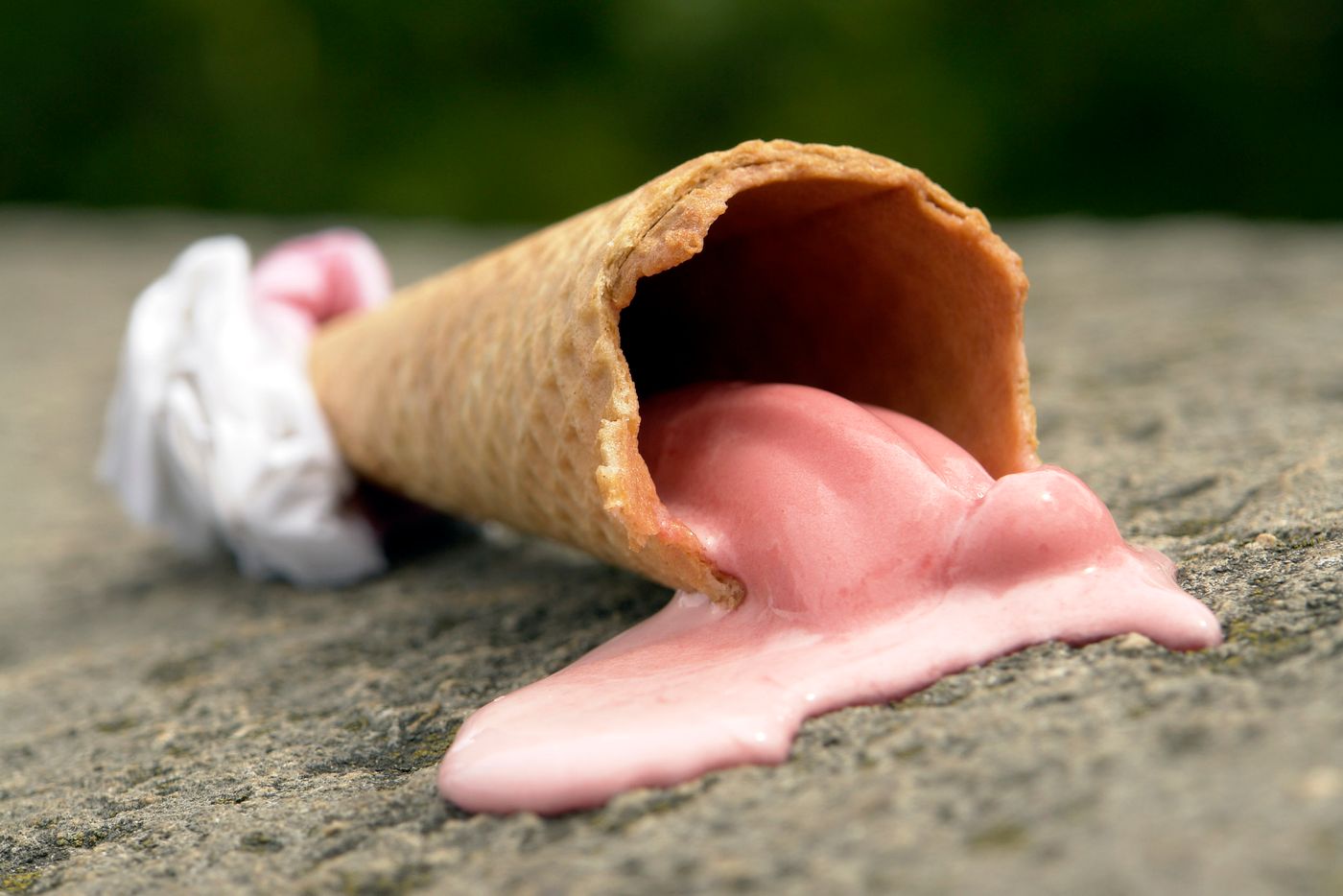
Substantial softening or melting is not repaired by moving ice cream into a better container. Image: Tobias Baur / Pexels.
After an outage or warm event
Do not use the container to justify refreezing
A power outage decision should use time and temperature, not whether the tub is glass or plastic. Keep the freezer door closed. FoodSafety.gov says a full freezer may hold a safe temperature for about 48 hours and a half-full freezer for about 24 hours if it stays closed, but actual conditions vary.
Its outage chart lists ice cream and frozen yogurt for disposal whether they still contain ice crystals and feel refrigerator-cold or have been above 40°F for more than two hours. USDA also advises discarding soft or melted ice cream for quality. Follow local public-health instructions if an emergency creates different guidance.
En cas de doute, jetez-le. Refreezing can make a package firm again, but it does not prove that the product stayed safe and will usually leave a coarse texture.

A wider package can make scooping easier, while format and portion size affect repeat warming. Confirm dimensions and frozen performance for the exact project. Image: Honokage.
For brands, packers and sourcing teams
Qualify the finished package, not just a resin
A home recommendation cannot approve a commercial package. For U.S. food-contact review, the FDA evaluates substances for the intended food type and condition of use. Frozen storage is a defined condition, and dairy or fatty foods can change the relevant use case. A regulatory status may also include limits, specifications or a manufacturer-specific notification.
Commercial approval should cover the tub, lid, seal, ink, label and other food-contact components as applicable. It should also cover the formula, fill temperature, hardening process, storage duration, distribution lane and target market. Ask for supporting documents, then confirm that they match the supplied construction.
Honokage shows several ice cream container formats, a 1000 ml container example and an overview of packaging material options. Treat these as supplier starting points. Samples and project-specific tests are still required before bulk approval.

First-sample inspection is one part of approval. Frozen product, closure, transport and shelf-life trials should follow the agreed use case. Image: Honokage.
Send useful project details
What should an ice cream container RFQ include?
Provide the ice cream or frozen-dessert type, fat level, inclusions, fill weight, fill temperature, package size, desired shape, opening method and tamper-evidence need. State whether the line will apply a lid, film seal or both.
Add hardening conditions, minimum storage temperature, expected shelf life, transport route, retail display, case count, pallet pattern, target market, annual volume and artwork plan. Share any current failure, such as lid lift, sidewall cracking, frost, odor pickup or damaged decoration.
Agree on sample quantities, dimensions, appearance limits and tests before tooling or bulk production. If the project changes, review whether the earlier food-contact and performance evidence still applies.
Turn the cold chain into a test plan
Compare containers with your real product
Send the product type, fill, closure, hardening method, storage and delivery range, target market, shelf-life goal and forecast. Honokage can use these details to discuss suitable samples and a project-specific validation path.
Supplier capabilities and test statements should be confirmed for the exact construction, market and production lot.
Common questions
Ice cream storage FAQ
Does glass keep ice cream fresher than plastic?
Not by itself. Freshness depends on a tight closure, low air exposure and steady storage at 0°F or below. A well-closed freezer-rated plastic tub can outperform a glass jar with a loose lid.
Can a Mason jar be used for ice cream?
Only when the jar maker identifies that exact wide-mouth product for freezing. Follow its fill and headspace instructions. Regular jars, narrow shoulders, chips and thermal shock can increase breakage risk.
Does a recycling number show that plastic is freezer-safe?
No. A resin identification code helps identify a broad plastic family. It does not certify the complete container, additives, lid or intended use. Check the product instructions or ask the supplier.
Is BPA-free plastic automatically safe for ice cream?
No. That claim addresses one substance, not freezer performance or every food-contact requirement. Use a finished container supported for frozen food under the intended market and conditions.
Should ice cream be moved into an airtight container?
Keep it in the original pack if that pack is intact and recloses well. Transfer to a clean freezer-rated container when the carton or lid is damaged or when smaller portions will reduce repeated warming.
Is freezer burn dangerous?
Freezer burn is mainly a quality problem caused by moisture loss. It can make ice cream dry or stale. It does not prove safety, so review any separate thawing, contamination or package-damage concern.
Can softened ice cream be refrozen in a clean container?
A clean container does not reset time and temperature. Substantially softened or melted ice cream will lose texture, and an unknown warm period may create a safety concern. Outage guidance says to discard it.
Which container is best for children or busy families?
Freezer-rated plastic is often more practical because it is light and shatter-resistant. Choose a size that can be served quickly, a lid that adults can close fully and a format that does not crack when dropped cold.
Bottom line
Choose the complete container, not the headline
For everyday home use, an intact freezer-rated plastic container with a reliable lid is usually the most practical option. Freezer-rated wide-mouth glass can be equally suitable when it is handled carefully, filled with the right headspace and protected from thermal shock. Keep either package at 0°F (−18°C) or below, close it cleanly and avoid repeated warming. The safest answer comes from the exact container, the food, the freezer and the handling history—not from saying that all glass or all plastic is better.
Technical references
These sources support the freezer temperature, container selection, outage, texture and food-contact boundaries used above. Quality guidance is not presented as a universal safety expiry date.
- FDA: Are You Storing Food Safely?
- National Center for Home Food Preservation: Containers for Freezing
- National Center for Home Food Preservation: Freezing Ice Cream
- FoodSafety.gov: Food Safety During Power Outages
- USDA FSIS: Freezing and Food Safety
- University of Guelph: Ice Cream Shelf Life
- FDA: Food Types and Conditions of Use
- FDA: Determining the Regulatory Status of Food-Contact Components
Educational information only. It is not a tested recipe, medical advice, legal opinion, food-safety plan or commercial shelf-life validation.