


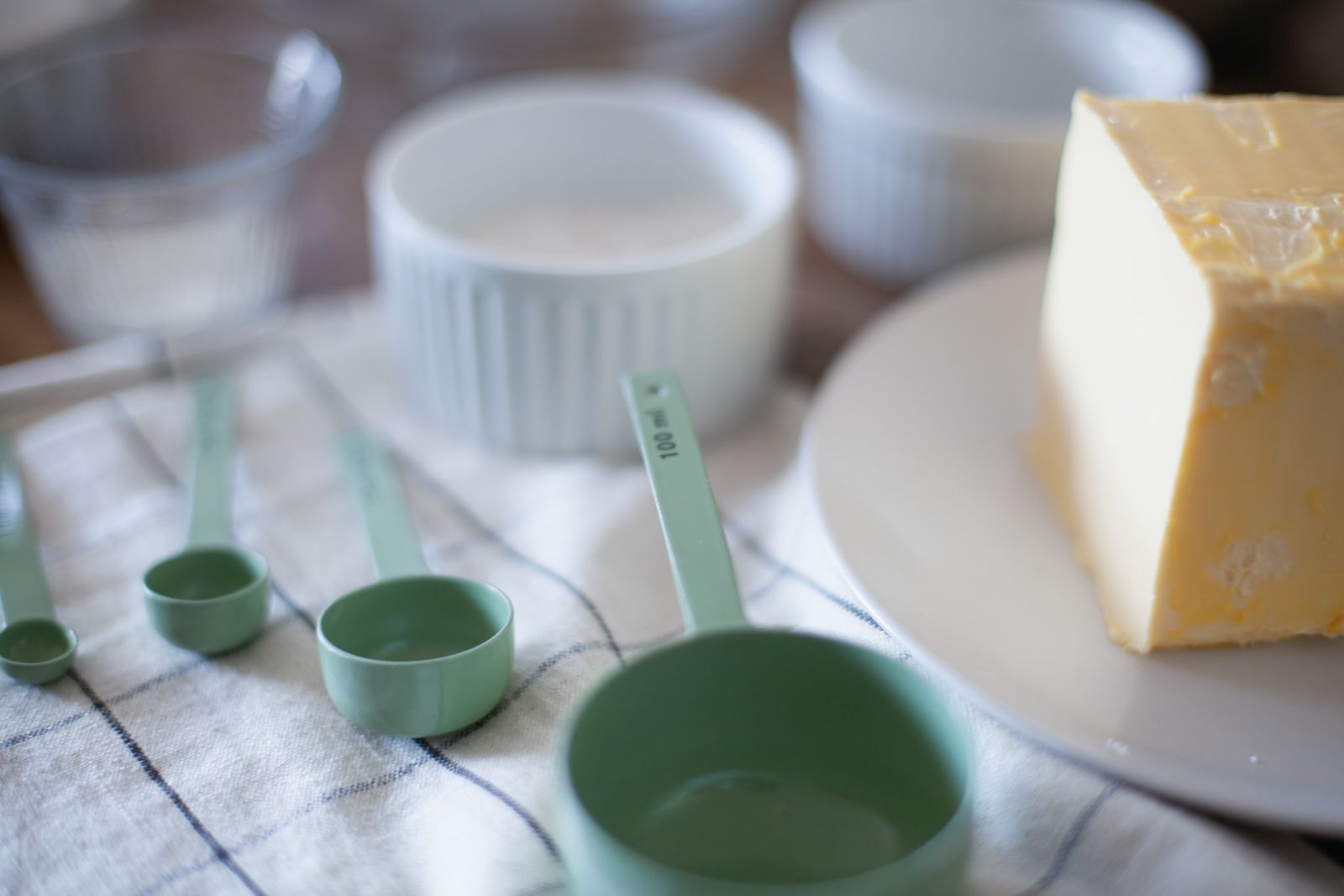
The answer to save
3/4 cup butter = 1 1/2 U.S. sticks
Fastest method: unwrap two standard U.S. sticks. Use the first stick whole. Cut the second stick at its 4-tablespoon or 1/4-cup mark. That piece is half a stick, and the two pieces together make 3/4 cup.
Three checks prevent most mistakes
The simple math
Why does 3/4 cup equal 1 1/2 sticks?
The calculation starts with tablespoons. USDA’s measurement table lists 3/4 cup as 12 tablespoons. A standard U.S. butter stick contains 8 tablespoons. Divide 12 by 8, and the result is 1.5 sticks.
You can also check the answer with cup fractions. One full stick is 1/2 cup. Half of another stick is 1/4 cup. Add 1/2 cup and 1/4 cup, and you get 3/4 cup.
Quick butter conversion chart
What are the nearby cup-to-stick conversions?
Use this chart only for conventional U.S. stick butter. The gram values are normal recipe roundings.
Need a broader reference? See Honokage’s guides to butter stick-to-cup conversions et tablespoons in a butter stick.
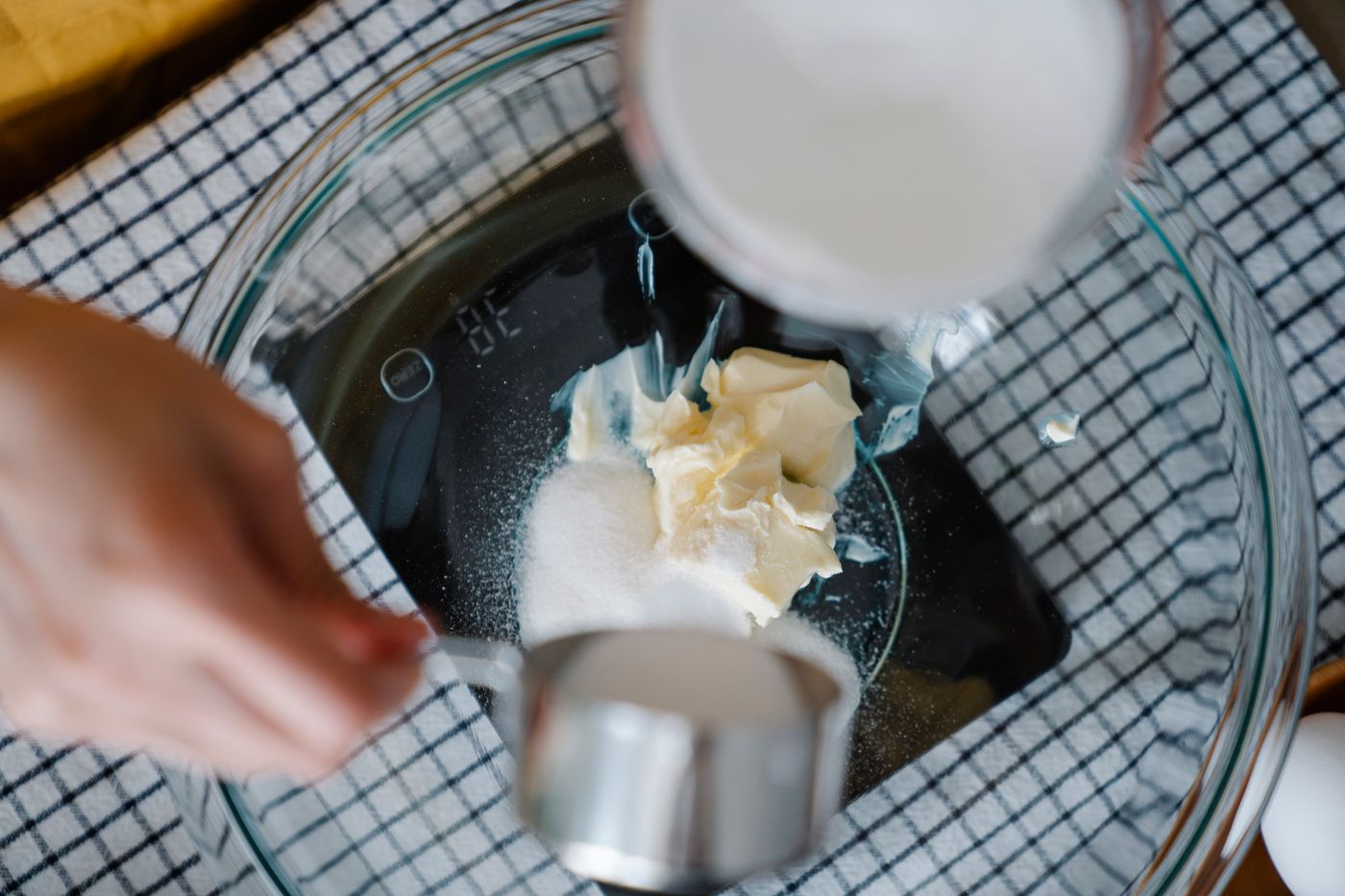
A scale gives a clear answer when the butter is sold as a block, tub, slab, or loose piece. Image: Felicity Tai / Pexels.
Choose the method by package format
How do you measure 3/4 cup of butter accurately?
Best accuracy rule: measure the amount first, then bring it to the temperature the recipe requests. Do not melt butter just because liquid feels easier to pour. Softened, melted, browned, and cold butter can produce different results.
One number, two different units
Is 3/4 cup butter 6 ounces or 6 fluid ounces?
Both numbers can appear, but they describe different things. Three-fourths of a U.S. cup is 6 fluid ounces of volume. At the same time, 1 1/2 standard U.S. butter sticks weigh 6 ounces. The number is the same in this case, but the units are not interchangeable.
For shared kitchens: write “170 g butter” or “6 oz butter by weight.” Avoid writing only “6 oz butter” when staff use both liquid and weight measures.
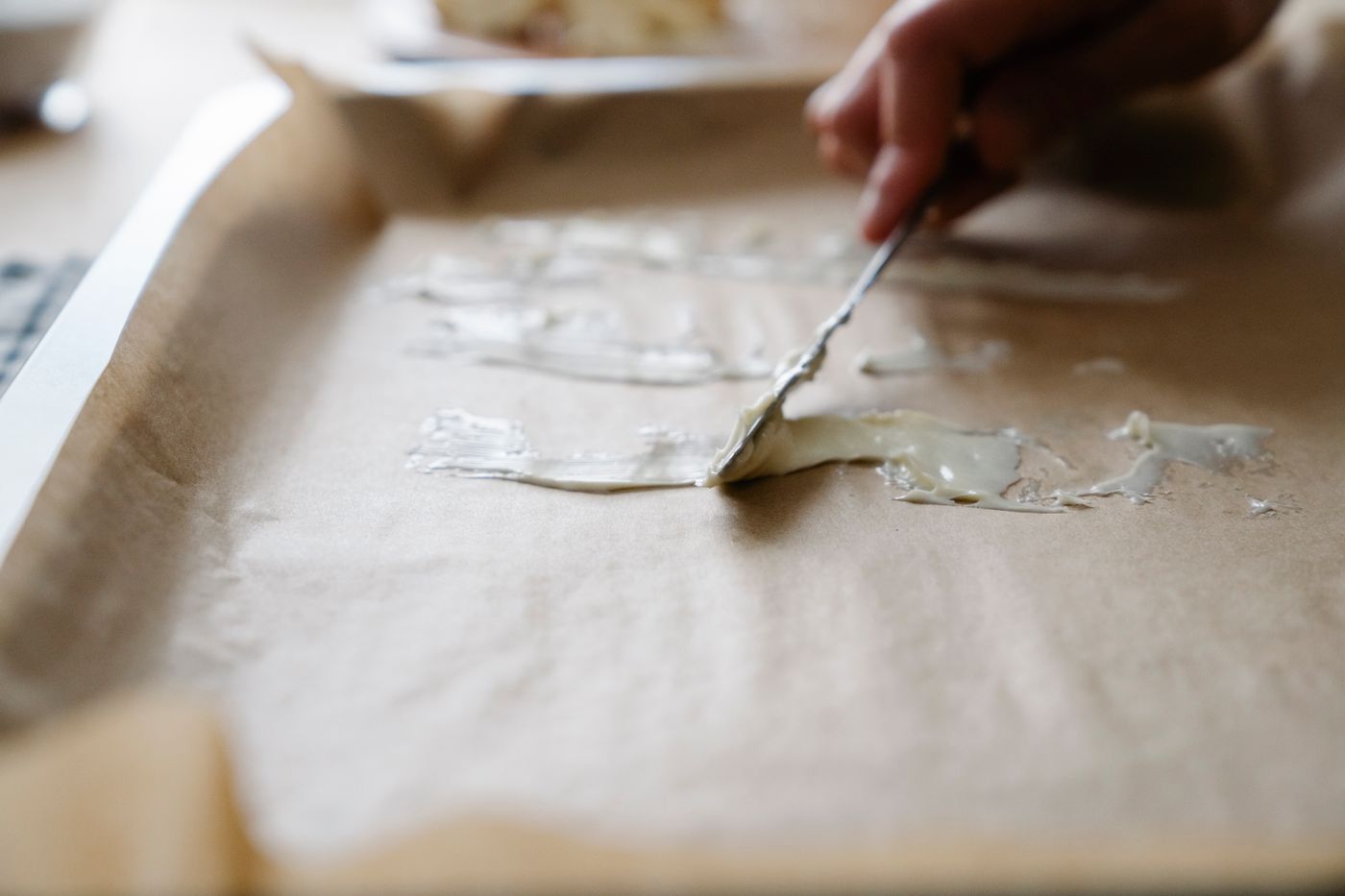
The right quantity and the right butter condition are separate recipe controls. Image: Felicity Tai / Pexels.
The number can stay the same while performance changes
Do salted, European-style, or whipped butter change the conversion?
Troubleshooting
What are the most common 3/4-cup butter mistakes?
Real kitchen examples
How does the conversion work in common recipes?
Frequently asked questions
3/4 cup butter FAQ
How many sticks of butter is 3/4 cup?
For standard U.S. butter, it is 1 1/2 sticks. Use one full stick plus half of a second stick.
Is 3/4 cup butter the same as 12 tablespoons?
Yes. Three-fourths of a cup is 12 tablespoons. Because one U.S. stick contains 8 tablespoons, the total is 1.5 sticks.
How many grams is 3/4 cup of butter?
The practical conversion for standard U.S. stick butter is about 170 grams. The ounce conversion gives 170.1 g before normal recipe rounding.
How do I cut 1 1/2 sticks?
Keep one stick whole. Cut the second at the 4-tablespoon or 1/4-cup mark. The piece you keep is half of that stick.
How much of a 250 g block do I need?
Weigh 170 g. That is about 68% of a 250 g block, but weighing is more accurate than cutting a percentage by eye.
Can I use salted butter?
The amount stays the same. The recipe may need less added salt, so check the butter label and the recipe’s substitution advice.
Does melted butter still equal 3/4 cup?
The measured amount can be the same, but melted butter may change the recipe result. Measure the requested amount and use it in the condition the recipe names.
Can I use margarine instead?
Only when the recipe and product label support the substitution. Different water and oil levels can change spread, texture, browning, and structure.
For butter and spread brands
Can packaging make measurement easier?
Yes, when the information matches the product. A U.S. stick wrapper can use tablespoon and cup cut marks. A tub or block can make net weight, serving information, product type, storage directions, lot code, and opening instructions easy to find.
Do not print a stick-butter conversion on whipped or blended spread packaging unless the product has been checked for that use. The pack should help consumers measure the actual product, not create a false equivalence.

Example container format only. The correct capacity, fill line, label statements, closure, and performance checks depend on the real butter or spread product.
Packaging brief
What should a butter container buyer specify?
Honokage publishes a butter container range, a 1000 ml butter tub example, and a testing overview. These pages are starting points. Final capacity, claims, food-contact compliance, decoration, closure and distribution performance require product- and market-specific validation.
Butter and spread packaging buyers
Discuss a container around the real product and filling line
Share the product type, formula, net weight, filling and cooling conditions, required capacity, lid and tamper-evident concept, artwork, target market, cold-chain route, case configuration, order volume and test plan. Honokage can use those inputs to discuss an existing format or a custom project.
Final answer
Use one whole stick plus half of another
For a standard U.S. butter package, 3/4 cup is 1 1/2 sticks. It is also 12 tablespoons, 6 ounces by weight, or about 170 grams. The wrapper method is fastest when the marks are clear.
If your butter is sold as a block, tub, slab, or loose piece, weigh 170 g. Then use the butter type and temperature named by the recipe. That protects both the quantity and the baking result.
Sources and further reading
- Land O’Lakes: Butter Conversion Calculator and Table — 3/4 cup equals 12 tablespoons, 1 1/2 sticks, 6 ounces, and 170 grams for its standard butter sticks.
- USDA Agricultural Research Service: Measurement Conversion Tables — 3/4 cup equals 12 tablespoons; one dry ounce equals 28.35 grams.
- Oklahoma State University Extension: Butter Packaging and Measurement — U.S. quarter-pound sticks and eight-tablespoon wrapper markings.
- King Arthur Baking: Recipe Success Guide — butter type, temperature, weighing and recipe standards.
- King Arthur Baking: Butter for Baking — salted, unsalted, whipped, American-style and European-style butter differences.
Editorial note: conversions apply to conventional U.S. stick butter. Product labels and the recipe’s stated weight, butter type, and temperature take priority when they differ.