


Quick answer
Choose the complete cup for the job, not the material name that sounds healthiest.
A compliant ceramic glaze, heat-rated glass body, documented stainless-steel mug, or correctly specified PP cup can each be appropriate. A poor glaze, chipped rim, unsuitable decoration, failing lid, trapped residue, or use outside the manufacturer’s temperature instructions can make an otherwise familiar material a bad choice.
Best simple rule: buy drinkware intended for food contact and hot beverages, follow its care and temperature instructions, reject damaged parts, and never assume that “BPA-free,” a recycling number, “natural,” or “compostable” proves the finished cup is safe for boiling-hot coffee.
A safe coffee cup has four layers
Material comparison
Which coffee cup material fits each use?
This comparison is a selection shortcut, not a certification. It assumes a reputable product intended for beverages and used within written instructions. The exact article can still fail because of its formulation, decoration, damage, lid, cleaning design, or unsupported use claim.

Ceramic and heat-rated glass are practical for stable surfaces, but suitability still depends on the finished item. Photo: Kathrine Joy Sorongon via Pexels.
Home and desk use
Is glass or ceramic safer for daily coffee?
Both can be good choices when the finished mug is made for hot beverages. Glass offers a smooth, nonporous contact surface and makes residue easy to see. Ceramic gives a comfortable familiar feel and can retain heat well. Neither material name eliminates physical hazards: glass can break under impact or thermal shock, while ceramic can chip, crack, or develop fine glaze crazing.
Choose heat-rated glass and follow the maker’s limits. Do not pour boiling liquid into an ordinary decorative glass, move a hot glass onto a cold wet surface, or assume every double-wall design tolerates the same shock. Retire a cup with chips, cracks, sharp edges, or damage near the rim or handle.
For ceramic, buy new drinkware from a reputable seller and confirm that it is intended for food use. The glaze and decoration matter more than the word “ceramic.” Unknown pottery, decorative-only ware, antique mugs, and damaged or heavily crazed surfaces deserve caution. Bright decoration on the food-contact surface or lip should have documented compliance for the target market.
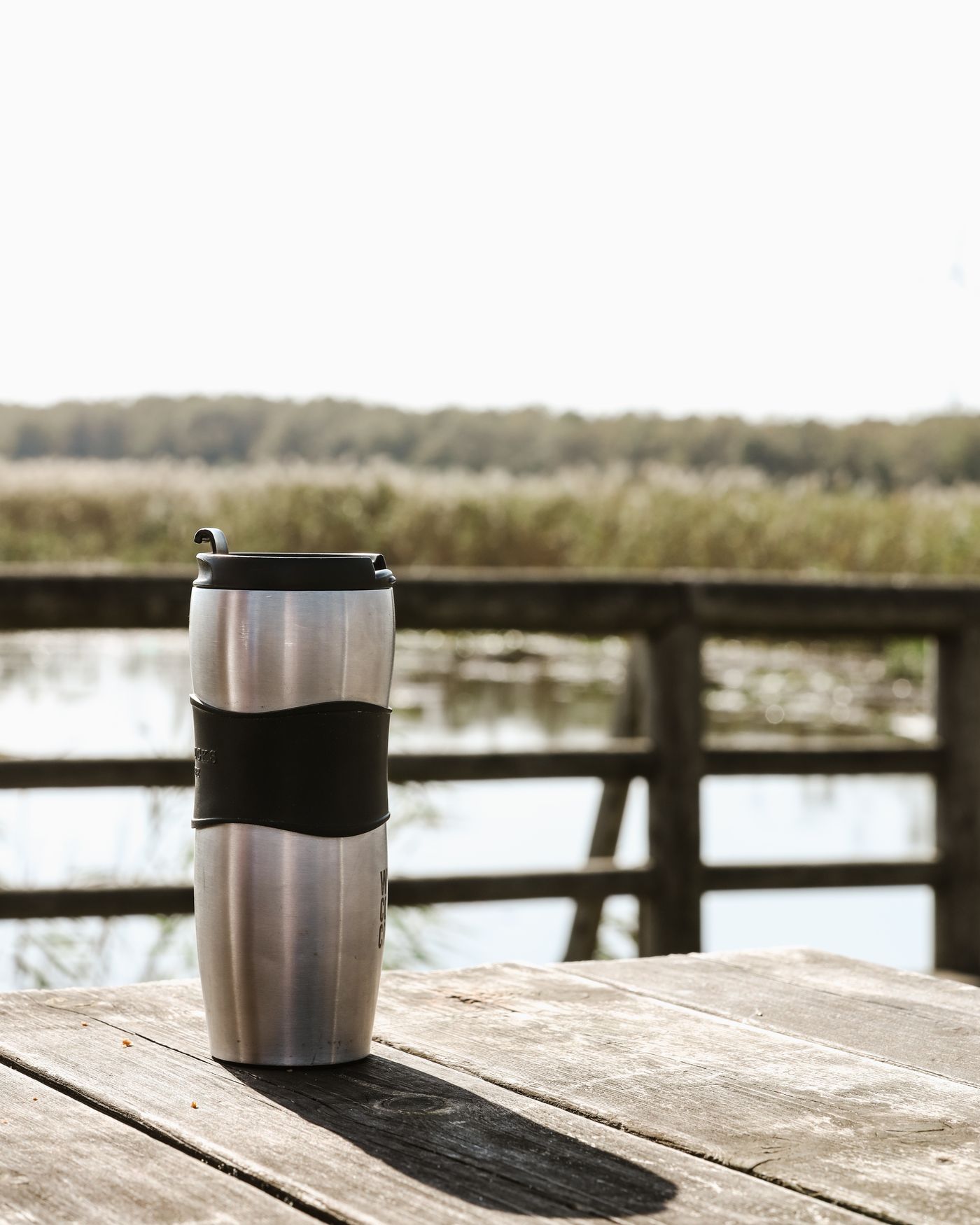
For commuting, a durable body is only part of safety; the lid and seal deserve equal attention. Photo: Osman Karagöz via Pexels.
Travel and commute
Why stainless steel is often the practical travel choice
A reputable stainless-steel mug is tough, reusable, and less likely to shatter in a bag or vehicle. Vacuum insulation can slow heat loss and keep the outer wall easier to hold. Those benefits make stainless steel a strong travel starting point, but the finished assembly still matters: exact alloy, inner finish, welds, rim, lid threads, drinking opening, vent, gasket, handle, and cleaning access.
Never microwave a metal cup. Do not add liquid hotter than the manufacturer permits, overfill it, or close a design that must vent. After filling, keep the cup upright and away from your face while checking closure engagement. Do not shake-test hot liquid. Inspect for a damaged seal, cross-threading, a loose handle, pitting, corrosion, sharp edges, or an odor that remains after proper washing.
The 2024 CPSC recall of certain Stanley Switchback and Trigger Action travel mugs shows why “stainless steel” does not describe the full risk. The agency reported that affected lid threads could shrink when exposed to heat and torque, allowing the lid to detach and creating a burn hazard. That was a specific lid-system failure, not evidence that all stainless-steel mugs are unsafe.
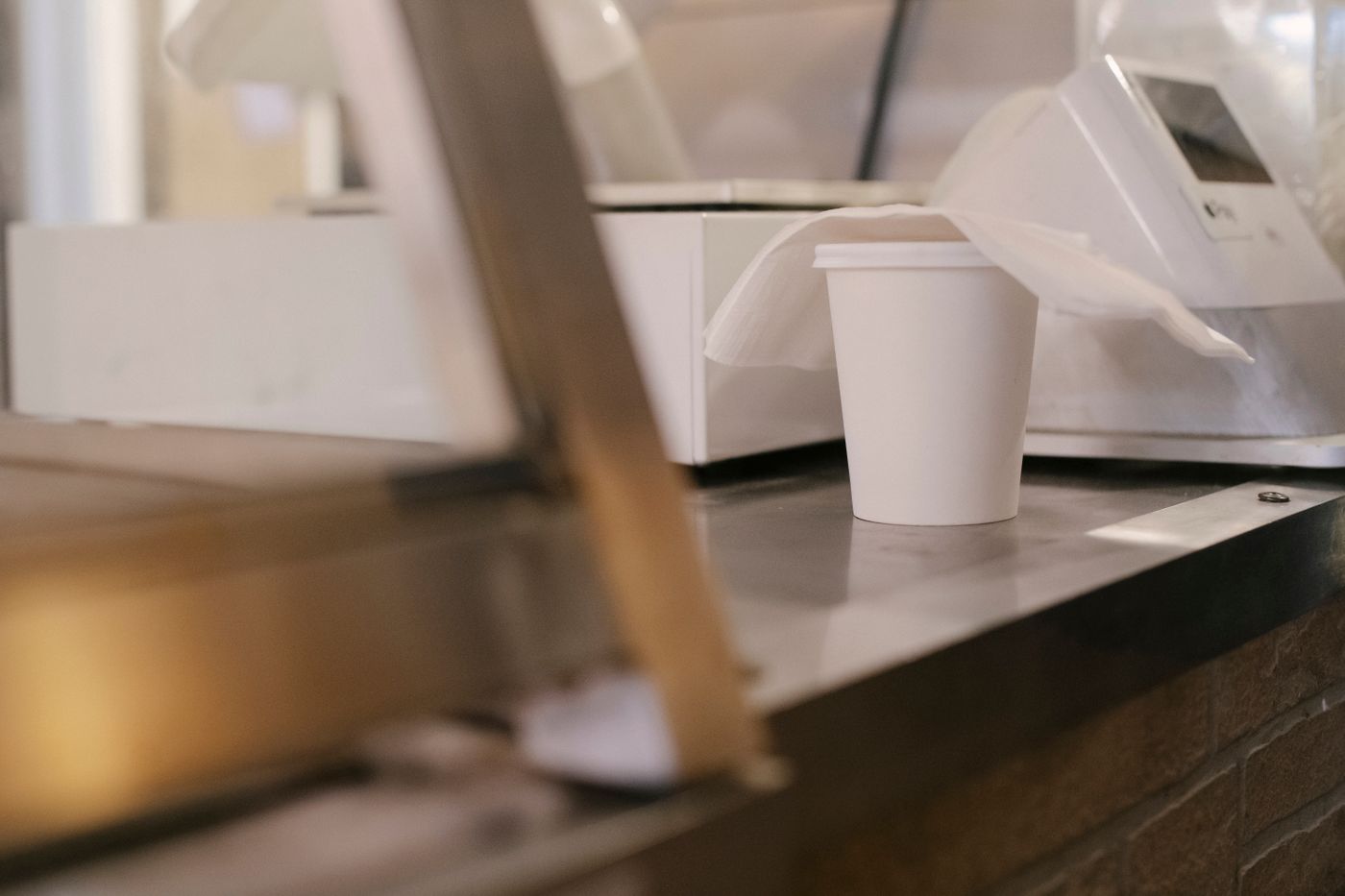
Takeaway safety depends on how the cup, rim, lid, sleeve, and beverage work together. Photo: Tim Samuel via Pexels.
Takeaway service
Is a paper coffee cup healthier than plastic?
Not automatically. A paper hot cup is normally a composite package. Paperboard provides shape, while a barrier helps control liquid penetration. The barrier may be polyethylene, PLA, an aqueous system, or another technology. The seam, rim, base, inks, adhesives, sleeve, and lid complete the package. Calling it “paper” does not prove the entire cup is plastic-free, recyclable, compostable, PFAS-free, suitable for a specific temperature, or safer than every plastic cup.
For a café or beverage brand, test the complete production cup with its matched lid and the actual drink. Fill at the highest expected temperature, hold for the real service time, and assess seam wetting, base leakage, wall softening, rim distortion, lid retention, venting, drinking comfort, sleeve performance, and spill behavior. Include handling after delivery, because a lid that feels secure on the counter may behave differently in a moving bag.
PFAS claims also need careful wording. The FDA reports that PFAS grease-proofing agents are no longer being sold for use in U.S. paper and paperboard food packaging. It also determined that 35 related food-contact notifications were no longer effective on January 6, 2025, with a June 30, 2025 compliance date for certain existing stock. That is meaningful U.S. regulatory progress, but it does not prove every cup in every country has the same formulation or justify a broad “chemical-free” claim.

A supplier’s paper cup listing is the start of qualification, not a substitute for project-specific evidence. See Honokage’s 12 oz double-wall paper cup.
Five questions for a paper-cup supplier
1. What is the full construction? Paperboard, barrier, inks, adhesives, seam, rim, base, sleeve, and lid.
2. Which use is supported? Beverage type, maximum fill temperature, contact time, and single-use limits.
3. Which market is covered? Ask for the actual food-contact basis and current supporting documents.
4. Which claims are proven? Define test method, facility assumptions, and geographic scope for recycling or composting language.
5. Has the matched system passed? Test cup, sleeve, lid, fill, holding, transport, and customer handling together.

Plastic, melamine, and composite cups
Can a plastic coffee cup be safe for hot drinks?
Yes, an exact finished plastic cup can be suitable when its components have the correct regulatory status and the manufacturer supports the intended hot-drink conditions. “Plastic” is not one material. Polymer, additives, color, recycled content, decoration, wall design, lid, food type, temperature, contact time, reuse, and cleaning conditions all matter.
The FDA explains that the overall regulatory status of a food-contact material is dictated by the status of each substance that makes up the article, including applicable specifications and conditions of use. A resin identification code such as #5 is mainly a material-sorting clue. It is not a certificate for boiling liquid, microwave heating, repeated dishwashing, or every colorant and decoration. “BPA-free” addresses BPA; it does not evaluate the whole formulation or finished cup.
Do not microwave a cup unless the exact item is explicitly approved for microwave use by its manufacturer. USDA guidance also warns against using metal, cold-storage containers, or one-time-use packages such as margarine tubs in a microwave. Damage, warping, peeling, odor, or a changed surface is a reason to stop reuse and consult the maker.
Melamine needs a separate rule. FDA permits melamine-formaldehyde tableware for serving foods but advises against using it in microwave ovens. Its published testing found higher migration under more severe heat and acidic conditions. Follow exact instructions rather than treating a durable appearance as proof of unlimited hot use.
“Bamboo” appearance is not a safety category. European authorities have taken action against unauthorized bamboo or other plant fillers in plastic food-contact articles. A cup can look natural while still being a plastic composite. Ask for the complete composition and market-specific authorization.
Burn prevention and hygiene
How do you use and clean a coffee cup safely?
Many real-world injuries come from hot liquid, an unexpected opening, or breakage rather than a material-migration question. A reusable cup also becomes a hygiene problem when coffee oils, milk, sugar, and moisture stay inside a lid or gasket. Use this short routine.
Evidence without alarm
What should you know about microplastics and hot cups?
Research can detect microplastics and nanoplastics in foods and in the environment, but detection alone does not establish the health effect of a specific cup. The FDA’s current review says that the available scientific evidence does not demonstrate that the levels detected in foods pose a risk to human health. It also notes major knowledge gaps and the lack of standardized methods.
That does not mean manufacturers should ignore particle release, wear, or migration questions. It means claims must match the evidence. Avoid turning one laboratory condition into a consumer exposure estimate, and do not state that a particular cup causes cancer, dementia, hormone disruption, or another disease without strong product-specific evidence.
A practical response is to use cups within their intended temperature and reuse limits, replace visibly damaged products, avoid unnecessary heating, and ask suppliers for clear formulation, test, and change-control information. “Zero particles,” “chemical-free,” and “100% toxin-free” are not credible substitutes for a controlled specification.
For packaging buyers
Specify the cup-and-lid system in the RFQ
State the beverage, acidity range, dairy or sugar content, maximum fill temperature, contact time, service style, reuse target, cleaning method, microwave expectation, user group, destination market, and required claims.
Request the full bill of materials for the body, coating, label or print, ink, adhesive, lid, gasket, valve, sleeve, and any recycled content. Ask which documents support the exact product and intended use, not a generic resin brochure.
Define cup-lid fit, retention, leakage, venting, wall and grip temperature, drop behavior, odor or taste acceptance, dishwasher cycles, print durability, inspection limits, traceability, and changes that require reapproval.

Turn supplier quality checks into written project methods, sample sizes, limits, and change-control rules. See Honokage’s testing overview.
Honokage project fit
How should a brand evaluate Honokage coffee cups?
Honokage publishes custom PP coffee cup options, IML decoration, matching lids, and reusable or takeaway formats. It also lists double-wall paper cups Und bedruckte Reisebecher aus Kunststoff. These supplier-published pages help identify possible routes; they do not make every model interchangeable or suitable for every hot drink.
A buyer should send the use conditions and target market, then request the actual drawing, material and food-contact documents, lid configuration, temperature basis, reuse and cleaning instructions, samples, and agreed test plan. For hot coffee, confirm wall temperature and handling comfort as well as migration and leak performance.
Before bulk production, approve artwork, first samples, filled-cup handling, the real capping method, transport simulation, and customer-use instructions. If the resin, color, label, coating, ink, lid, seal, mold, process, manufacturing site, or supplier changes, decide in advance which checks must be repeated.
Common myths
Six coffee cup safety claims to question
Frequently asked questions
Coffee cup material safety FAQ
What is the healthiest and safest material for coffee cups?
There is no universal winner. Use reputable heat-rated glass or food-use ceramic on a stable surface, a documented stainless-steel mug for travel, and a qualified cup-and-lid system for takeaway service.
Is ceramic safer than stainless steel?
Not in every setting. Ceramic offers a familiar smooth drinking surface but can chip or break. Stainless steel resists breakage and suits travel, but its lid, gasket, finish, cleaning design, and no-microwave rule need attention.
Is borosilicate glass best for coffee?
Heat-rated borosilicate glass can be a strong choice, especially when you want to see residue and drink color. It still has manufacturer temperature limits and can break from impact, defects, or severe thermal shock.
Are PP coffee cups safe for hot drinks?
An exact PP cup may be suitable when the supplier supports the beverage, fill temperature, contact time, lid, decoration, target market, and reuse conditions. The #5 code alone does not prove those points.
Can you microwave a reusable coffee cup?
Only when the exact cup and lid are expressly authorized for microwave use. Never microwave stainless steel or another metal cup, and FDA advises against microwaving melamine tableware.
Are paper cups PFAS-free?
Do not infer that from the word “paper.” U.S. FDA actions removed specific PFAS grease-proofing authorizations, but buyers should obtain current product- and market-specific statements for the exact paper, barrier, inks, adhesives, and converting route.
When should a reusable cup be replaced?
Replace or investigate a cup with cracks, chips, sharp edges, pitting, corrosion, peeling, warping, a loose handle, persistent odor, missing seals, or a lid that no longer closes consistently. Follow any shorter manufacturer replacement instruction.
What documents should a coffee-cup buyer request?
Request a product drawing, full component description, intended-use statement, market-specific food-contact support, lid and hot-fill test evidence, care instructions for reusable items, claim substantiation, lot traceability, and written change-control requirements.
Plan a coffee cup project
Turn a material preference into a testable cup brief
Tell Honokage the beverage, maximum fill temperature, holding time, service route, capacity, lid and vent needs, reuse target, cleaning method, decoration, destination market, customer claims, annual volume, and test requirements. The result should be a defined cup-and-lid configuration—not a generic promise about “healthy material.”
Sources and scope
This educational guide supports product selection and supplier discussions. It is not medical advice, a recall check, or a substitute for the laws, test reports, and manufacturer instructions that apply to a specific cup.
Key references: FDA food-contact component status; FDA ceramic cup and mug lead action level; FDA PFAS food-contact update; FDA microplastics review; FDA melamine tableware Q&A; USDA microwave guidance; CPSC Stanley travel mug recall; and European Commission bamboo-composite enforcement.